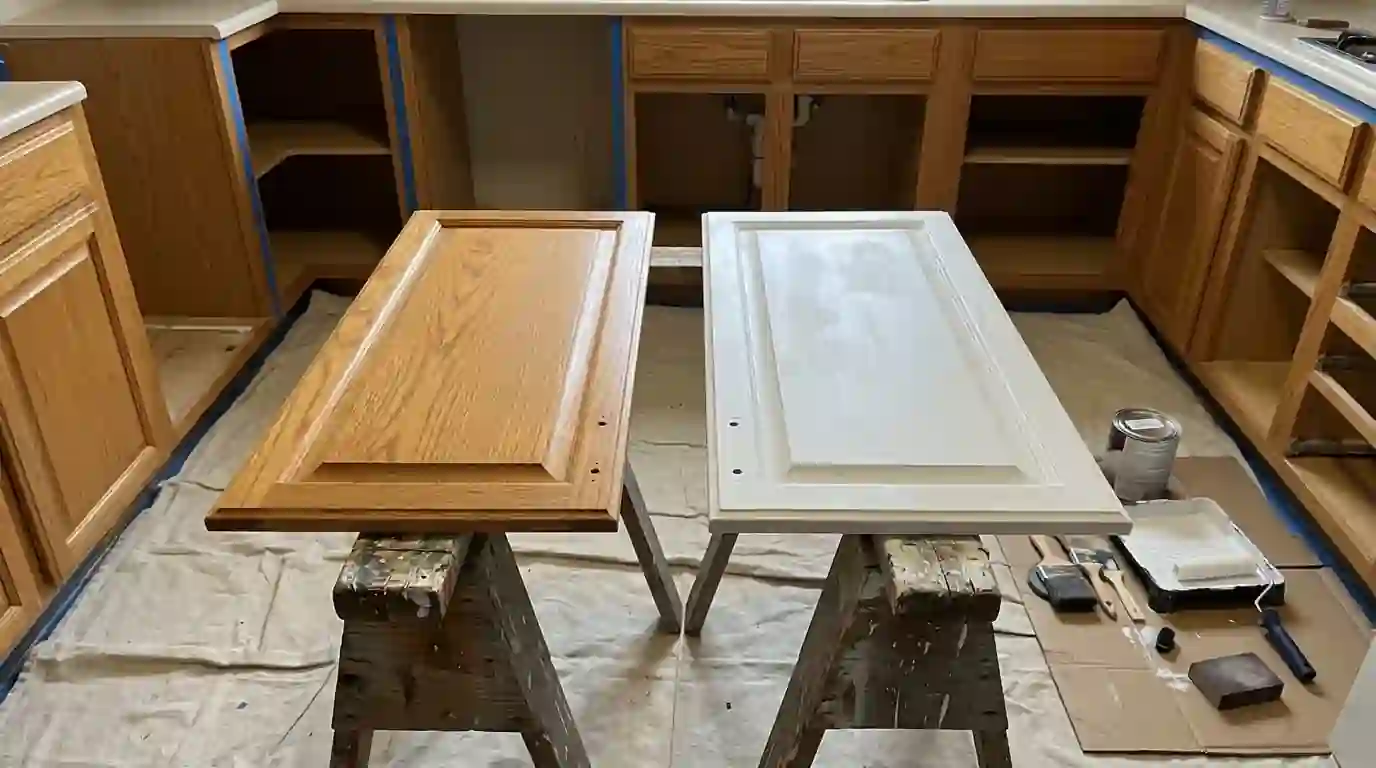
Short answer
If the boxes are solid and you want a lighter or modern color, paint is usually the answer; if you still like wood and only the topcoat is worn, restain or recoat. HomeAdvisor's Naperville cost page shows $406 to $1,182 for cabinet painting, while HomeGuide lists full cabinet refinishing at $1,500 to $4,500.
Three options, and the question that decides between them
Start with one question: do you still like wood? If the answer is yes, the choice is between a new clear coat over the existing stain, a restain in the same or a darker tone, or a careful clean and touch-up. If the answer is no, paint is the route that takes oak to white, gray, navy or green.
Next, check the boxes and doors. Solid oak or oak veneer that is still tight to the frame takes either finish well. Peeling veneer, swollen panels under the sink or doors that no longer close square need repair or replacement first, whichever finish you choose. Many kitchens around Naperville are old enough for this to matter, since the city's median home dates to 1990 in the 2019-2023 American Community Survey.
A quick test tells you a lot. Open the door under the sink and look for swelling or peeling at the bottom edge, then run a hand along the doors next to the stove and the trash pull-out. Grease buildup, soft spots and loose veneer all show up there first, and they shape the scope more than the color does.
When painting oak is the right call
Paint makes sense when the color is the problem. Oak has deep, open grain, and that grain shows through paint unless it is filled. Some people like the texture; others want a smooth, furniture-like face. Decide before work starts, because grain filling adds a full step and real time to the job.
Done properly, the sequence runs like this. Each door and drawer front is removed and labeled, every surface is degreased and scuffed, and a bonding or stain-blocking primer goes on to stop oak tannins from bleeding through. Then two coats of cabinet enamel. Doors are sprayed flat, away from the kitchen, while the boxes are finished in place with counters covered. Our oak cabinet painting page covers the full process, and the sheen guide explains why cabinets get a satin or semi-gloss enamel.
Color choice deserves a little caution. Bright white cabinets show every smudge near the handles, while soft whites, warm grays and mid-tone greens hide daily wear better. Two-tone kitchens, with a darker island or lower run and lighter uppers, are a common way to add contrast without making the room feel heavy. Whatever you pick, look at a painted door sample next to your counter and floor, not just a paint chip.
Cure time matters as much as dry time. Cabinet enamel can feel dry within hours yet take much longer to reach full hardness, so doors go back on carefully, and bumpers and hardware are handled with care for the first few weeks. Rushing that stage is a common cause of early chips and sticking doors.
When restaining or a new clear coat makes more sense
If the wood still looks good and only the finish is dull or worn near the handles, a new clear coat is the lightest fix. The cabinets are cleaned, the old finish is scuffed, worn spots are color-matched, and a fresh topcoat goes on. The grain and tone stay as they are.
Restaining is more work. Going darker is possible over the sanded existing finish with gel stains or toners, but going lighter usually means stripping to bare wood, which is slow and messy on raised-panel doors. Most people who want oak noticeably lighter end up choosing paint. See cabinet staining and refinishing for how a restain runs from start to finish.
Keep in mind that a restain stays honest to the wood. Water damage under the sink, dark rings around handles and mismatched replacement doors will still show through a new stain, while paint covers them. If the cabinets carry a lot of those marks, that alone can tip the decision toward paint.
When leaving them alone is the smart move
Not every oak kitchen needs a new finish. If the cabinets are solid and the finish is intact, a deep degrease, new hardware and touch-ups on worn edges can change the look for a fraction of the cost of paint.
It also pays to wait if a countertop or floor change is coming, since a new counter can change which cabinet color looks right. If you are torn, repaint the walls first and live with them for a while, or put up large painted color samples next to the cabinets before you commit.
Call and describe your cabinets, and we will tell you which of the three options fits before anyone talks numbers.
Call (630) 760-2729What the published ranges say
Cost sites split this work in different ways. HomeAdvisor's Naperville page puts a typical cabinet painting project at $406 to $1,182, and HomeGuide lists kitchen cabinet painting at $70 to $125 per cabinet door. For refinishing, HomeGuide gives $1,500 to $4,500, and HomeAdvisor's Naperville refinishing page shows an average of $3,114.
Those figures are for planning, not quotes. Door count drives the total more than the size of the kitchen, and so do extras: grain filling, an island in a second color, glass-front doors, crown molding, and vanities or laundry cabinets added to the same job.
When you collect quotes, count your doors, drawer fronts and exposed side panels yourself and write the numbers down. Ask each painter to price the same list, with primer, number of coats and any grain filling spelled out. Totals that looked far apart often move closer once everyone is pricing the same kitchen.
| Option | Published range | Unit | Source |
|---|---|---|---|
| Cabinet painting, Naperville page | $406 to $1,182 | Typical total | HomeAdvisor |
| Kitchen cabinet painting | $70 to $125 | Per cabinet door | HomeGuide |
| Cabinet refinishing | $1,500 to $4,500 | Total | HomeGuide |
| Cabinet refinishing, Naperville page | $3,114 | Average total | HomeAdvisor |
What to ask before a door comes off
- Will the grain be filled or left to show?
- Which primer stops tannin bleed on oak?
- Are the doors sprayed away from the house or on site?
- How long until the kitchen is fully usable again?
- How are hinges and hardware labeled and stored?
- Which enamel goes on, and how long does it cure?
Clear answers to those six questions tell you more about the finished kitchen than the price does. A cabinet job that skips primer or rushes the cure can look perfect on day one and start chipping around the handles soon after.
Services this guide relates to
Kitchen Cabinet Painting
Doors off, primed and sprayed
Cabinet Staining & Refinishing
Restain or recoat, keep the grain
Interior Painting
Single rooms to whole-house color changes
Color Consultation
Big samples on your own walls
Sources: embedded.homeadvisor.com, homeguide.com, homeadvisor.com, point2homes.com.