Short answer
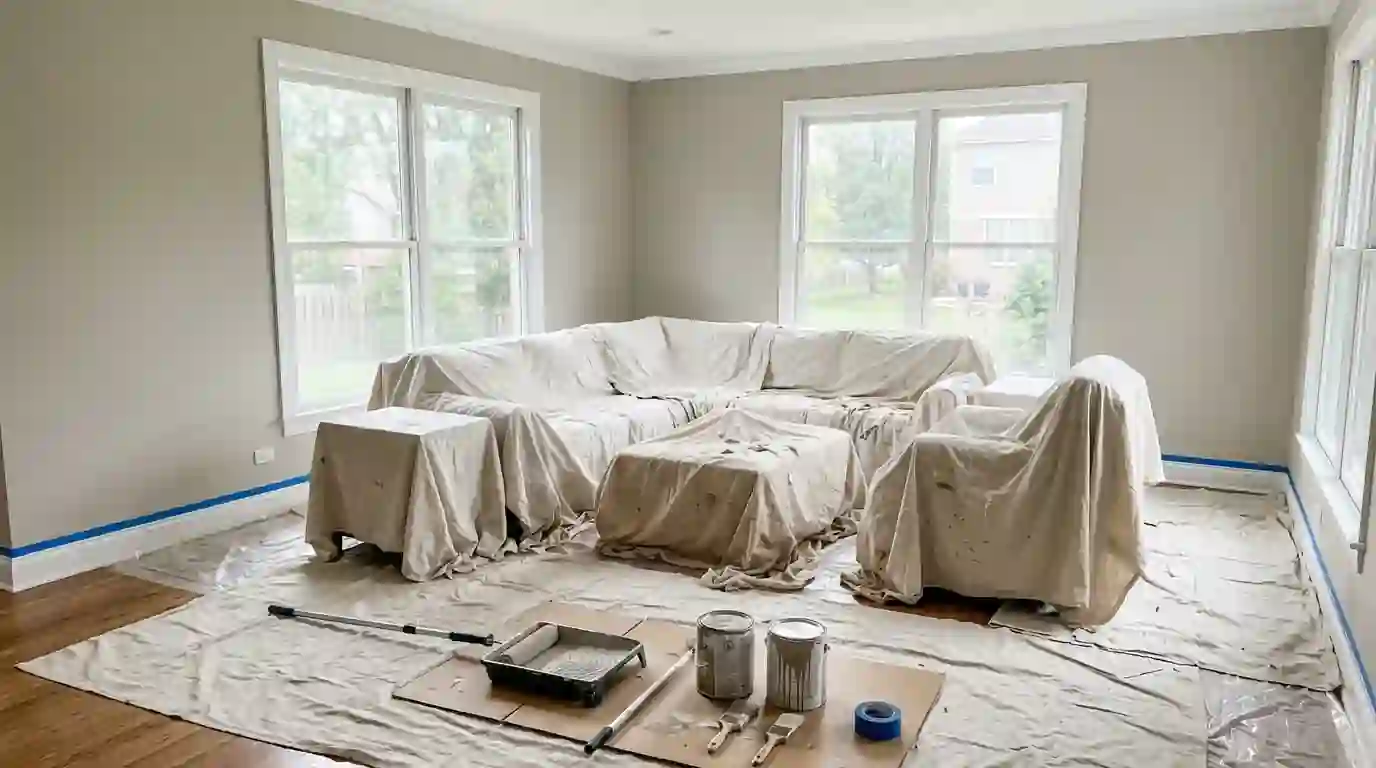
In Naperville, basement painting starts with a moisture check on any bare concrete or block, because paint over a damp wall bubbles and flakes within a season. Finished drywall paints like any upstairs room, masonry needs a coating made for it, and open joists are usually sprayed.
Three surfaces, three different paint jobs
Most basements mix finished drywall, bare foundation walls and an unfinished ceiling of joists, ducts and wiring. Each one calls for a different product and a different tool.
The first question is always water. We tape plastic squares to bare walls and check them a day later; dampness under the plastic means the moisture gets dealt with before any coating.
Pricing a basement paint job
We have not found a published range that fits basements, because drywall, bare block and sprayed joists price so differently, so your number comes from the walk-through.
What moves the price
- Square feet of drywall, block and ceiling
- Moisture problems that need fixing first
- Efflorescence and old paint to remove
- Emptying the space for a sprayed ceiling
- How much storage has to move
Which coating suits which basement surface
Picking the wrong product for the surface is the usual reason basement paint peels.
| Coating | Goes on | Handles damp | Finish |
|---|---|---|---|
| Acrylic latex over primer | Finished drywall | Not designed for it | Eggshell or matte |
| Masonry primer and paint | Dry concrete and block | Lets some vapor pass | Flat, even color |
| Waterproofing masonry coating | Dry below-grade masonry | Resists seepage, not leaks | Thick, slightly textured |
| Dry-fall spray paint | Open joists and ducts | Not a moisture product | Flat, one uniform color |
Finished basement drywall
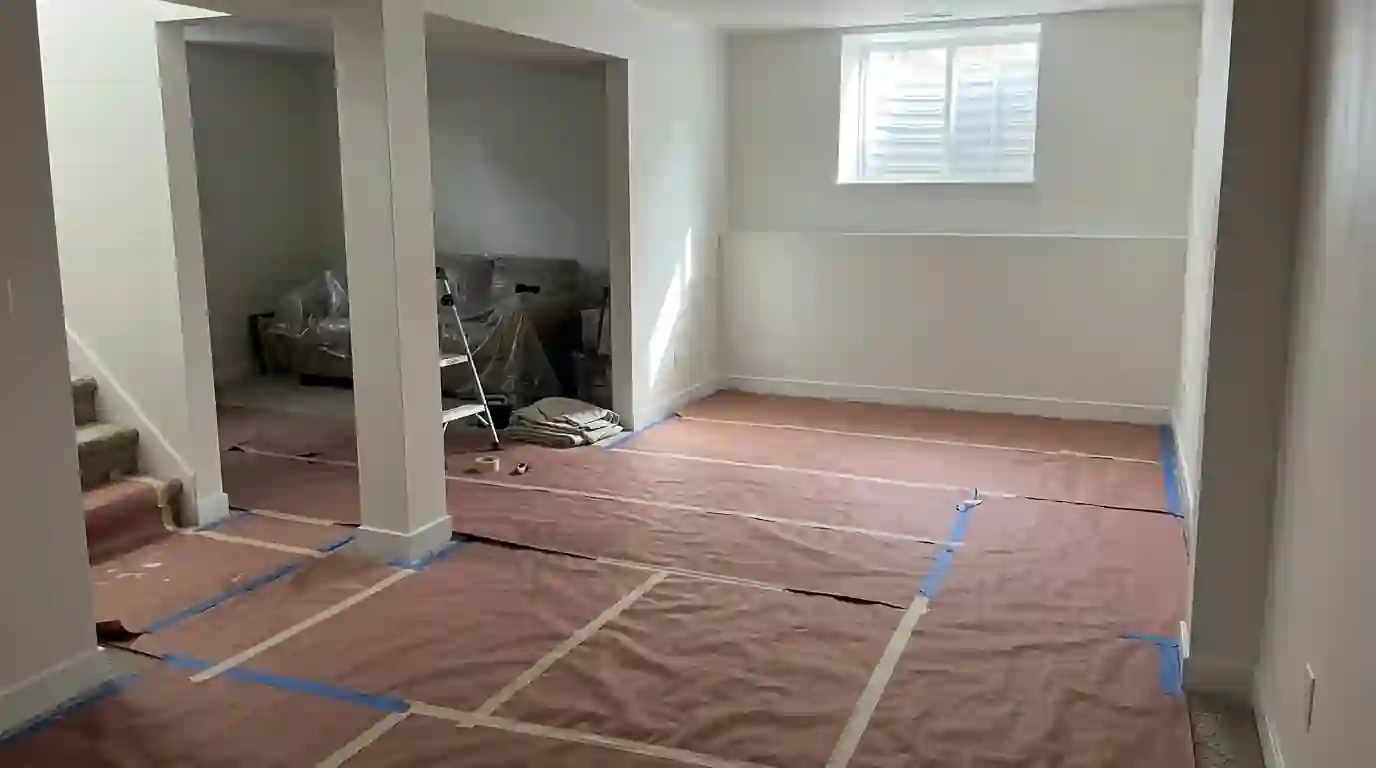
Finished basement walls paint like any room upstairs, with a few basement habits. Drywall near the floor can show tide lines from an old leak, and those need a stain-blocking primer once the source is fixed. Soffits boxing in ducts make the ceiling line hard to keep straight, so we brush those edges slowly. An eggshell sheen handles kids, gym equipment and storage bins rubbing the wall. Dents and gouges get patched and sanded first, and raw drywall is primed so the color comes out even.
Poured concrete and block walls
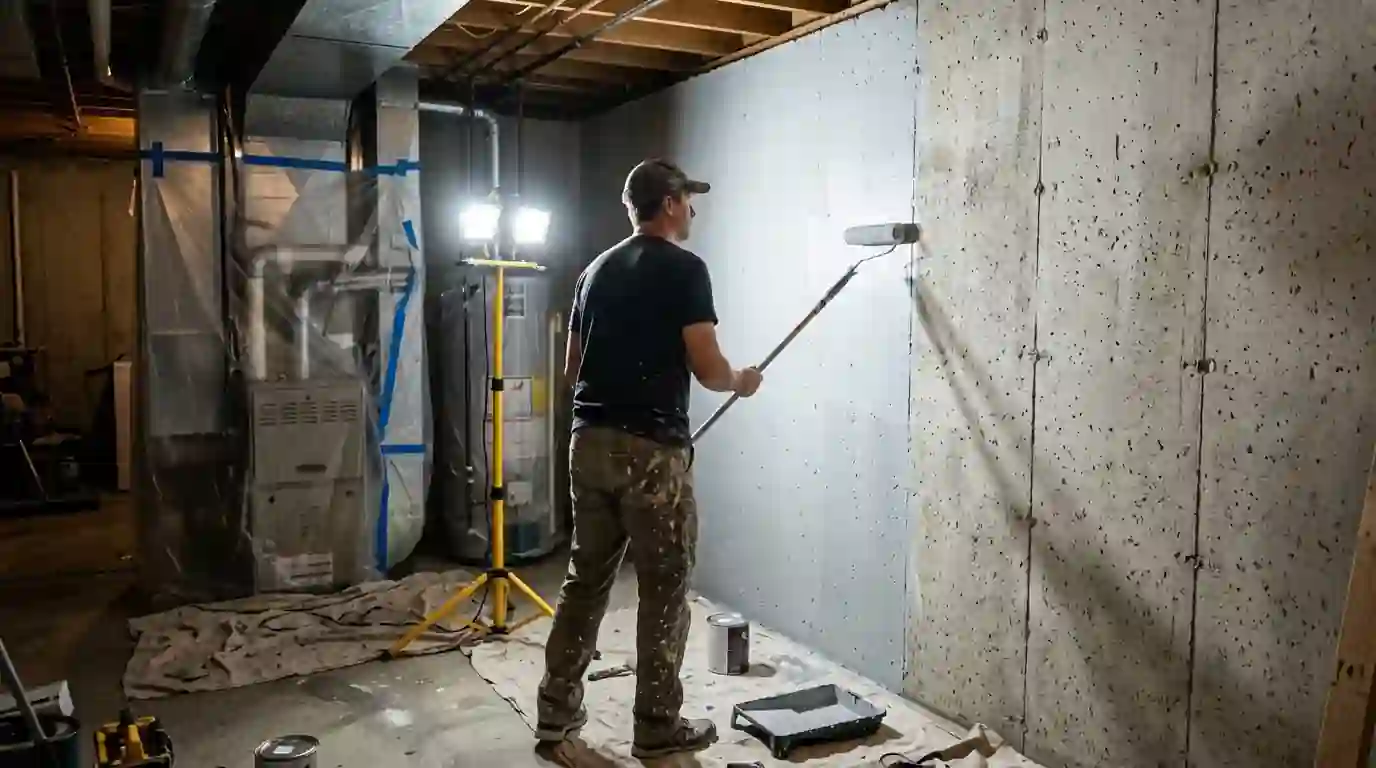
Bare foundation walls are where basement paint fails most often. Concrete and block can push moisture and salts through, which shows as white powder called efflorescence and lifts any paint that seals too tight. We wire-brush the powder off, patch cracks and run the plastic sheet test. Dry walls get a masonry primer and acrylic masonry paint, or a waterproofing masonry coating where you want extra resistance to seepage. No coating stops an active leak. For the slab itself, see basement floor coatings.
Open joist ceilings
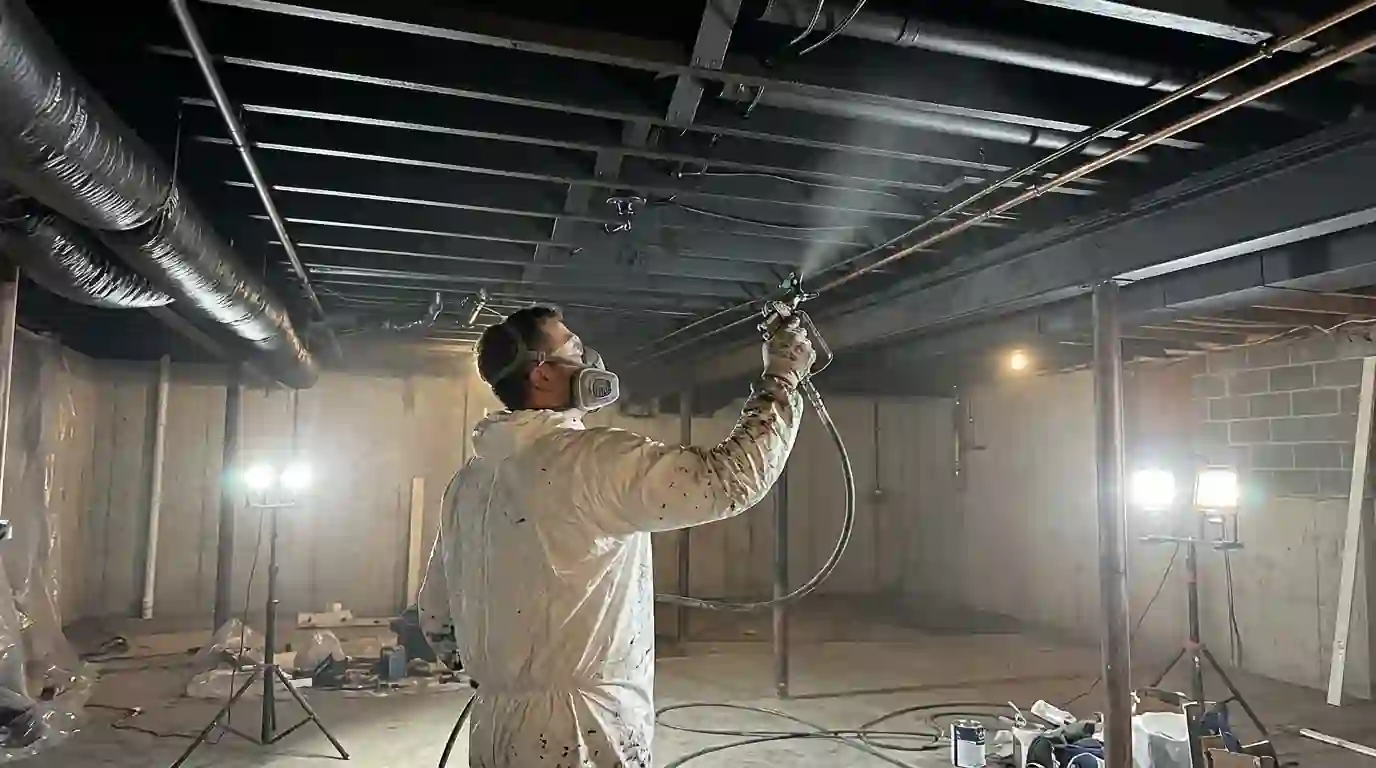
Leaving the joists exposed and spraying them one dark color is a common way to finish a basement ceiling without hanging drywall. Joists, subfloor, ducts, pipes and wires all get the same flat coat, usually black, charcoal or white, and the clutter overhead fades away. It is a spray-only job, so the basement is emptied or wrapped in plastic first, and we use a dry-fall paint where overspray could drift. Shutoff valves, the electrical panel and any labels stay masked and readable.
Chicago-area snow, rain and Will-O-Way basements
In a normal Chicago-area year, 38.4 inches of snow falls and total precipitation reaches 37.86 inches, and spring snowmelt on top of rain is when foundation walls tend to be wettest. That is why we test bare masonry before choosing a coating, not after it fails. In Will-O-Way, a neighborhood that borders the river near downtown, basements get the same plastic-sheet check as anywhere else in Naperville: the test result, not the address, decides which product goes on the wall.
How we take a basement from gray to finished
- Walk and test. Surfaces mapped and plastic squares taped to bare walls overnight.
- Clear and wrap. Storage moved, mechanicals and floors covered in plastic.
- Clean and patch. Powder brushed off, cracks patched, loose paint scraped back.
- Prime and coat. Masonry primer on block, drywall primed, then the finish coats.
- Spray the ceiling. Joists and ducts sprayed last, then plastic pulled and floor swept.
When a basement wall is telling you something
- White powder on the blockEfflorescence means water is moving through the wall, so it is brushed off and tested first.
- Paint peeling off the foundationOld paint trapped moisture and let go, and it has to come off before recoating.
- Damp spots after a rainPatches that darken and dry again point to water that paint alone will not stop.
- Gray, dusty bare concreteUnpainted walls shed dust and make the space feel unfinished, even when they are dry.
- Musty smell near the wallsWorth a moisture check before painting, so the new coating does not seal dampness in.
How long the basement is off limits
Drywall rooms are usually back in use the next day. Sprayed joist ceilings take longer, since the space is emptied and stays wrapped until the overspray has settled and dried.
Jobs that often go with this one
Garage & Basement Floor Coatings
Epoxy and flake garage floors
Drywall Repair
Holes, nail pops and cracks
Interior Painting
Single rooms to whole-house color changes
New Construction & Remodel Painting
New drywall, additions, remodels