Short answer
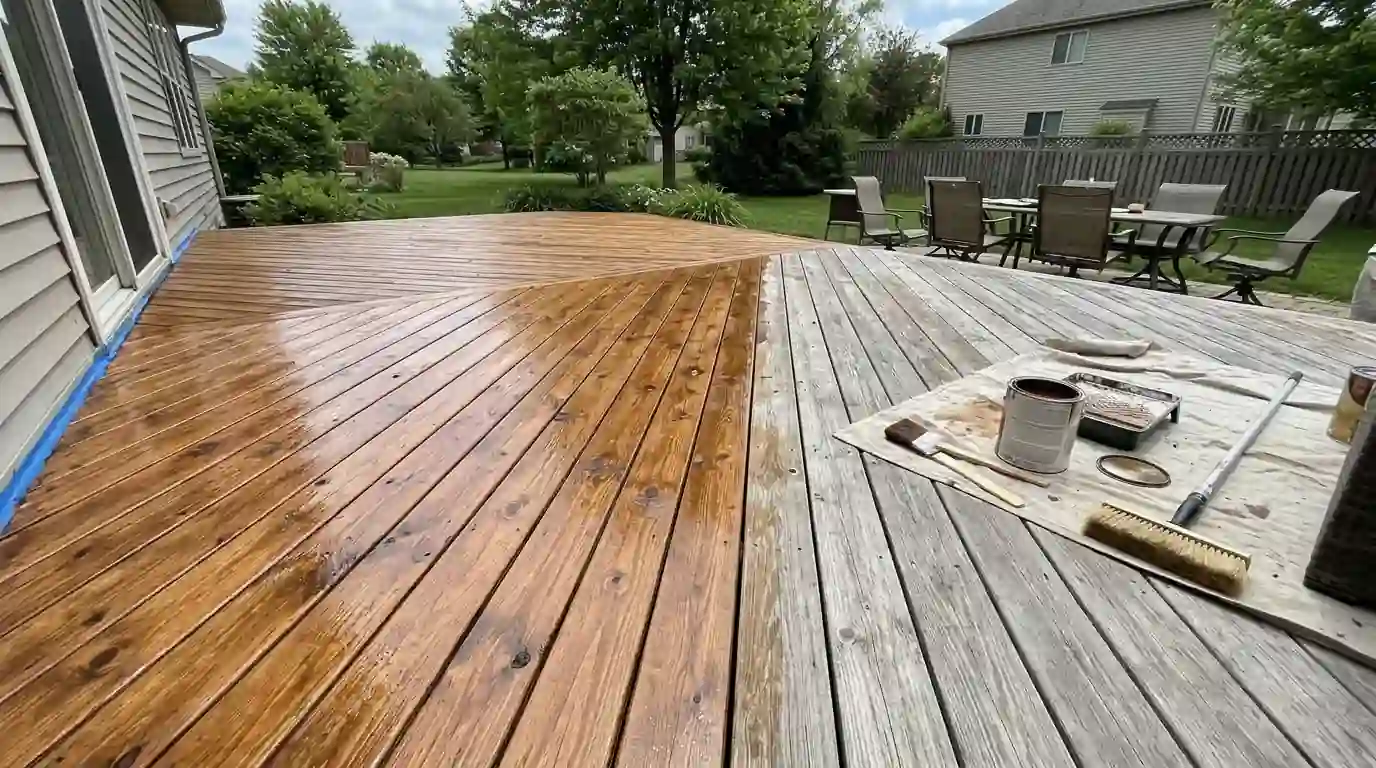
Decks in Naperville are best stained between late April and mid-October, after the normal last spring freeze on April 21 and before the first autumn freeze around October 19. HomeAdvisor lists $1 to $4 per square foot, with a normal total of $550 to $1,250.
Why the wash and the wait matter more than the stain
Most deck stain failures come from prep, not product: stain brushed over dirt, mildew or an old flaking finish has nothing sound to soak into.
So every job starts with a cleaning matched to the type of wood and a dry-out of a full day or more, then stain worked along full board lengths so no lap marks dry in.
Pressure-treated pine decks
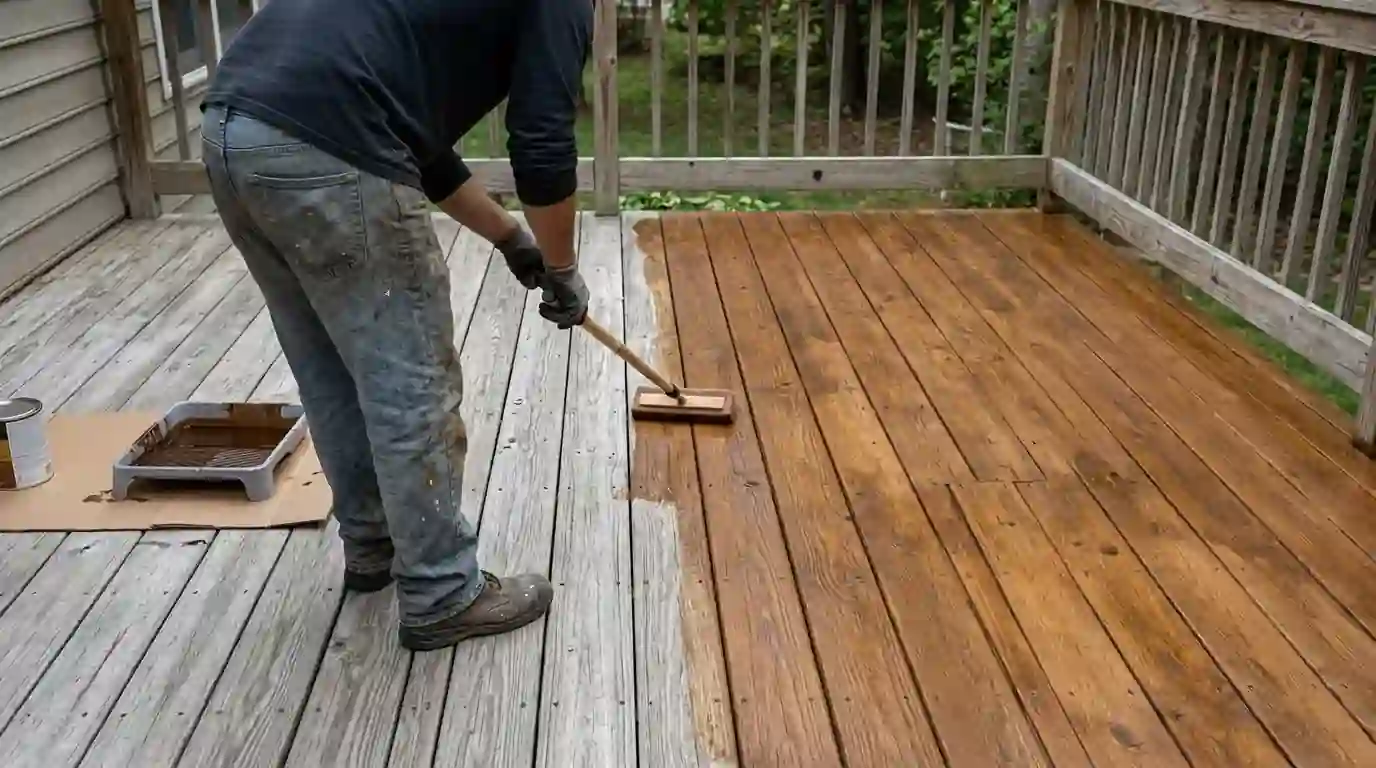
Pressure-treated pine is the most common deck lumber, and new boards need to dry out before they take stain well, which can mean waiting months after a deck is built. On older decks, the pine checks and splinters as it weathers, so we wash, brighten and lightly sand the rough spots before staining. A semi-transparent or semi-solid stain suits most pine decks; it soaks in rather than forming a film that can peel underfoot. Boards with deep cracks or popped nails are noted and fixed first.
Cedar decks
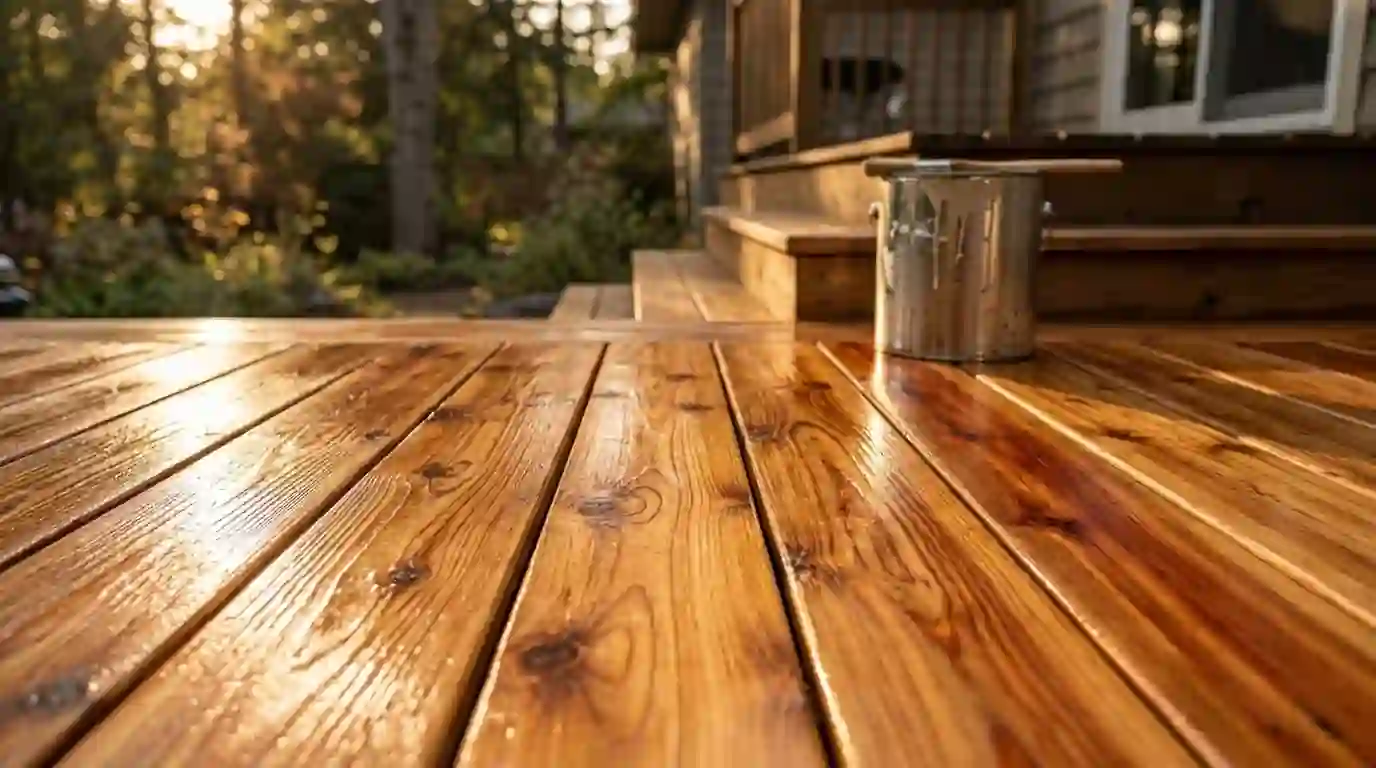
Cedar is softer than pine and full of natural oils and tannins, so it gouges easily under a pressure washer and can bleed dark stains when cleaned with the wrong product. We clean it at low pressure, use a brightener to even out the tone, and let it dry before staining. A penetrating oil or semi-transparent stain shows off the grain; solid colors hide it. Cedar decks that already wear a solid stain generally need to stay solid, unless the old coat is stripped off completely.
Rails and spindles
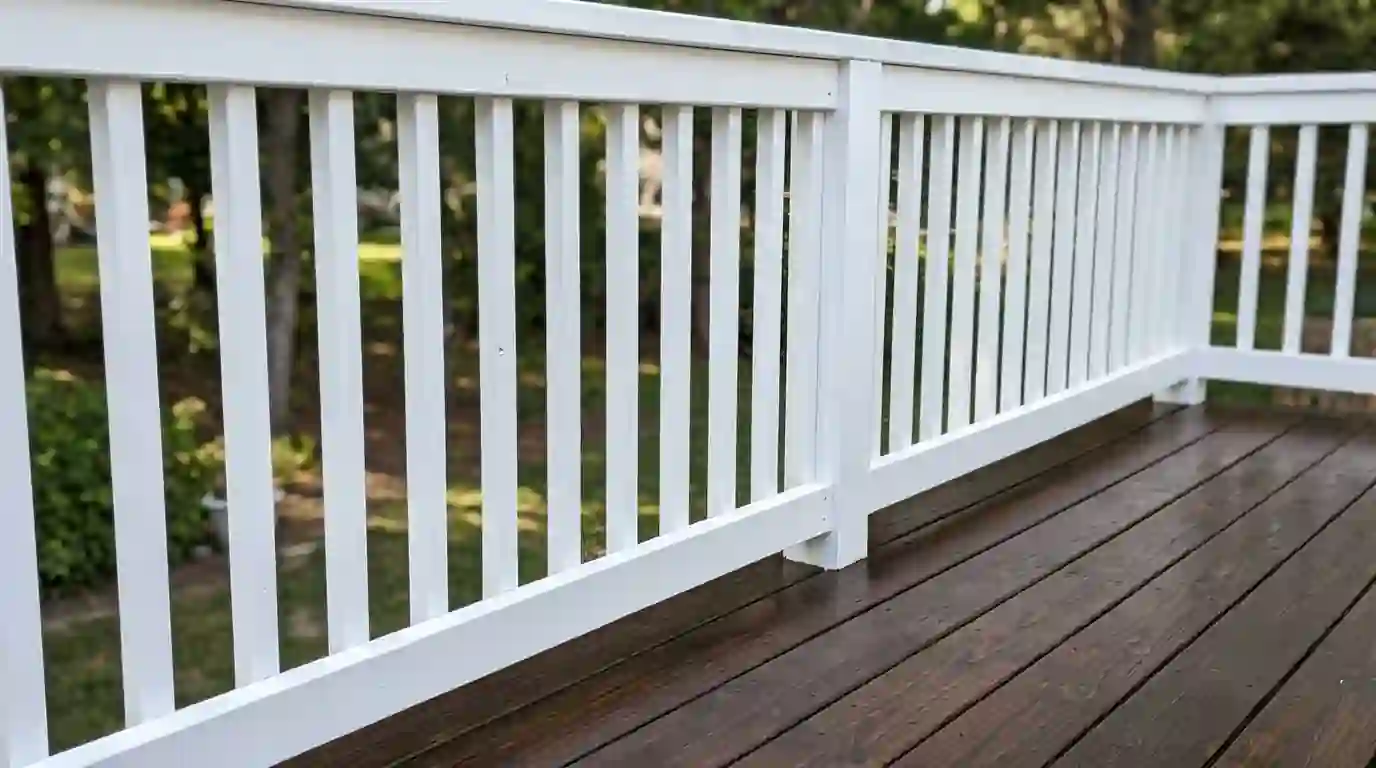
Rails and spindles have four faces each, so they hold far more surface per foot than the deck floor, and they take weather from every side. We brush or pad every face, wipe drips before they dry and cover the boards below so spindle runs do not leave spots on fresh floor stain. Many people choose a solid stain or paint on the rails with a semi-transparent stain on the floor, which looks crisp and holds color longer on the vertical parts that get no foot traffic at all.
Staining weather around Naperville, by the calendar
Cabot's guidance puts staining weather at 50°F to 80°F with a dry 24 hours to follow, and it cautions that hot days flash the stain dry and leave lap marks. Around Naperville, the normal last spring freeze at O'Hare falls on April 21 and the first autumn freeze on October 19, based on 1991 to 2020 data. That pushes most deck staining into late spring and early fall, and we work across the deck with the shade.
Deck staining, from inspection to furniture back
- Inspect. Check for loose boards, popped nails and old failing stain.
- Wash or strip. Clean off mildew and gray fibers, or strip a failed coat.
- Dry. Wait until the boards test dry, usually a day or more.
- Stain. Rails and spindles first, then floor boards in full lengths.
- Back in use. Furniture returns once the stain has had time to set.
Deck staining prices from published guides
Treat these HomeAdvisor figures as a planning starting point, not as our quote.
| Job | Typical range | Unit | Source |
|---|---|---|---|
| Deck staining | $550 to $1,250 | total (normal range) | HomeAdvisor |
| Deck staining | $1 to $4 | per sq ft | HomeAdvisor |
What moves the price
- Deck size and number of levels
- Rails, spindles and stairs
- Stripping old stain versus a wash
- Semi-transparent versus solid stain
- Boards to replace or refasten first
How long the deck is off-limits
Plan on two to three days in total: one to wash, a dry-out day or more, then staining. Bare feet can usually go back on after about a day, furniture after two.
Transparent, semi-transparent or solid deck stain
More pigment means more protection from sun and less grain on show.
| Stain | Look | Sun protection | Best for |
|---|---|---|---|
| Transparent or toner | Natural wood with a light tint | Low, so recoats come often | New cedar in good shape |
| Semi-transparent | Color with the grain visible | Moderate, from added pigment | Most pine and cedar decks |
| Solid | Opaque color, texture still shows | Highest of the three | Older, mismatched or repaired boards |
Deck jobs to do yourself and when to bring us in
Clearing and rinsing is easy; the staining is where DIY jobs go wrong.
Fine to do yourself
- Sweeping debris out of board gaps
- Moving furniture, grills and planters
- Rinsing the deck with a garden hose
Worth calling a painter
- Stripping peeling stain
- Large decks with long rail runs
- Cedar that bleeds or blotches
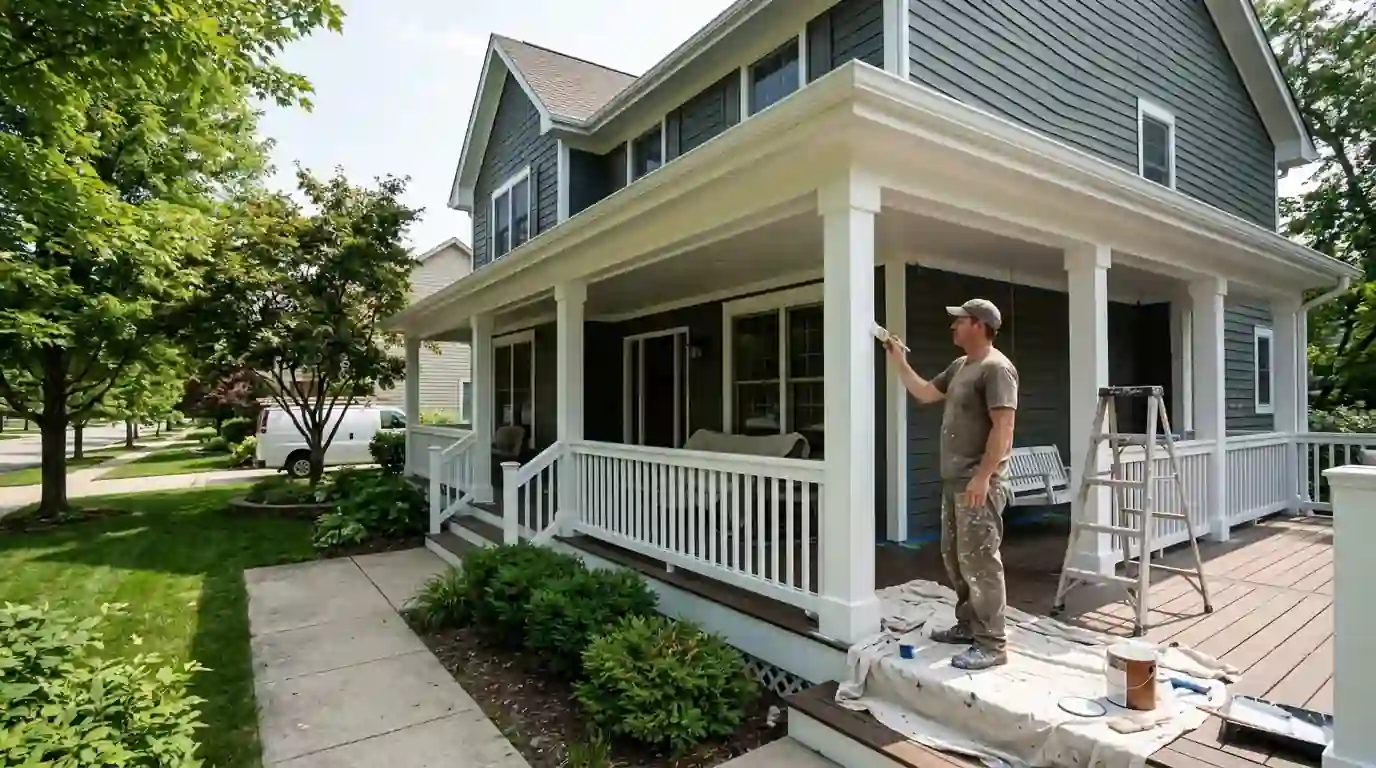
A deck stained on the right day soaks in evenly and keeps its color longer, so we watch the forecast as closely as the wood.
Call (630) 760-2729Deck stains we work with
Cabot, Ready Seal and Duckback penetrating stains for most decks, with Olympic and Behr solid colors where older boards need hiding.
- Sherwin-Williams
- Benjamin Moore
- PPG Paints
- Behr
- Valspar
- Cabot
- Sikkens
- Olympic
- Zinsser
- Kilz
- Romabio
- Ready Seal
Jobs that often go with this one
Deck Stripping & Restoration
Failed coatings stripped and sanded
Fence & Pergola Staining
Fences, pergolas and gazebos
Pressure Washing & Soft Washing
Siding, decks and flatwork
Porch, Railing & Column Painting
Iron rails, porch floors, columns