Short answer
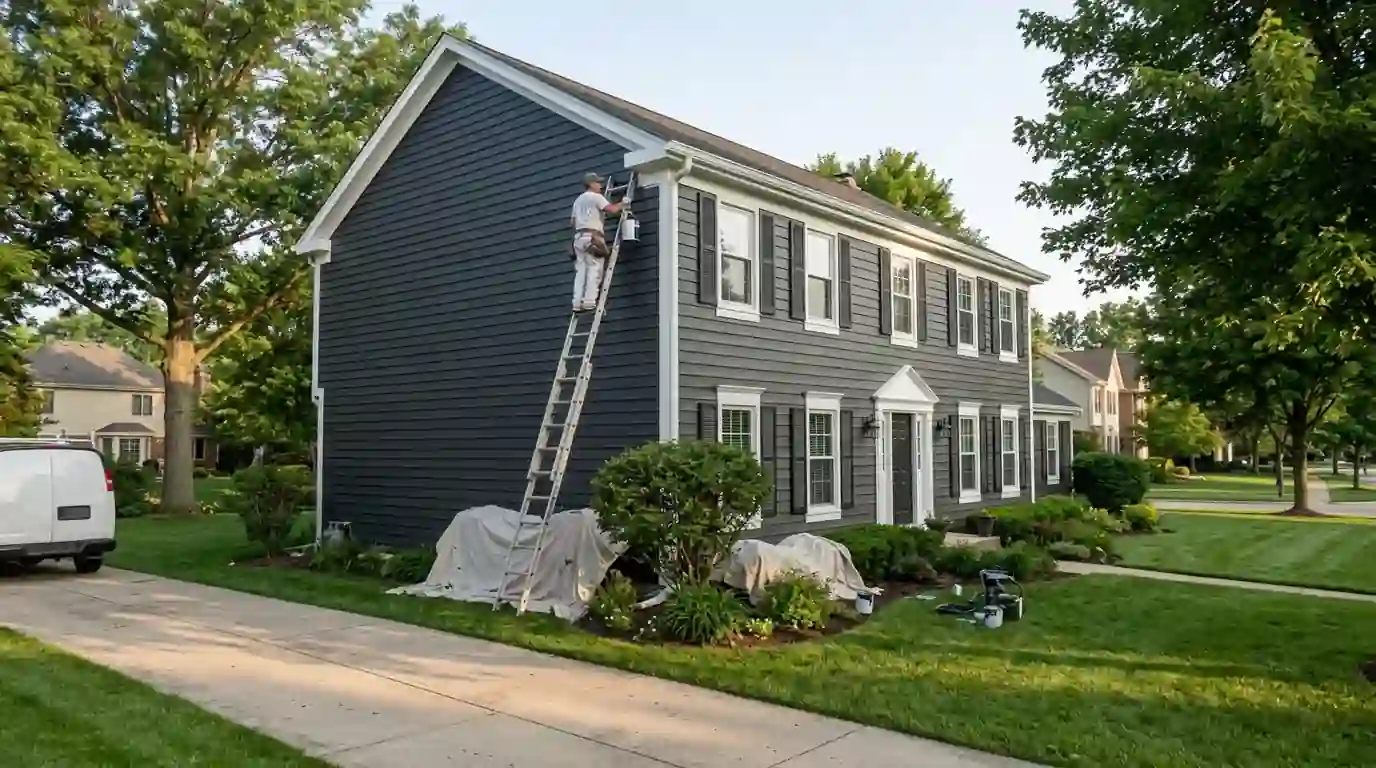
Exterior trim in Naperville gets painted from spring into October, while overnight lows stay above 40°F and fresh latex can cure. This Old House lists $4.25 to $8.25 per linear foot, and Bob Vila lists between $1 and $6 per linear foot for the same kind of work.
Why trim runs on its own repaint schedule
Sills hold rain, fascia catches gutter overflow and casing joints open a little more every time the wood swells and shrinks, so paint on trim breaks down years ahead of the siding.
Repainting trim between full exterior jobs is one of the simplest ways to keep rot out, and it sharpens the front, since trim frames every window and roofline.

What a trim repaint covers
Unless we agree otherwise, a trim job includes:
- Scraping and sanding all loose paint
- Spot priming bare wood with exterior primer
- Recaulking open joints at casings and corners
- Reglazing loose panes on older wood sashes
- Two finish coats on trim, fascia and soffits
Window and door trim
Window and door casings take the most weather on the sill and the bottom few inches of each side, where rain runs down and sits. That is where paint lifts first and where we probe for soft wood before anything else. Loose paint is scraped to a sound edge and feathered so the old paint line does not show. Bare spots get primer, joints get fresh caulk, and the trim gets two coats of exterior enamel in satin or semi-gloss so it sheds water.
Soffits and fascia
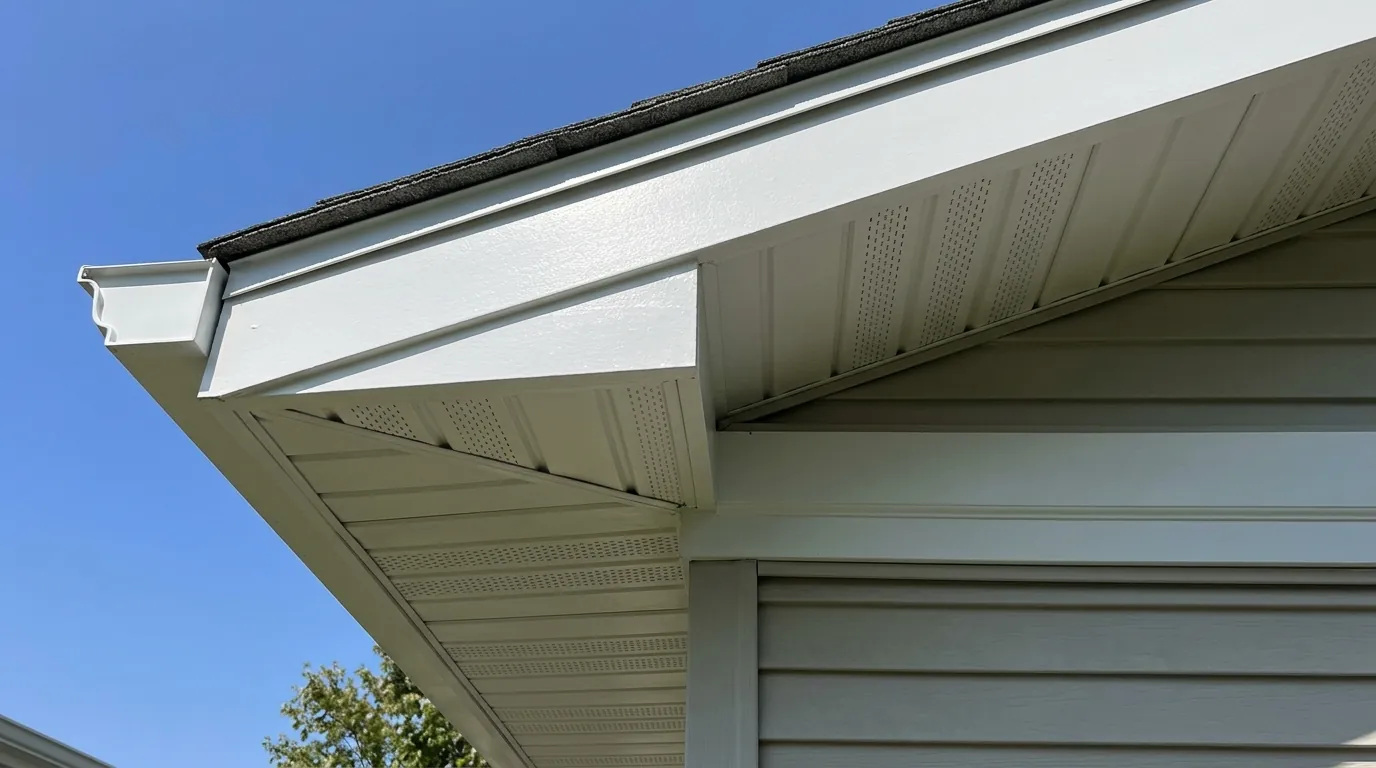
Fascia boards sit right behind the gutters, so any overflow or ice dam soaks them through the winter. Soffits stay drier but collect dust, cobwebs and mildew under the eaves, and their vents clog easily with paint. We clean the soffits and keep vent openings clear, then scrape and prime the fascia, working paint up behind the gutter as far as a brush reaches. Fascia gets two coats; soffits need one or two depending on the color change and how chalky the old coat is.
Caulking and glazing
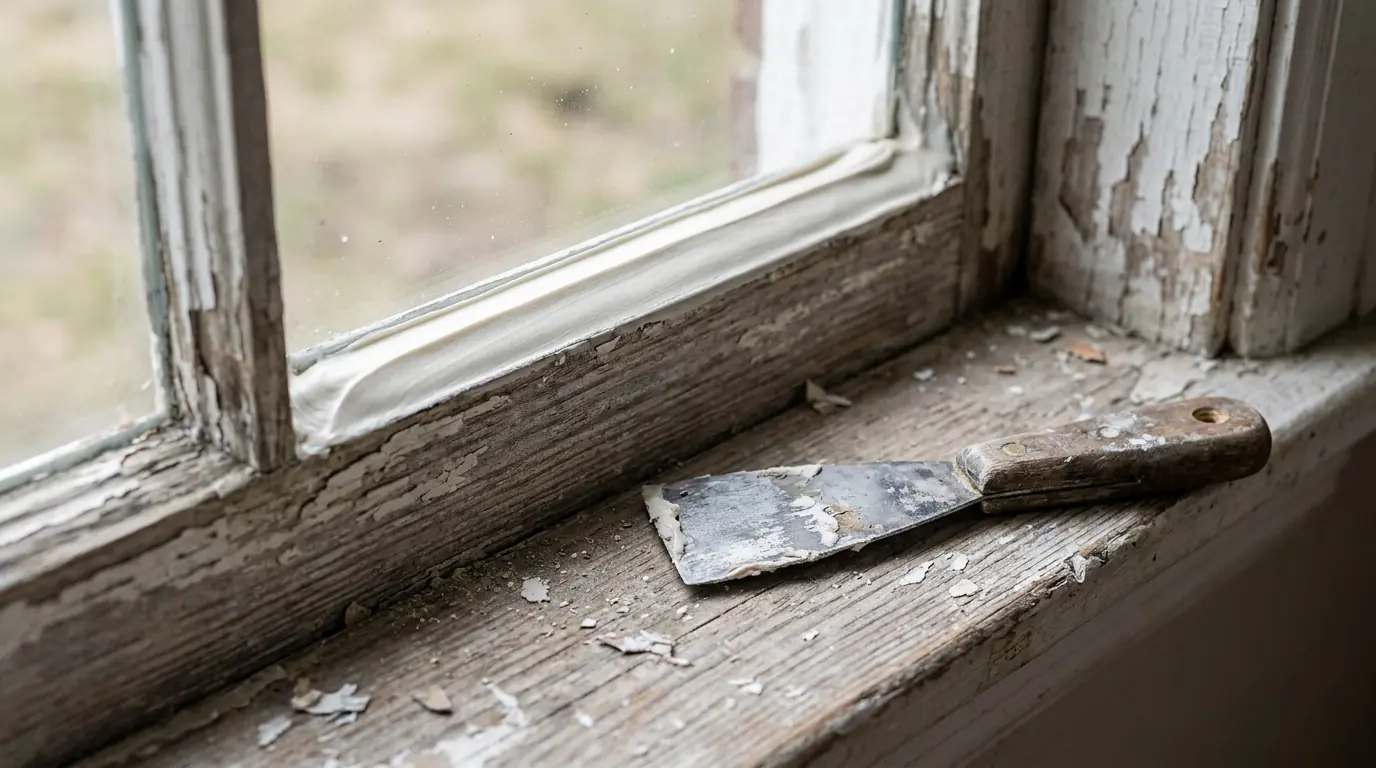
Most trim failures start at a joint, not in the middle of a board. Old caulk shrinks, cracks and pulls away from the siding, letting water run behind the casing. We cut out failed beads, fill deep gaps with backer rod and run a paintable exterior sealant. On older wood windows, loose or missing glazing putty is raked out and replaced, then left to skin over before painting. The finish coat laps slightly onto the glass to seal the putty line, the small detail that keeps a sash sound.
Shutters
Shutters usually wear the darkest color on a house, and dark pigments fade fastest in direct sun. Vinyl shutters need a gentle cleaning and a color from a vinyl-safe list; wood shutters may need loose paint scraped and split slats glued. Where they come off easily, we paint them laid flat so every louver is covered, then rehang them on their original fasteners. If they are fixed to the wall, we mask the siding behind them and brush each louver by hand.
Trim warning signs you can spot from the yard
- Paint lifting on sillsFlakes and curled edges along window sills, right where rain sits.
- Gaps at cornersOpen seams where casing meets siding or two trim boards butt together.
- Stained fasciaDark streaks or peeling behind gutters from overflow and winter ice.
- Loose glazingCracked putty, or panes that rattle in older wood window sashes.
The Naperville trim season, set by overnight lows
Around Naperville, average overnight lows at O'Hare climb to 40.3°F in April and stay above 40°F through October, when they average 45.4°F, then drop to 34.1°F in November. The normal last spring freeze is April 21 and the first autumn freeze October 19. That window matters more for trim than siding, because thin edges and sills cool fast after sunset, so we time trim days to let the finish set before evening dew.
How we take trim from flaking to finished
- Probe. Check sills, fascia and casings for soft wood before anything else.
- Scrape and sand. Remove loose paint and feather the edges smooth with sandpaper.
- Seal. Prime bare wood, recaulk joints and reglaze loose window panes.
- Paint. Two coats of exterior enamel, cut in by brush along every edge.
- Walk it. Check every window and roofline run with you at the end.
Published prices for exterior trim work
Two national guides publish these per-foot planning ranges; they are not our quote.
| Job | Typical range | Unit | Source |
|---|---|---|---|
| Exterior trim painting | $4.25 to $8.25 | per linear foot | This Old House |
| Exterior trim painting | between $1 and $6 | per linear foot | Bob Vila |
What moves the price
- Linear feet of trim, fascia and soffit
- Second-story eaves and ladder setups
- Rot repair found under the old paint
- Number of windows needing new glazing
Trim enamels and primers we use
Sherwin-Williams and Benjamin Moore exterior enamels, PPG Paints on some jobs, and Zinsser or Kilz primer on bare wood and knots.
- Sherwin-Williams
- Benjamin Moore
- PPG Paints
- Behr
- Valspar
- Cabot
- Sikkens
- Olympic
- Zinsser
- Kilz
- Romabio
- Ready Seal
Jobs that often go with this one
Exterior House Painting
Scrape, caulk, prime, two coats
Wood Rot Repair Before Painting
Sills, fascia and jambs fixed first
Siding Painting
Aluminum, vinyl, fiber cement, hardboard
Front Door Painting & Refinishing
Painted or restained entry doors