Short answer
A garage floor coating in Naperville lasts only as long as its bond to the slab, so the concrete is ground and moisture-checked before anything is mixed. HomeAdvisor's published ranges run $1,650 to $3,494 for garage epoxy and $1,500 to $6,000 for a two-car garage of about 500 square feet.
Why the grinding matters more than the color
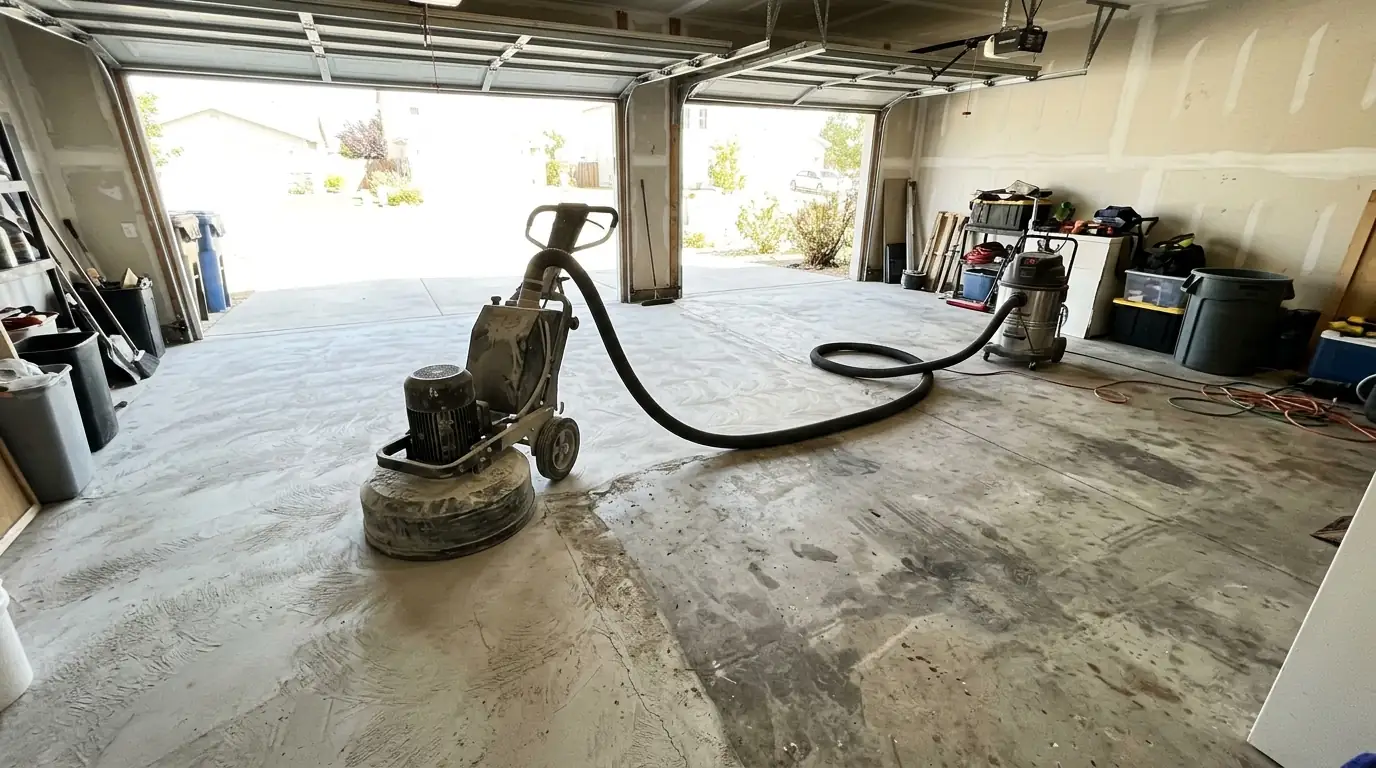
Most failed garage coatings were rolled over smooth, sealed or dusty concrete. Hot tires soften the coat, it grips the rubber instead of the slab, and patches lift right where the car parks.
A diamond grinder opens the surface so the coating can soak in and lock on. Cracks, spalls and pits get filled, and a moisture test tells us whether the slab is dry enough to coat.
Published garage floor coating ranges
HomeAdvisor publishes these as planning ranges for garage epoxy, not a price from us.
| Job | Typical range | Unit | Source |
|---|---|---|---|
| Garage floor epoxy | $1,650 to $3,494 | total | HomeAdvisor |
| Two-car garage epoxy (about 500 sq ft) | $1,500 to $6,000 | total | HomeAdvisor |
What moves the price
- Garage or basement square footage
- Grinding effort and old paint or sealer removal
- Crack, spall and pit repair
- Solid color, partial flake or full broadcast
- Epoxy versus polyaspartic topcoat
Epoxy, polyaspartic and flake systems side by side
All three start from the same ground slab and differ in cure time, sun tolerance and look.
| System | Before parking | Strengths | Watch-outs |
|---|---|---|---|
| Epoxy | Several days, per product sheet | Thick build, strong bond, good value | Can yellow in direct sun |
| Polyaspartic | Often the next day | Fast return to use, stays clear | Short working time, less forgiving |
| Flake broadcast | Set by the topcoat used | Hides dust, texture adds grip | More steps and more material |
Epoxy
Two-part epoxy is the traditional garage floor coating: a resin and hardener mixed on site and rolled or squeegeed onto ground concrete. It builds a thick film that fills small surface flaws and bonds hard to a properly prepped slab. Epoxy can amber in strong sun near an open garage door, so we often top it with a clear coat that resists yellowing. It needs moderate temperatures to cure and several days before a car goes back on, so it suits a garage you can empty for most of a week.
Polyaspartic
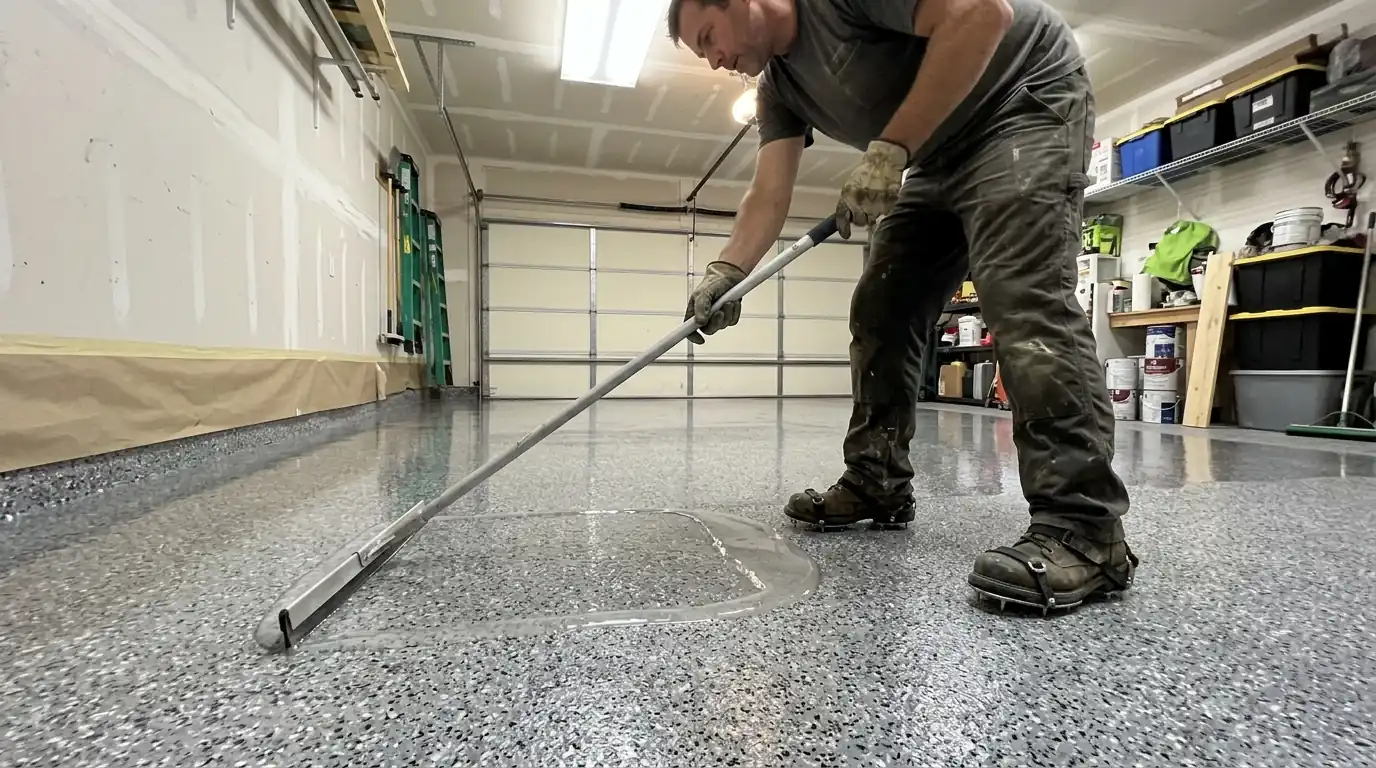
Polyaspartic coatings cure much faster than epoxy and stay clear in sunlight, which makes them popular as a topcoat and as a full system for anyone who cannot give up the garage for long. The fast cure is also the hard part: each batch has a short working window, so it is mixed in small amounts and spread quickly in sections. Polyaspartic tolerates a wider range of temperatures during application, which helps in a cold garage, but it still needs ground, dry concrete underneath to bond.
Flake broadcast floors
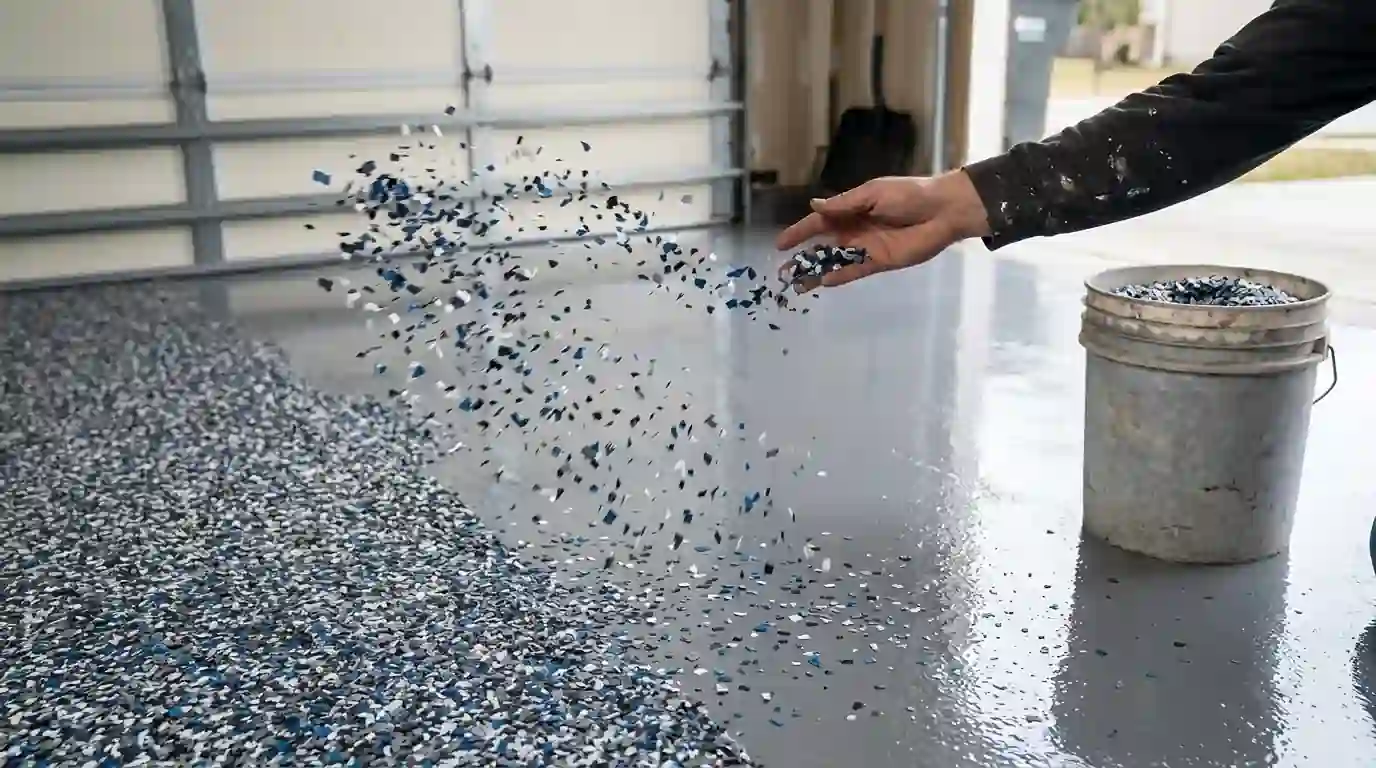
A flake floor starts with a base coat, then colored vinyl chips are tossed by hand into the wet coat until the surface is partly or fully covered. Once it cures, loose flakes are scraped and vacuumed off, and one or two clear topcoats lock the rest in place. The speckled finish hides dust, salt residue and small flaws in the concrete, and the texture gives some grip underfoot. Full broadcast uses more flakes and an extra scraping step, and it is the version most people picture in a two-car garage.
What a floor coating job includes
Unless your walk-through notes otherwise, the scope covers:
- Diamond grinding the full slab and edges
- A moisture check before any coating is mixed
- Filling cracks, pits and spalled spots
- Base coat, flake if chosen, and clear topcoat
- Coating a few inches up the wall, if wanted
- Written cure times for walking and parking
Garage floors across Naperville, including Indian Hill
Roughly 35,865 Naperville homes, 62.8% of the city's housing units, are detached single-family houses, and attached townhouses and similar units account for 12.2% more, with smaller garages and basements that take the same coatings at a smaller scale. In Indian Hill, less than a mile south of I-88, a car that spends the winter on the highway brings salt and slush home with it. A coated floor rinses clean in a few minutes, where bare concrete soaks that brine up and starts to scale and pit at the surface.
How a coated floor goes down
- Empty and inspect. Garage cleared, cracks mapped and any old paint or sealer identified.
- Grind. Diamond grinder opens the slab while dust is vacuumed as we go.
- Repair. Cracks, pits and spalls filled, then ground flush with the floor.
- Coat. Base coat, flakes if chosen, then the clear topcoat.
- Cure. Foot traffic first, cars only after the product's full cure time.
How long the garage stays empty
Plan on clearing the garage for the full job. Grinding and repairs take a day, coats follow over one or two more, and the product's cure time sets when cars can park again.
Jobs that often go with this one
Garage Door Painting
Steel and wood doors
Basement Painting
Drywall, block walls, open joists
Pressure Washing & Soft Washing
Siding, decks and flatwork
Drywall Repair
Holes, nail pops and cracks