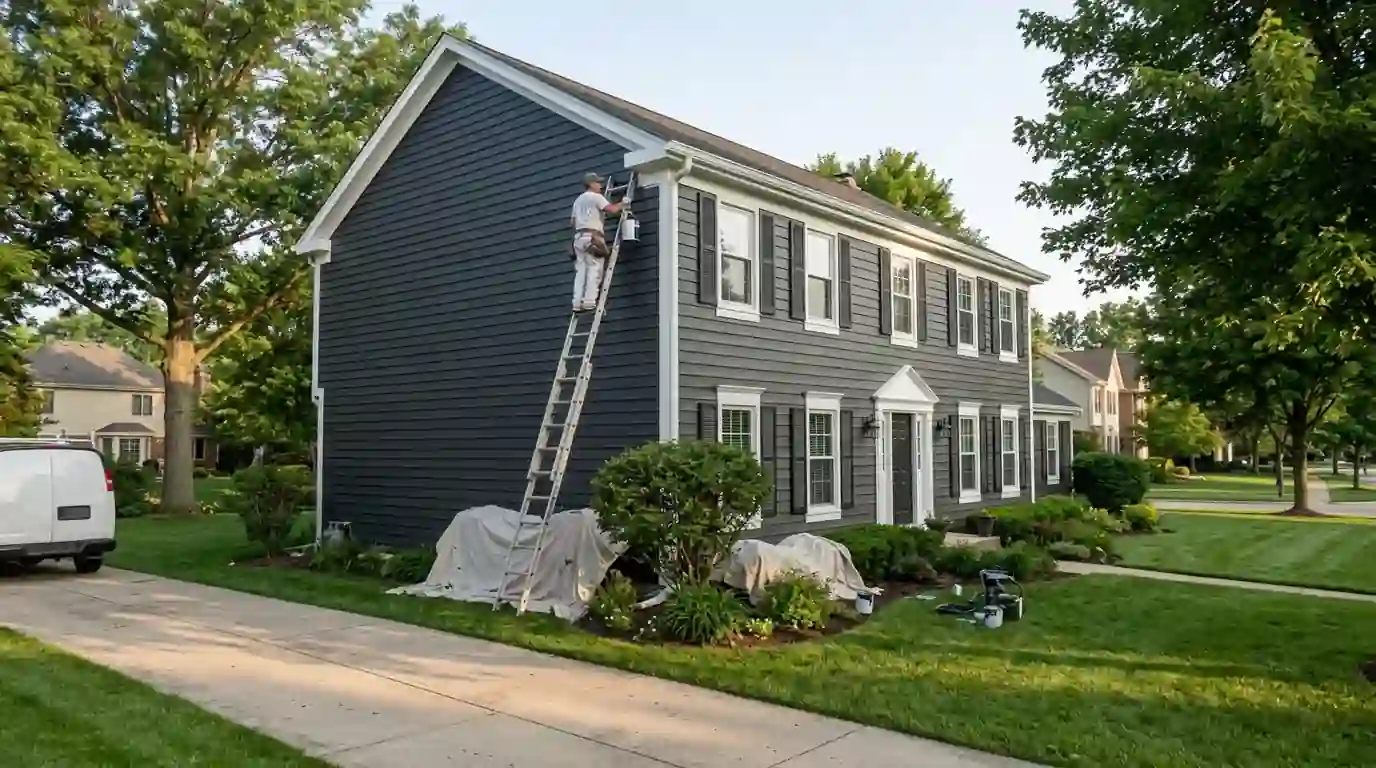
Short answer
Rotted wood on a Naperville house has to be repaired before painting, because new paint sealed over soft wood traps moisture and peels. HomeAdvisor lists $500 to $2,352 as a normal range for dry rot repair and $700 to $2,850 for wood siding repair.
Why rot gets fixed before the primer comes out
Rot is a fungus that feeds on wood that stays wet. Once the fibers soften, no primer can hold, and the trapped moisture keeps working under any new coat.
So we probe every sill, fascia run and jamb on the house, flag each soft spot with tape and agree with you on epoxy or replacement before a painting day is booked.
Published ranges for rot repair
HomeAdvisor publishes these planning ranges; they are not our quote, since rot is measured only once opened.
| Job | Typical range | Unit | Source |
|---|---|---|---|
| Dry rot repair | $500 to $2,352 | total (normal range) | HomeAdvisor |
| Wood siding repair | $700 to $2,850 | total (typical range) | HomeAdvisor |
What moves the price
- How deep the rot runs once opened
- Epoxy rebuild versus new wood
- Custom profiles that must be matched
- Second-story fascia and ladder access
- Number of separate spots on the house
Epoxy fill, Dutchman patch or full replacement
How far the rot runs decides which repair makes sense.
| Repair | Best for | Trade-off |
|---|---|---|
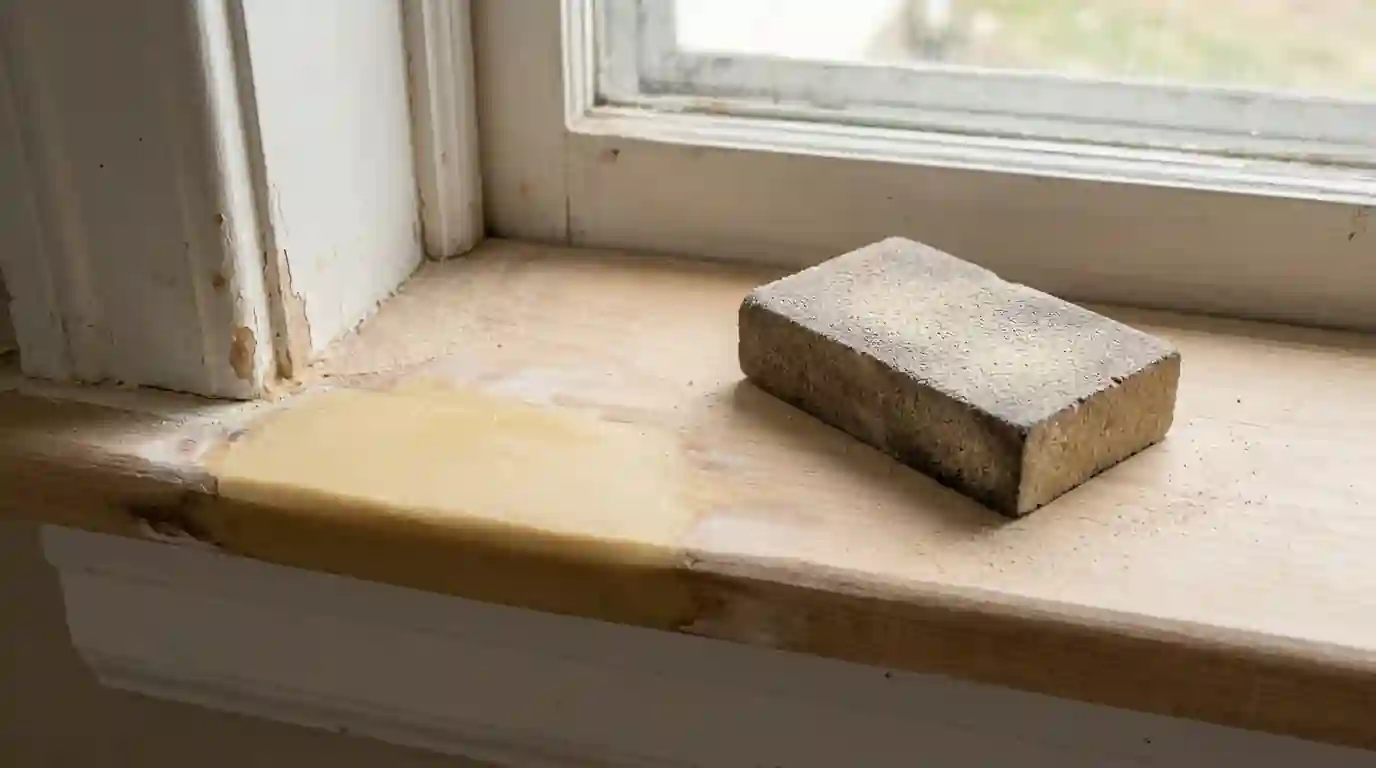
| Epoxy consolidant and filler | Small, shallow pockets in sound boards | Needs careful shaping and sanding by hand |
| Dutchman patch | One rotted section of a long board | A seam that disappears only once painted |
| Full replacement | Rot through most of the piece | More carpentry, and new wood must be primed |
Window sills
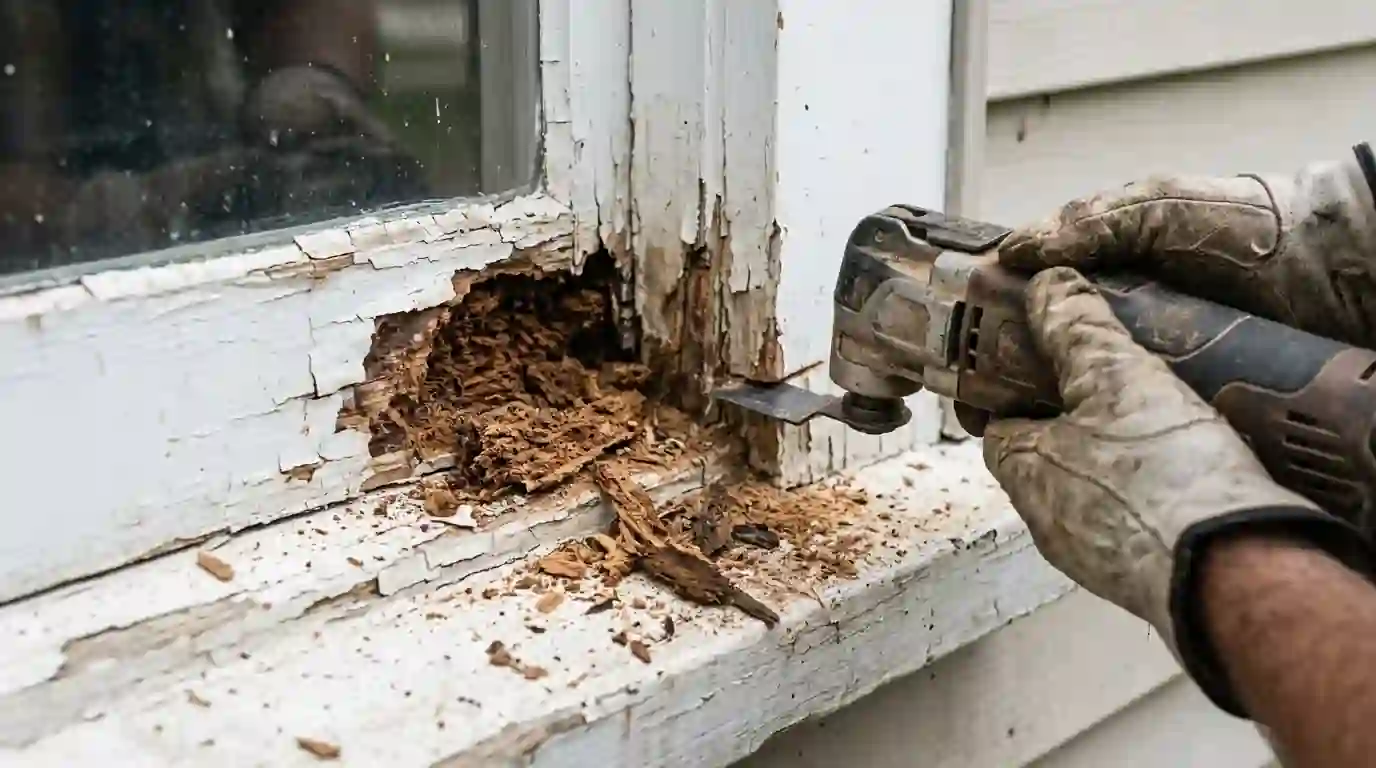
Sills sit flat or nearly flat, so rain and snowmelt pool on them and soak into the end grain at each corner. Rot usually starts where the sill meets the side casing. If a screwdriver sinks in only shallowly, we dig out the soft wood, soak the cavity with consolidant and rebuild it with epoxy shaped to the profile. Deeper rot across the sill means cutting out a section or replacing the whole sill, then priming every face of the new piece before it goes in.
Fascia and rake boards
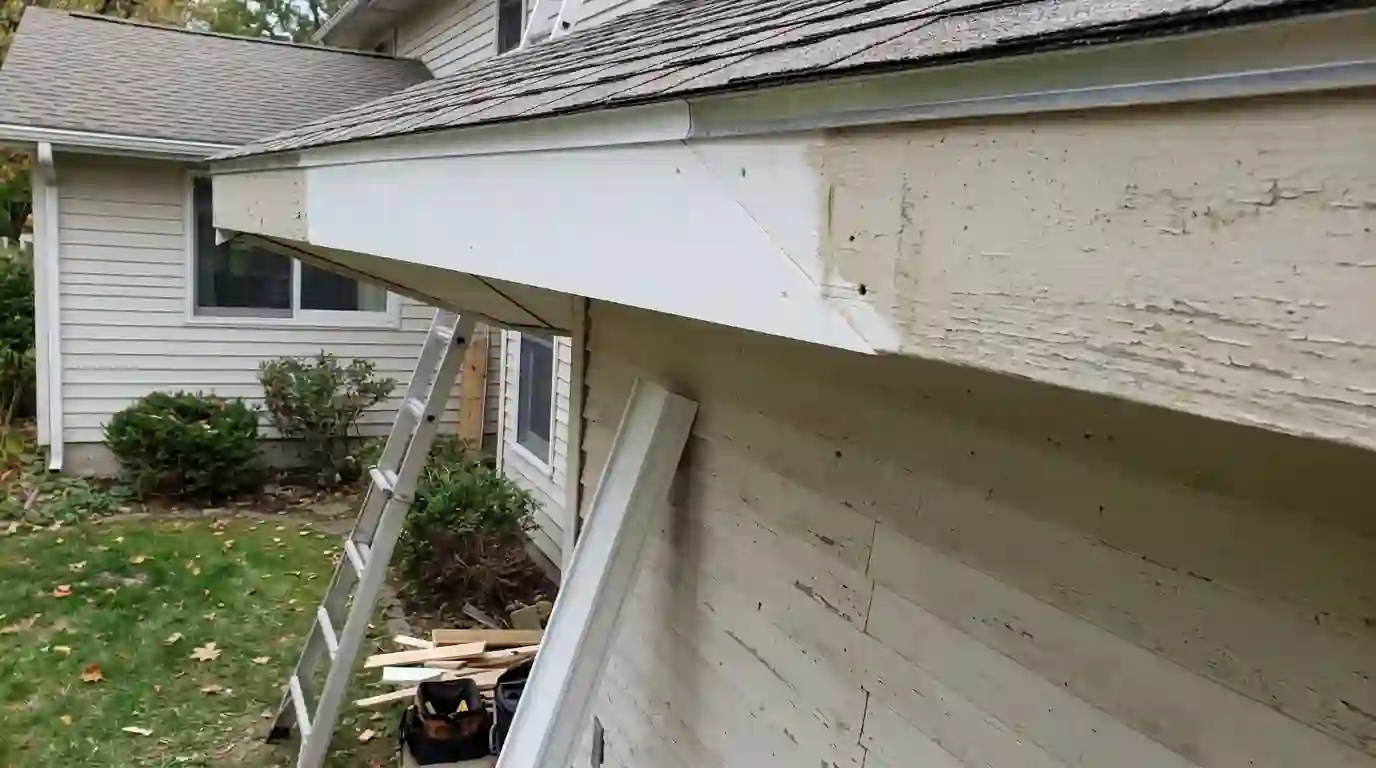
Fascia boards rot from the top edge down, usually where gutters overflow or ice dams hold water against the wood all winter. Rake boards on gable ends rot at the bottom corners where they meet the fascia. If the board behind a gutter needs replacing, that gutter section comes down and goes back up. We cut out the rotted length, splice in new primed lumber with an angled scarf joint and fasten it. Before it goes up, the back face and cut ends are primed so water cannot wick in.
Door jambs and brick molding
Exterior door jambs rot at the bottom, where the jamb meets the sill and water splashes up from the step. Brick molding, the trim around the outside of the door, rots at the same corners. We cut off the rotted bottom few inches and splice in a matching piece, or replace the full length of brick molding when it is soft along its run. Joints are sealed, the bottom end grain is primed, and the splice is filled and sanded so it disappears under paint.
Epoxy fill or replacement
Epoxy is the right call when the damage is small and the rest of the piece is sound, or when the piece is hard to replace, such as an original profile on an older window. Replacement makes more sense when rot runs through most of a board or the wood is easy to match with stock lumber. Either way, every bit of soft wood comes out first. Leaving decayed fiber behind filler or new wood only moves the rot a few inches over.
Chicago-area weather and historic-district repairs
Chicago-area normals at O'Hare run from a 25.2°F January mean to 75.4°F in July, and a typical year brings 38.4 inches of snow and 37.86 inches of total moisture, so exterior wood here spends long stretches wet, then frozen. In the Naperville Historic District, a material change to an exterior generally needs a Certificate of Appropriateness, and complex projects go before the Historic Preservation Commission at a public meeting, so check with the city before swapping rotted wood for a different material.
How a rot repair is done right
- Probe and mark. Every suspect spot is tested and flagged before work starts.
- Cut back. Soft wood comes out until only sound, dry fiber remains.
- Rebuild. Epoxy fill, a Dutchman patch, or new primed wood fitted in.
- Seal. Joints caulked, end grain primed, repairs sanded flush.
- Paint. Primer and finish coats matched to the surrounding trim.
Where to check your house for rot
- Screwdriver sinks inPress a screwdriver into sills and jamb bottoms; soft wood gives way easily.
- Paint bubbling in one spotBlisters in a single patch of trim often mark moisture inside the wood.
- Dark staining at cornersGray or black wood at miter joints and casing bottoms shows water getting in.
- Wavy or sagging fasciaA wavy roofline or gutters pulling away can mean soft wood behind them.
Jobs that often go with this one
Exterior Trim, Soffit & Fascia Painting
Trim, fascia, soffits, shutters
Exterior House Painting
Scrape, caulk, prime, two coats
Siding Painting
Aluminum, vinyl, fiber cement, hardboard
Deck Stripping & Restoration
Failed coatings stripped and sanded