Short answer
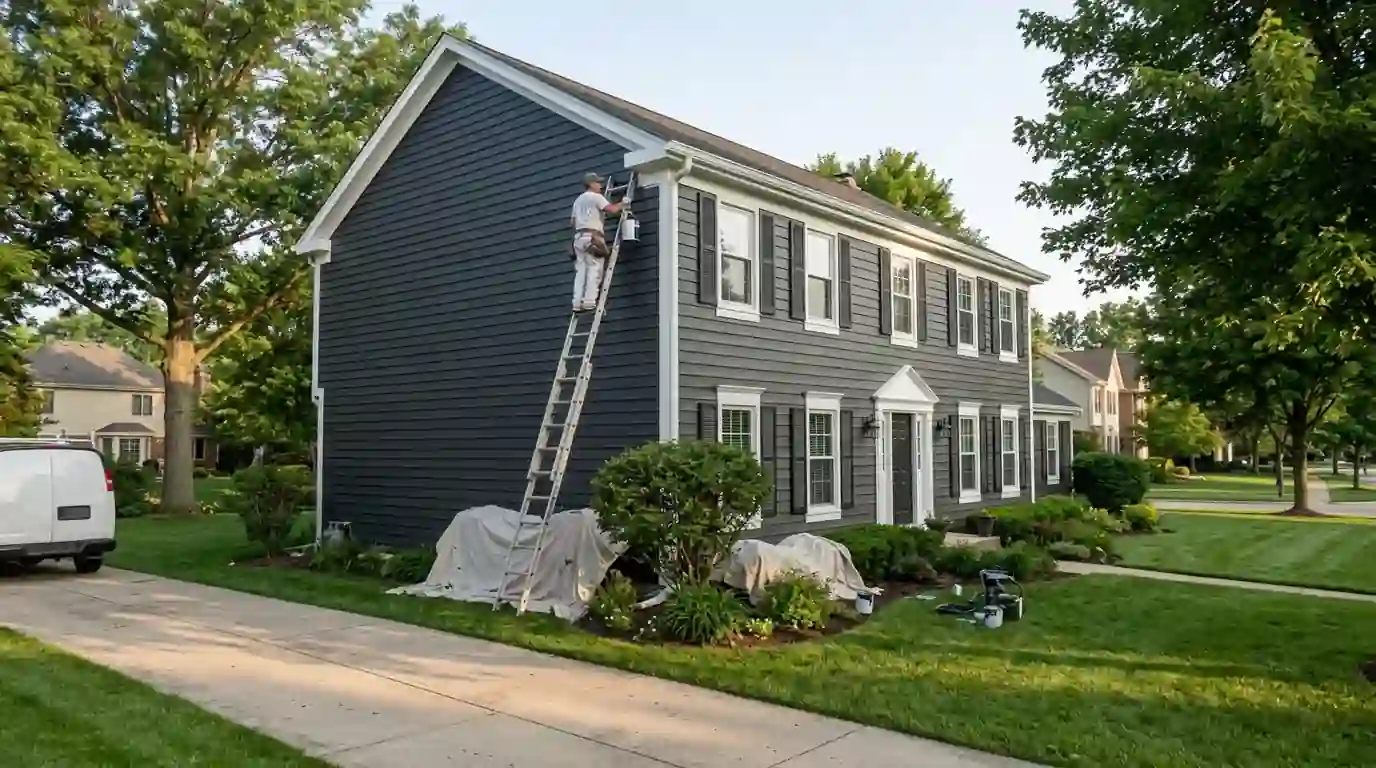
Siding in Naperville can be painted, whether aluminum, vinyl, fiber cement or hardboard, but vinyl must stay light enough not to warp. HomeAdvisor lists $1 to $3 per square foot for vinyl; Bob Vila lists $1.20 to $3.20 for fiber cement.
When painting siding makes more sense than replacing it
Most siding fades long before it fails. If the panels lie flat, sit tight and show no cracks, exterior acrylic gives the house a new color with far less upheaval than tearing it off.
Each material asks for something different. Aluminum chalks, vinyl moves with heat, fiber cement wicks water at unprimed cut ends and hardboard swells wherever water sits.
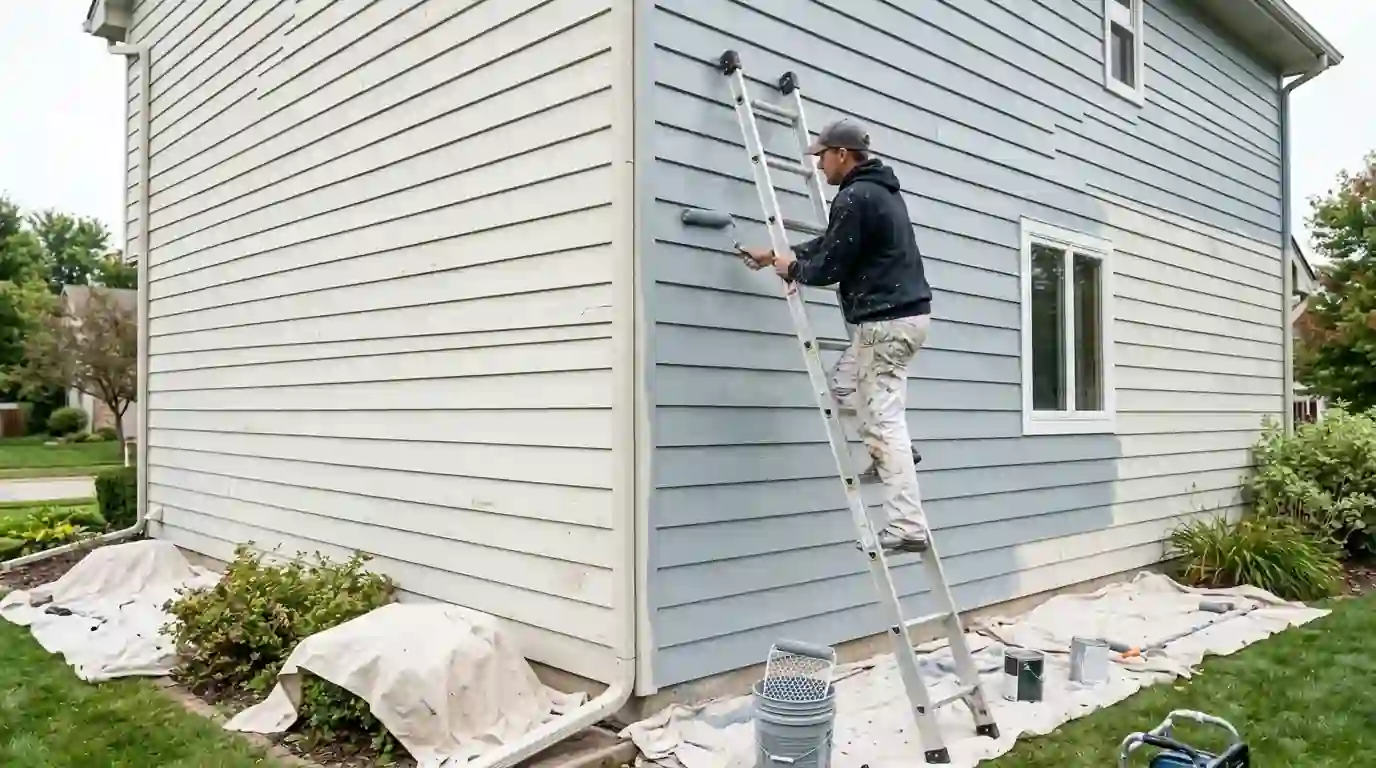
Published ranges for painting siding
Published planning ranges from national cost guides, not our quote.
| Job | Typical range | Unit | Source |
|---|---|---|---|
| Vinyl siding painting | $1 to $3 | per sq ft | HomeAdvisor |
| Fiber cement siding painting | $1.20 to $3.20 | per sq ft | Bob Vila |
What moves the price
- Siding material and how heavily it chalks
- Two stories, gables and ladder access
- A color change that needs an extra coat
- Loose panels or swollen boards to fix first
Aluminum, vinyl, fiber cement and hardboard side by side
Each siding fails differently, so prep changes.
| Siding | Main prep | Primer | Watch for |
|---|---|---|---|
| Aluminum | Wash off all the chalk | Bonding primer on bare metal | Dents and oxidation |
| Vinyl | Gentle low-pressure wash | Rarely needed if clean | Colors darker than the original |
| Fiber cement | Wash and recaulk at trim | Prime bare cut ends | Shrunken caulk at corners |
| Hardboard | Seal bottom drip edges | Oil primer on bare spots | Soft, swollen lower edges |
Aluminum siding
Aluminum siding usually still carries its factory finish, worn down to a powder that rubs off on your palm. Paint will not grip that powder, so the first job is a thorough wash with a chalk-cutting cleaner, then a rinse and a dry day. Scratches to bare metal and oxidized patches get a bonding primer. A satin or low-luster acrylic suits aluminum best, because a high gloss shows every small dent and wavy panel when the afternoon sun rakes across the wall.
Vinyl siding and vinyl-safe colors
Vinyl expands and contracts more than any other siding, and a dark coat can absorb enough heat to make panels bow and buckle. That is why paint makers publish vinyl-safe color lists, and why we steer you toward a shade inside that list, usually no darker than the original. The panels get a gentle wash, not a blast that drives water behind them, and they must be fully dry before the first coat. An acrylic formulated for vinyl flexes with the panels instead of cracking.
Fiber cement siding
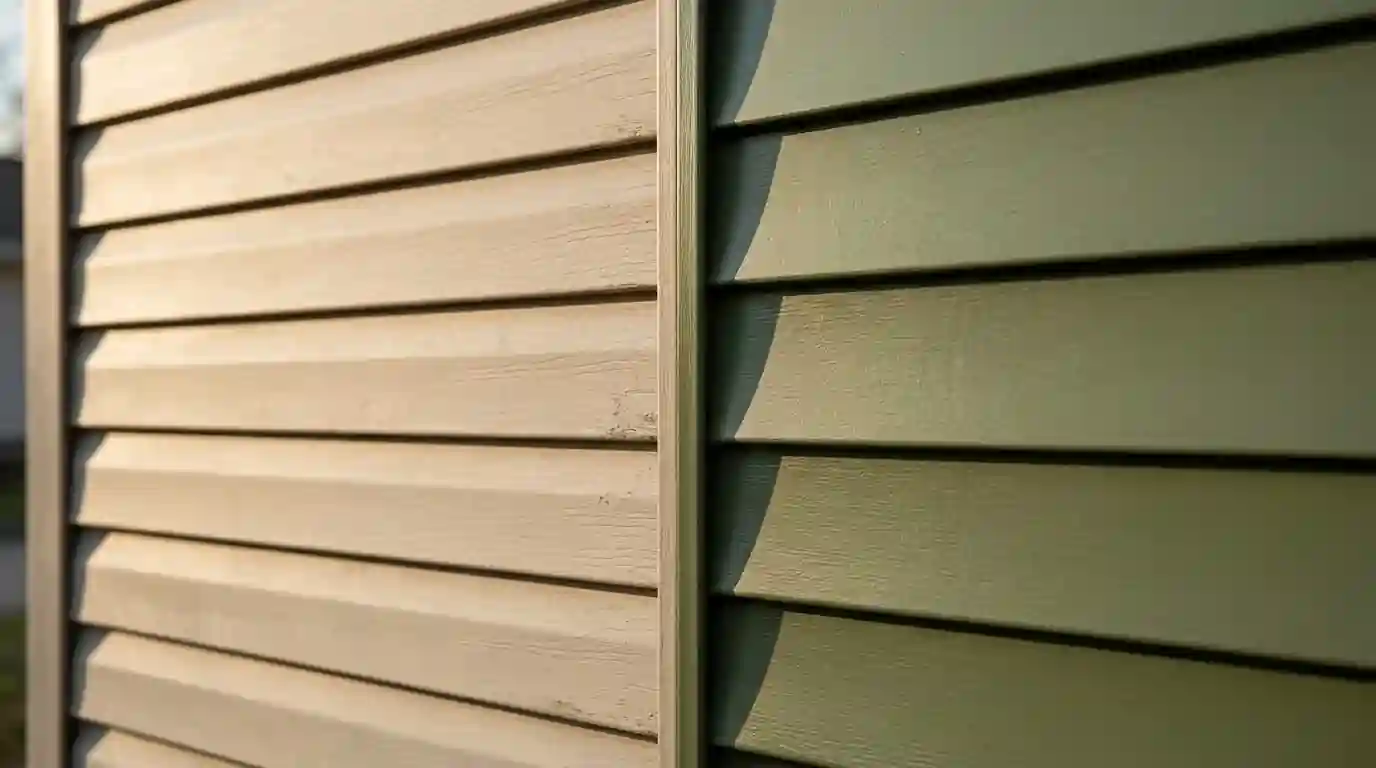
Fiber cement holds paint well, so when it looks tired the factory finish has usually faded and chalked rather than failed. The weak spots are where boards meet trim, windows and corners: caulk shrinks there, and any cut end the installer left unprimed soaks up water. We wash the siding, replace failed caulk with a paintable sealant, prime bare edges and apply two finish coats. On a big color change, the second coat keeps the wall from looking patchy in low, raking light.
Hardboard siding
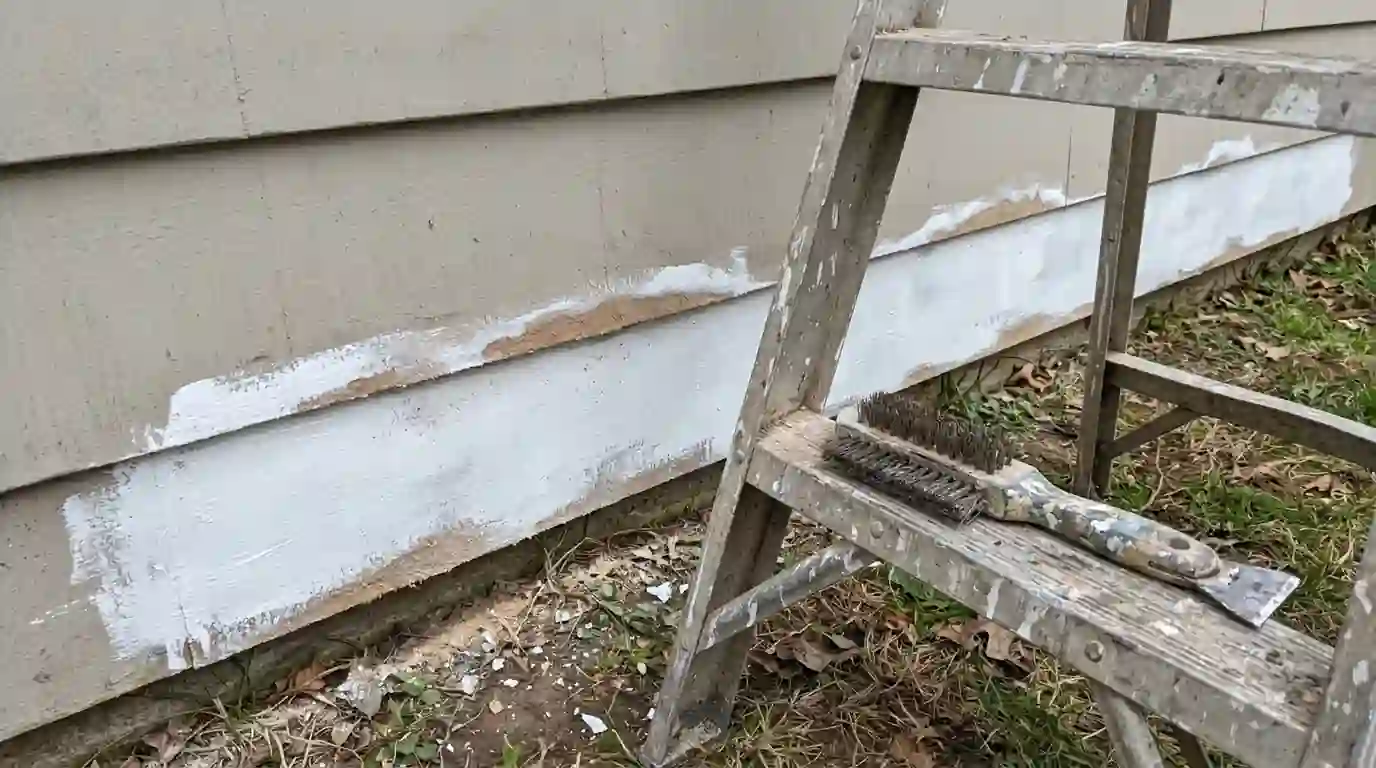
Hardboard is pressed wood fiber, and it stays sound only while its paint film keeps water out. Once the bottom edges of the laps lose their coating, they swell, soften and flake. We probe every suspect board with a screwdriver; soft or swollen pieces are replaced before anyone paints, and sound ones are sanded smooth. Every exposed edge and nail hole is primed and sealed, then two coats of exterior acrylic go on. Skip the edge work and swelling returns under the new color.
Mixed vinyl, steel and stone fronts in East Naperville
Sherwin-Williams rates its Duration Exterior Acrylic Latex for application down to 35°F, and it self-primes with one coat on repaints and two on bare surfaces, which helps on boards we have just replaced. In East Naperville, traditional homes and ranches sit beside newer modern-farmhouse and Craftsman-style builds that combine vinyl, steel and stone. On those mixed fronts we mask the stone, test each cladding for adhesion and keep painted vinyl in a safe color range.
How a siding repaint is sequenced
- Inspect and wash. Probe soft boards, test the chalk, then wash and let it dry.
- Repair and prime. Replace swollen boards, recaulk joints and prime bare spots.
- Paint. Two coats of exterior acrylic, brushed into the laps and rolled.
- Final look. Walk every side of the house with you and touch up misses.
Signs your siding is ready for paint
- Chalk on your handRub the siding and fine powder comes off, a sign the finish has broken down.
- Faded sunny wallsSouth and west walls look washed out beside the shaded north side.
- Swollen bottom edgesHardboard laps flare or flake along the bottom where water has crept in.
- Open caulk at the trimGaps where siding meets windows and casing let water slip behind the boards.
Siding paints and primers we reach for
Sherwin-Williams and Benjamin Moore acrylics made for siding, PPG Paints on some repaints, and Zinsser primer on bare aluminum.
- Sherwin-Williams
- Benjamin Moore
- PPG Paints
- Behr
- Valspar
- Cabot
- Sikkens
- Olympic
- Zinsser
- Kilz
- Romabio
- Ready Seal
Jobs that often go with this one
Exterior House Painting
Scrape, caulk, prime, two coats
Exterior Trim, Soffit & Fascia Painting
Trim, fascia, soffits, shutters
Pressure Washing & Soft Washing
Siding, decks and flatwork
Wood Rot Repair Before Painting
Sills, fascia and jambs fixed first