Short answer
There is no fixed number of years. Around Naperville, a paint film has to survive a climate that runs from a 25.2°F January mean to 75.4°F in July, with 37.86 inches of precipitation and 38.4 inches of snow in a normal year. Prep, primer, two full coats and the surface underneath decide whether that life is short or long.
Why nobody can promise a set number of years
Ask ten painters how long exterior paint lasts and you will hear ten answers, because the paint is only one variable. The same can lasts very differently on sound wood that was scraped, primed and given two coats than on chalky siding that got one quick coat in a cold October week.
What you can predict is the order in which things fail and the conditions that speed it up. Sun, standing water, freeze-thaw cycles and bare wood are the enemies; good prep and application in the right temperatures are the defense. The sections below cover each one, plus a yearly check that lets you repaint on your schedule instead of the house's.
Housing age plays a part around here too. Census survey data puts Naperville's median build year at 1990, so a large share of houses are on their second or third exterior coat. Each repaint adds film, and when older layers lose their grip, new paint comes off with them. A house with many coats needs more scraping to a sound base than one on its first repaint.
What a Chicago-area year does to a paint film
National Weather Service normals for O'Hare, covering 1991 to 2020, show a January mean of 25.2°F and a July mean of 75.4°F, with 37.86 inches of precipitation and 38.4 inches of snow in an average year. Wood siding and trim swell and shrink across that range, and the paint on top has to flex with them every season.
Freeze-thaw cycles do the most damage. At O'Hare the normal first fall freeze comes on October 19, and the last one in spring on April 21. Between those dates, water that slips behind paint through an open joint or a cracked caulk line freezes, expands and lifts the film. That is why caulking and sealing end grain matter as much as the topcoat.
Moisture from inside the house adds to the load. Bathrooms, kitchens and laundry rooms push warm, damp air into exterior walls in winter, and paint on the outside of those rooms often blisters first. Ice dams and overflowing gutters do the same at the eaves. If paint keeps failing in one spot, look for the water source before repainting it again.
| Measure | Normal | Why it matters for paint |
|---|---|---|
| January mean temperature | 25.2°F | Wood shrinks and caulk stiffens |
| July mean temperature | 75.4°F | Wood swells and sun bakes south walls |
| Average overnight low, April | 40.3°F | Outdoor painting season opens |
| Average overnight low, October | 45.4°F | Last steady month for exterior coats |
| Average overnight low, November | 34.1°F | Below the Duration and Aura minimums |
| Annual snowfall | 38.4 inches | Snow sits on sills, rails and decks |
The parts of a house that fail first
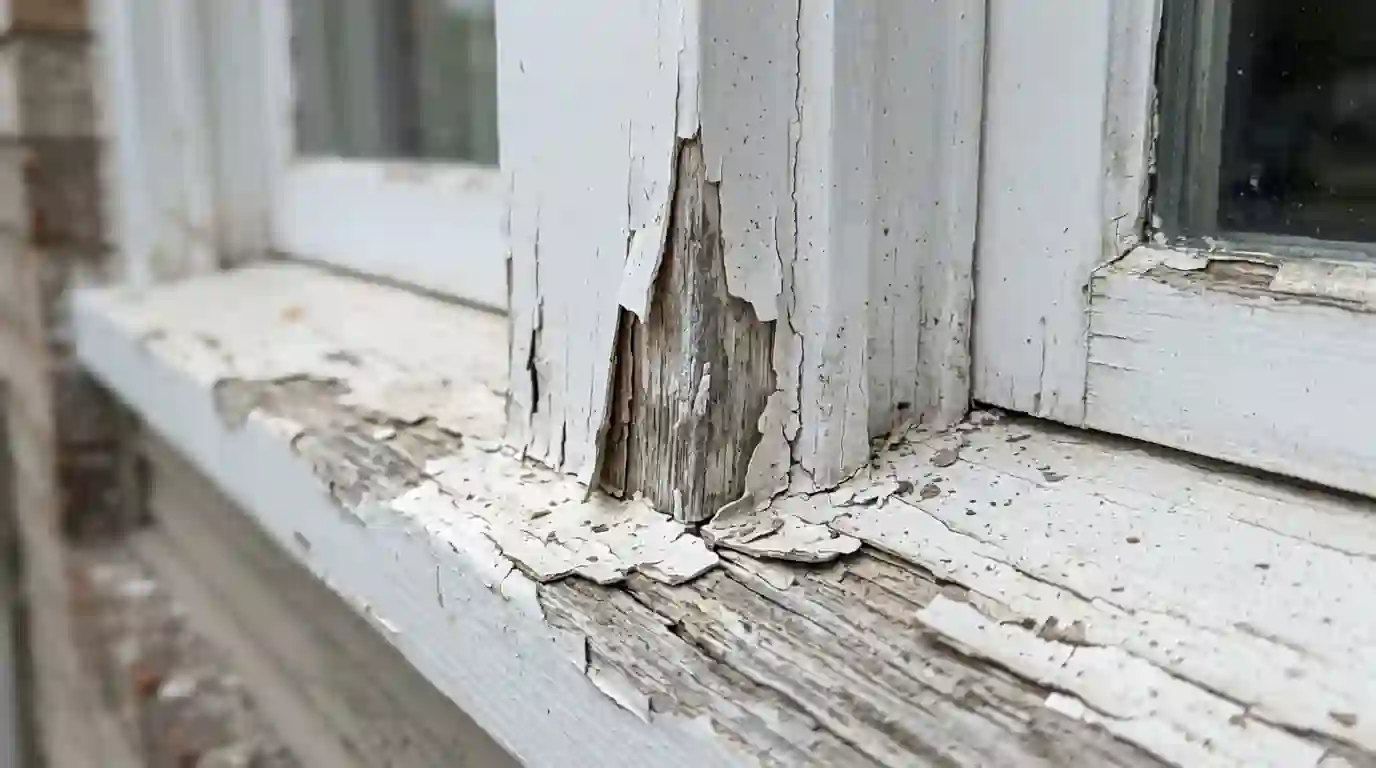
- Window sills and the bottom rails of sashes, where water sits.
- The lower edges of trim boards and garage door jambs near the driveway.
- South and west walls, which take the most afternoon sun.
- Fascia and rake boards under gutters that overflow.
- Horizontal surfaces such as porch floors, railings and deck boards.
Check these spots first each spring. If they are peeling while the big wall areas still look good, a trim and fascia repaint can buy time before the siding needs it. Soft wood found along the way should be fixed first, since rotted sills and jambs will push off new paint within a season or two.
Prep and application that add years
Most early failures trace back to prep. Loose paint has to be scraped back to a sound edge, bare wood primed, open joints caulked and chalky surfaces washed. Sherwin-Williams notes that its Duration Exterior self-primes with one coat on repaints but needs two coats on bare surfaces, a good reminder that raw wood needs more film than painted wood.
Temperature matters at the moment paint goes on. The Aura Exterior satin sheet from Benjamin Moore says not to apply when air and surface sit below 40°F, and Duration is rated down to 35°F. Average overnight lows at O'Hare reach 40.3°F in April and are still 45.4°F in October, so the usable stretch is spring through mid-fall. Paint applied in a cold snap can look fine for a while and then fail early. A full exterior repaint done inside that window starts with the odds in its favor.
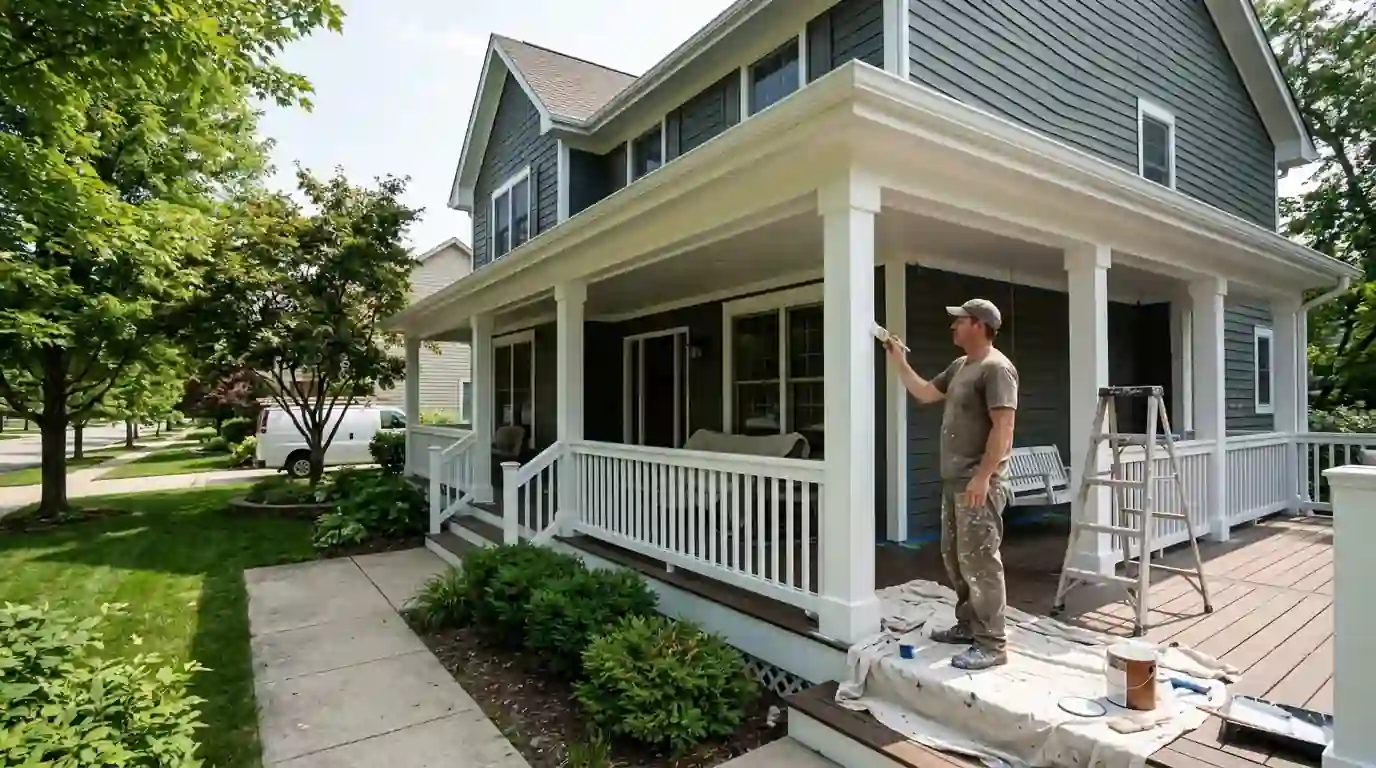
If your sills or trim are starting to peel, call and we will come look before a small repair turns into a big one.
Call (630) 760-2729Surface by surface: what holds paint longest
Different surfaces age at different speeds. Painted cedar and pine trim move the most with moisture and need the closest watching. Hardboard siding holds paint well until water gets into a cut edge, then it swells. Aluminum siding chalks, so it needs washing before it will hold a new coat. Vinyl can be painted, but only in colors that will not overheat the panels.
Stain behaves differently from paint. Semi-transparent stain on cedar wears away rather than peeling, so it is renewed more often but with less prep. Solid stain looks like paint and lasts longer on vertical siding, yet it can peel on horizontal boards. If your house has stained cedar siding, plan on recoats rather than a strip-and-start-over job, as long as you keep up with them.
Color plays a smaller part than most people expect, but it still counts. Dark colors absorb more heat on south and west walls, which makes wood move more and can fade the paint faster. Light and mid-tone colors tend to hold their look longer in full sun, which is worth weighing if you are choosing a new scheme for a sunny face of the house.
A yearly walk-around that stretches the next repaint
- Walk the house each spring with a notepad and a phone camera.
- Press a thumb into sills and the bottoms of jambs to feel for soft wood.
- Look for hairline cracks in caulk at corners and around windows.
- Rinse mildew and dirt off shaded walls with a gentle wash.
- Touch up small bare spots before winter, not after.
Small fixes made early keep water out of the wood, and dry wood holds paint. When peeling spreads past a few spots on more than one side of the house, it is time to price the full job; the exterior repaint budget guide shows how that quote is built.
Services this guide relates to
Exterior House Painting
Scrape, caulk, prime, two coats
Exterior Trim, Soffit & Fascia Painting
Trim, fascia, soffits, shutters
Cedar Siding Staining
Cedar cleaned and stained
Wood Rot Repair Before Painting
Sills, fascia and jambs fixed first
Sources: weather.gov, weather.gov (2), sherwin-williams.com, media.benjaminmoore.com, point2homes.com.