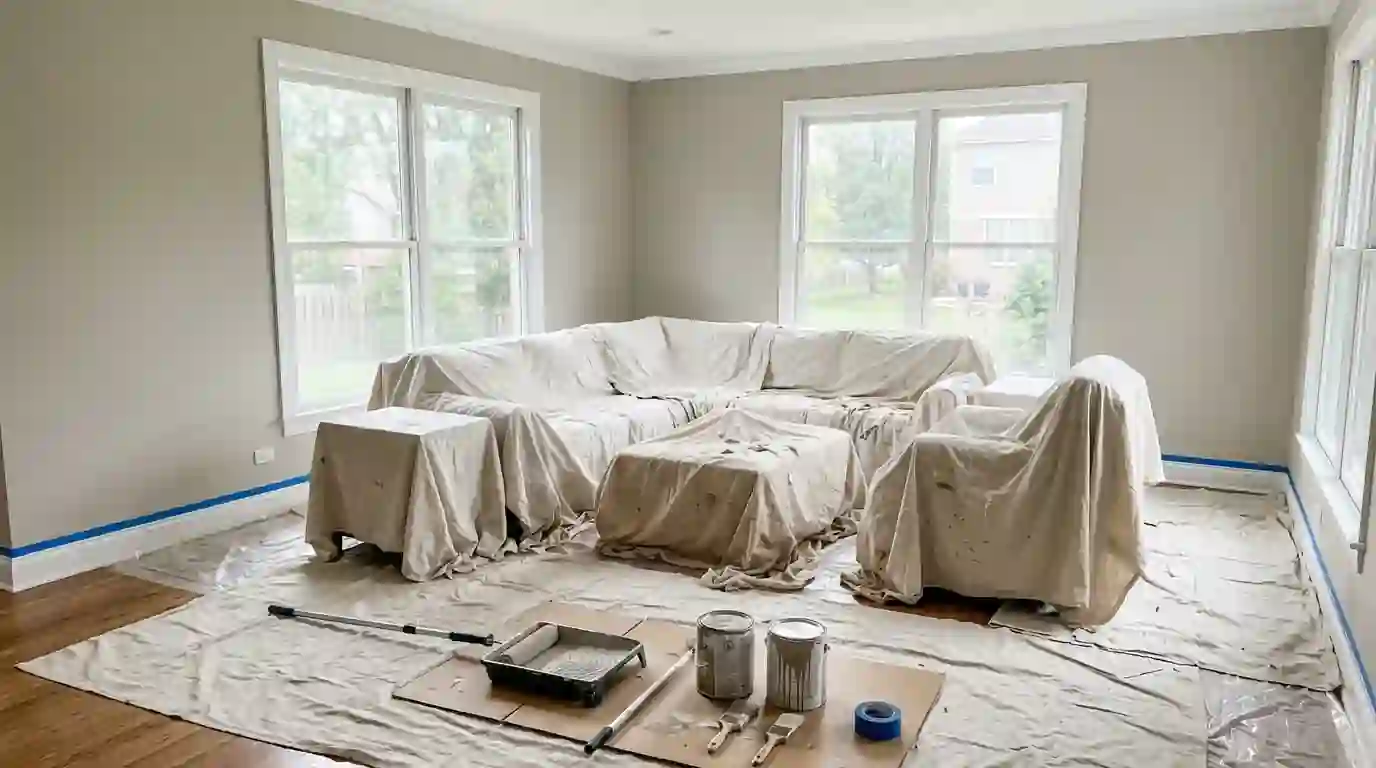
Short answer
In Naperville, refinishing a staircase means the stairs stay in use, so we work one side at a time or alternate steps while coats cure. Angi publishes $345 to $1,324 for refinishing 12 to 17 steps, and HomeAdvisor lists $321 to $1,255 for stairs and railings.
Why stairs wear out before the rest of the woodwork
The handrail is gripped on every trip, the nosing of each tread takes shoe scuffs, and spindles catch vacuums and laundry baskets. A finish that still looks fine on a door can be worn through on a rail.
Most staircases need a mix of work rather than one finish: rails restained, spindles and risers painted, treads sanded and sealed with a floor-grade clear coat.
Staircase refinishing price ranges
Both rows are published planning ranges for stair work, not our quote, and spindle count plus the finish you pick set the real figure.
| Job | Typical range | Unit | Source |
|---|---|---|---|
| Stair refinishing (12 to 17 steps) | $345 to $1,324 | total (typical range) | Angi |
| Stairs and railings refinishing | $321 to $1,255 | total (normal range) | HomeAdvisor |
What moves the price
- Number of steps and spindles
- Restaining, painting or a mix of both
- Worn treads that need sanding to bare wood
- Curved rails, landings and a second run
- Loose spindles to reglue or pin
Painted, stained or two-tone stairs
Each look wears differently, so the choice depends on how hard the stairs are used.
| Look | Shows wear | Upkeep | Suits |
|---|---|---|---|
| All stained | Hides scuffs best | Clear recoat every few years | Traditional oak interiors |
| Stained treads, painted risers | Risers scuff at the toe | Touch up risers as needed | Open stairs seen from the foyer |
| Stained rail, white spindles | Spindles show dust and nicks | Wipe and touch up | Brightening a dark stairwell |
| All painted | Treads chip and wear fast | Frequent touch-ups | Back stairs with light traffic |
Handrails and newel posts
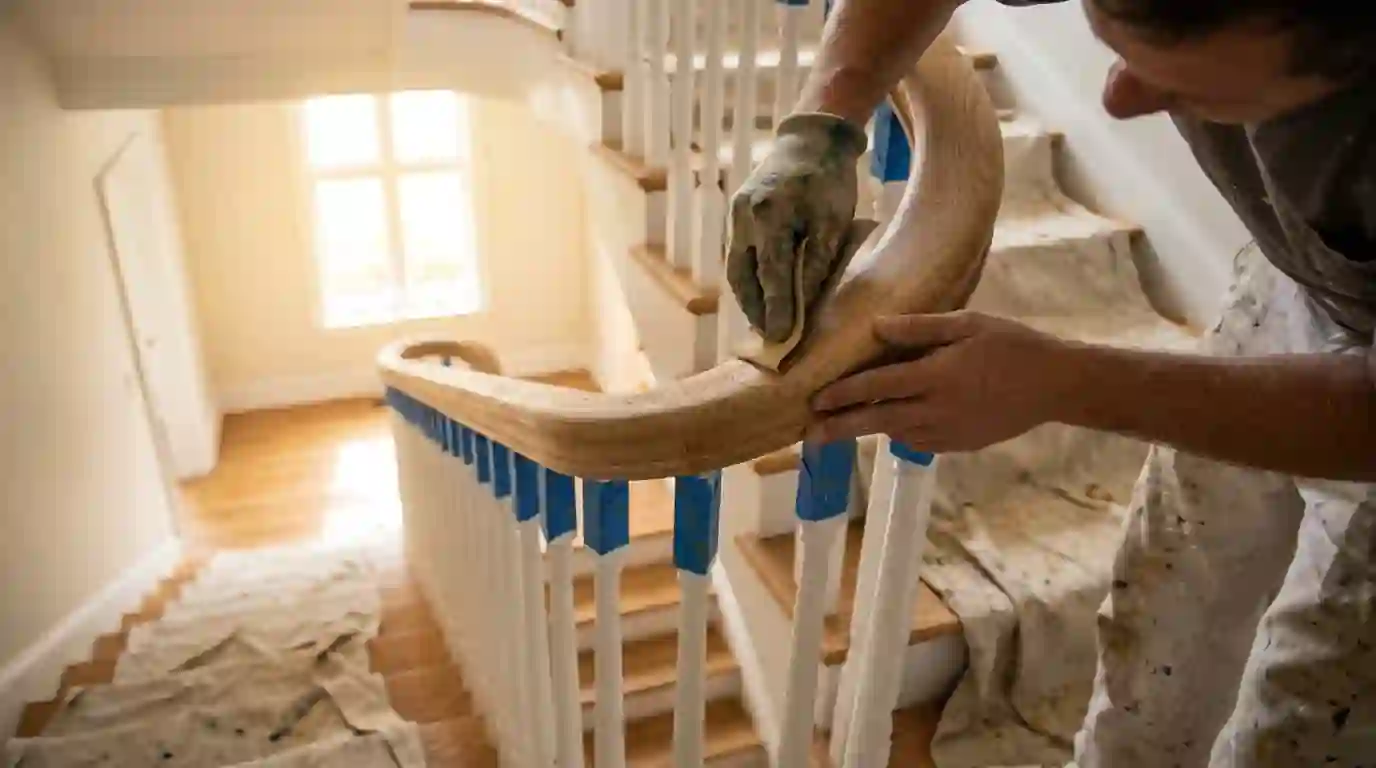
Handrails wear through where everyone grabs: the top of the newel, the start of the rail and the turn at the landing. Hand oils soften the finish, so we degrease first, then sand the rail and newel by hand to follow the profile. Restaining blends worn areas back to one color, and a durable clear coat goes on in two or three thin layers. A painted rail shows hand wear sooner, so we usually suggest keeping rails stained or using a very hard enamel.
Spindles and balusters
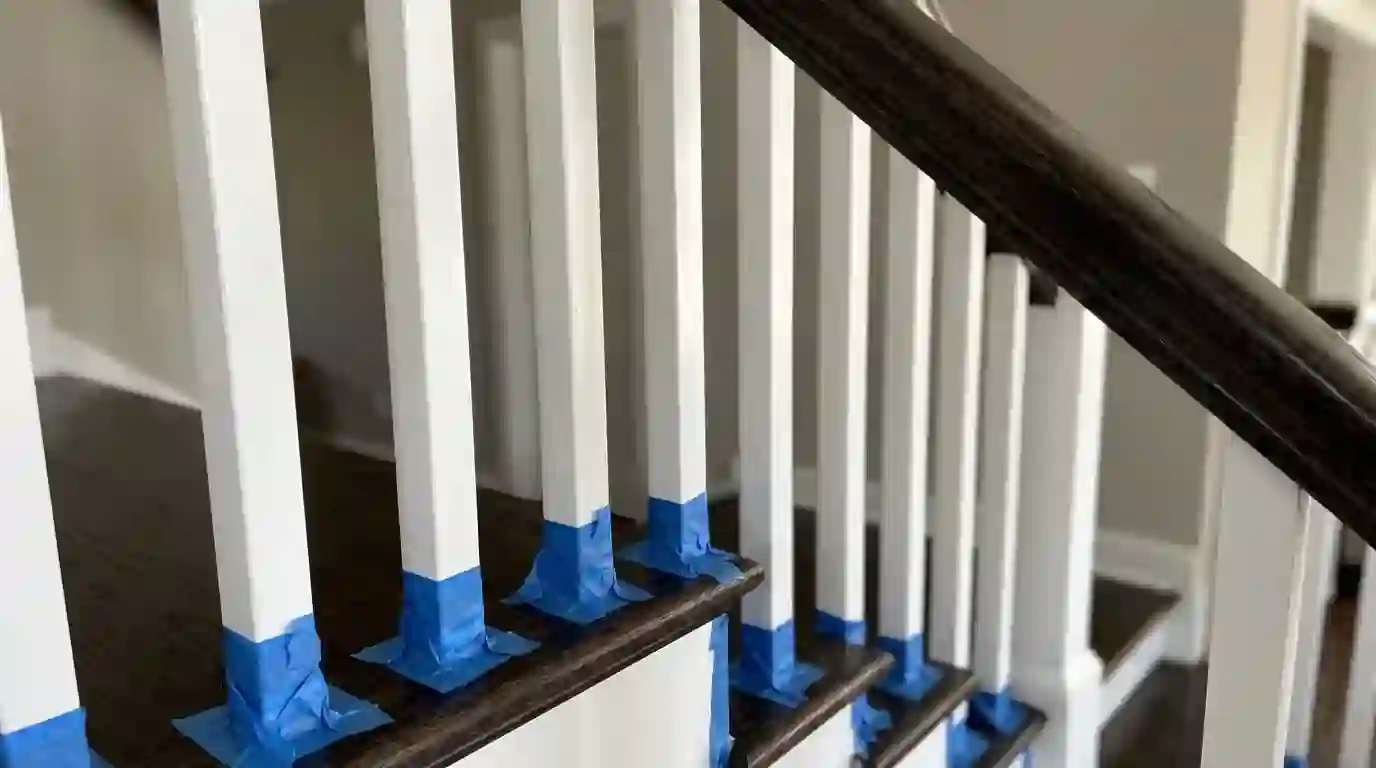
Spindles are slow work because each one has four faces and turned details to sand, prime and paint. Turning stained oak spindles white is a popular update, and it needs a bonding primer that blocks oak tannin so the white stays clean. We tape the rail above and the tread below every spindle so the lines stay crisp. Wrought iron balusters get a metal primer and enamel instead. Loose spindles are reglued or pinned before paint, because a wobble will crack the new finish.
Stained treads with painted risers
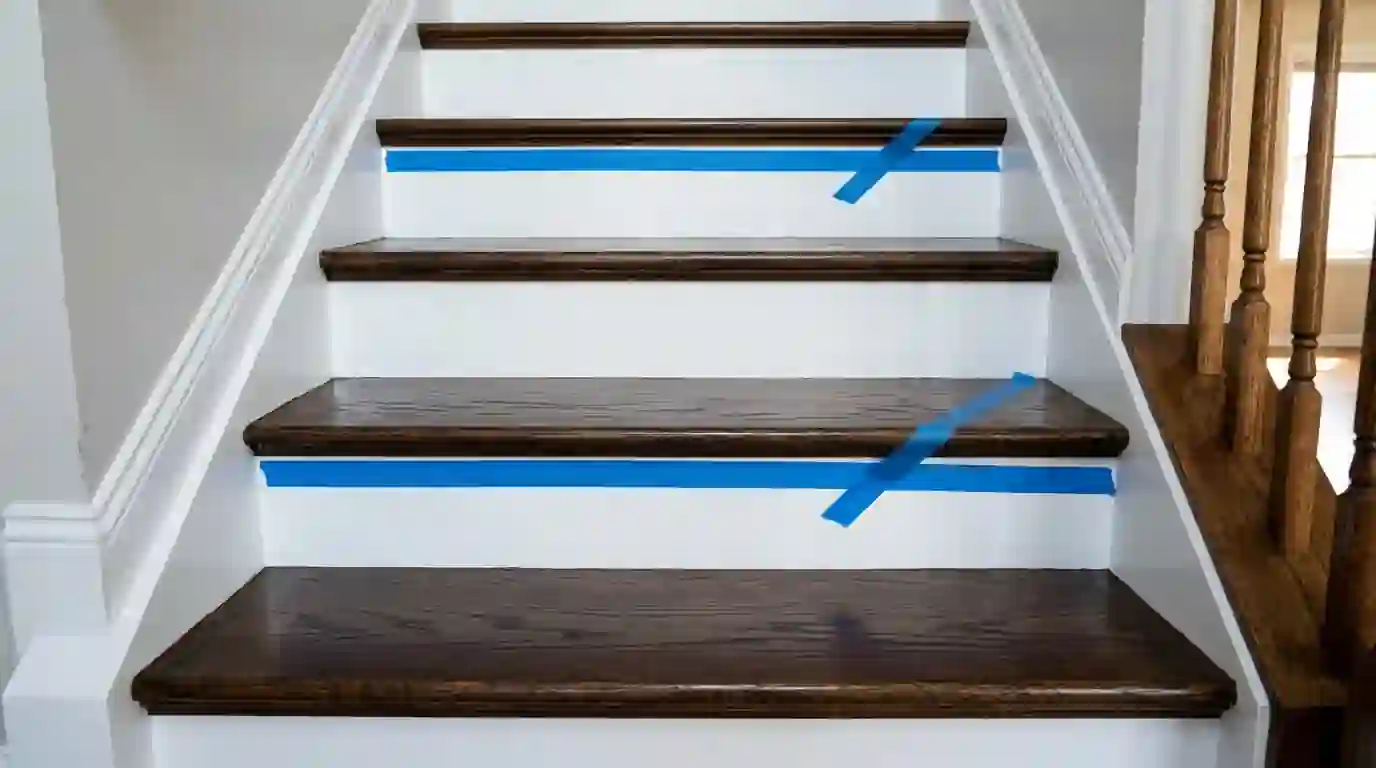
Dark treads with white risers is a classic look, and it splits the work by surface. Treads are sanded to bare wood where the finish has worn through, then stained and sealed with a floor-rated clear coat that can take shoes. Risers and stringers are scuffed, primed and painted in enamel. We do alternate steps, or one side of each tread, so the stairs stay usable. If the walls beside the stairs look tired, painting the stairwell walls can be added to the same visit.
What a staircase job covers
A staircase refinish normally includes the following, unless you tell us otherwise:
- Hand-sanding rails and newels to the profile
- Securing loose spindles before any finish
- Taping every spindle top and base
- Bonding primer on oak going to white
- Floor-rated clear finish on stained treads
- A walkable path kept open each day
Long staircases in West Wind and Stillwater
West Wind Estates was built mainly between the mid-1980s and late 1990s, so a stair rail there may be 25 to 40 years old. Its single-family homes run about 2,514 to 3,835 square feet, with four to six bedrooms. In Stillwater, the median home was built in 2001 and single-family houses average about 4,378 square feet. Bigger houses tend to mean longer rail runs, a landing turn or two and more balusters to count. That, more than the number of steps, drives the hours on a staircase.
How a staircase is refinished while you still use it
- Plan the sides. We decide which steps and which side stay open each day.
- Protect. Walls, floors and the landing covered, spindle bases taped off.
- Sand and prep. Rails and treads sanded, spindles scuffed, loose parts secured.
- Stain, prime, paint. Stain on the wood surfaces, primer and enamel on painted parts.
- Clear coat. Floor-grade finish on treads and thin protective coats on the rail.
Jobs that often go with this one
Two-Story Foyer & Vaulted Ceiling Painting
Foyers, vaults and stairwells
Interior Wood Staining & Clear Coats
Stained trim, paneling and built-ins
Trim, Baseboard & Door Painting
Hard-wearing enamel on trim and doors
Interior Painting
Single rooms to whole-house color changes