Short answer
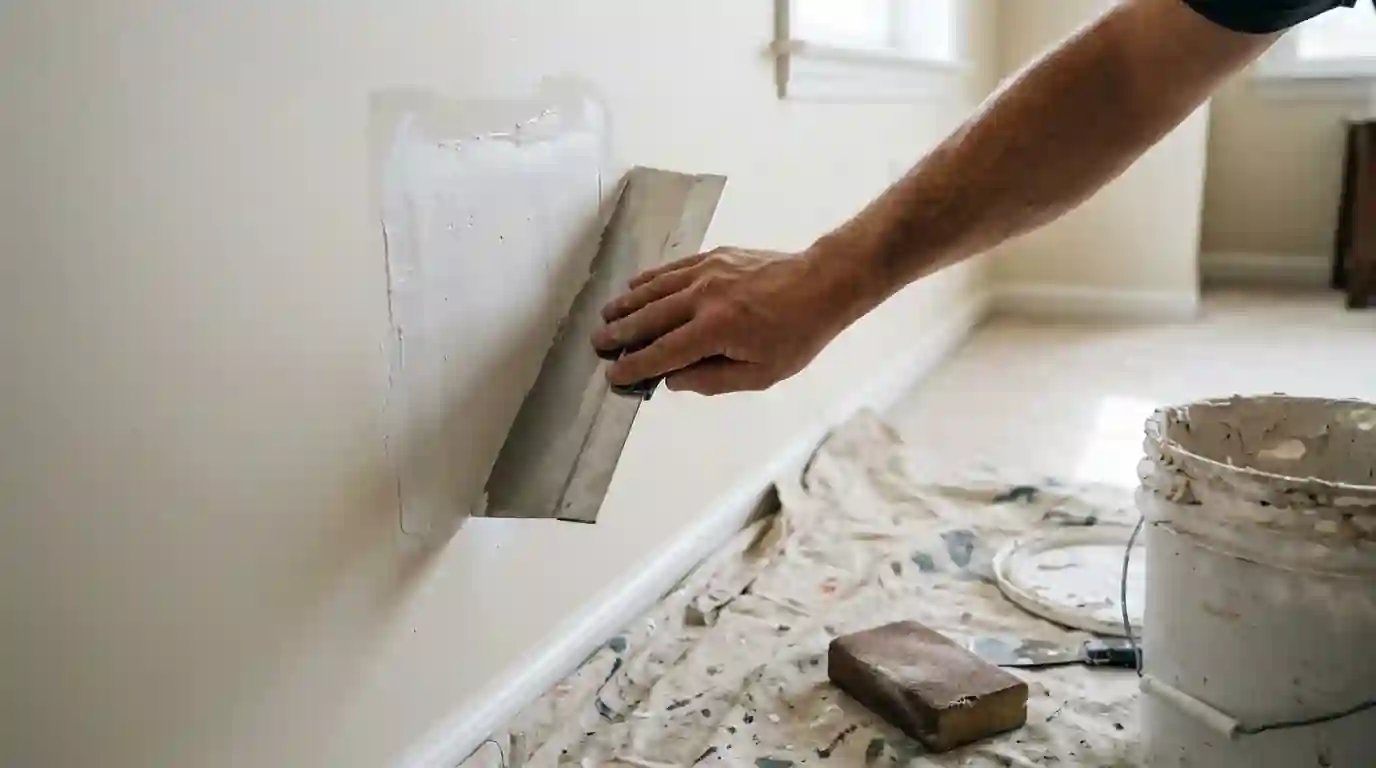
Drywall repair in Naperville needs at least two drying cycles, because joint compound has to dry before it can be sanded and coated again. HomeAdvisor publishes a normal range of $296 to $930 for drywall repair. Repainting the whole wall afterward hides a patch best.
Why a patch shows through new paint, and how to stop it
Patches show for three reasons: the mud was never sanded flat, bare compound soaked up paint differently from the wall around it, or the sheen changed at the edge.
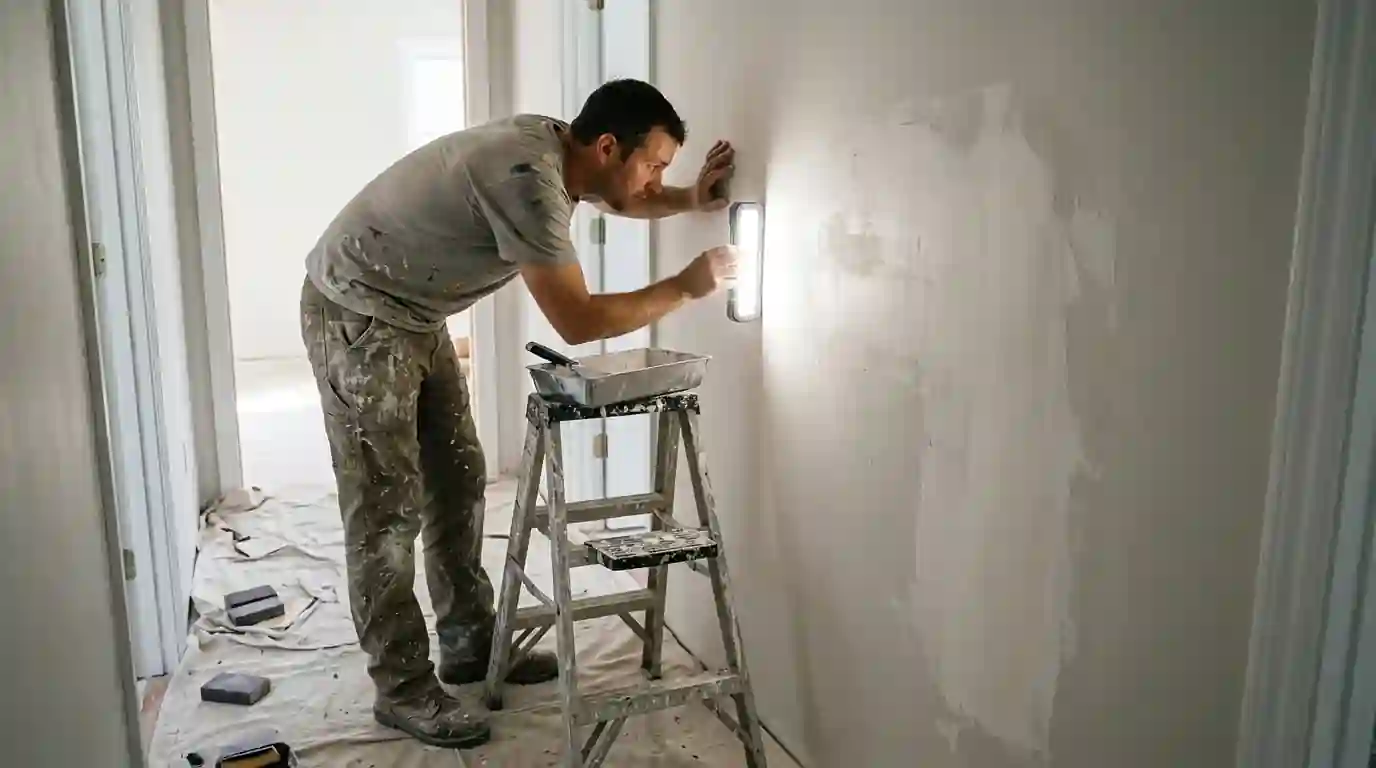
We deal with all three. Patches are feathered wide and checked with a work light held flat to the wall, then primed, and paint is rolled from corner to corner instead of dabbed on top.
What drywall repair costs in Naperville
HomeAdvisor's published range below is for planning only and is not a quote from us.
| Job | Typical range | Unit | Source |
|---|---|---|---|
| Drywall repair | $296 to $930 | total (normal range) | HomeAdvisor |
What moves the price
- Number of patches and how spread out
- Holes needing new drywall pieces
- Matching knockdown or orange peel texture
- Repainting the full wall or room afterward
- High walls and stairwells needing ladders
Drywall fixes you can handle, and when to call
Small dings make a good first project, while bigger damage rewards practice with a taping knife.
Fine to do yourself
- Nail holes and small anchor holes
- A dent or two in one wall
- Touch-ups on a wall you will repaint
Worth calling a painter
- Doorknob and fist-size holes
- Cracks that keep coming back
- Patches on ceilings and stairwells
Holes and dents
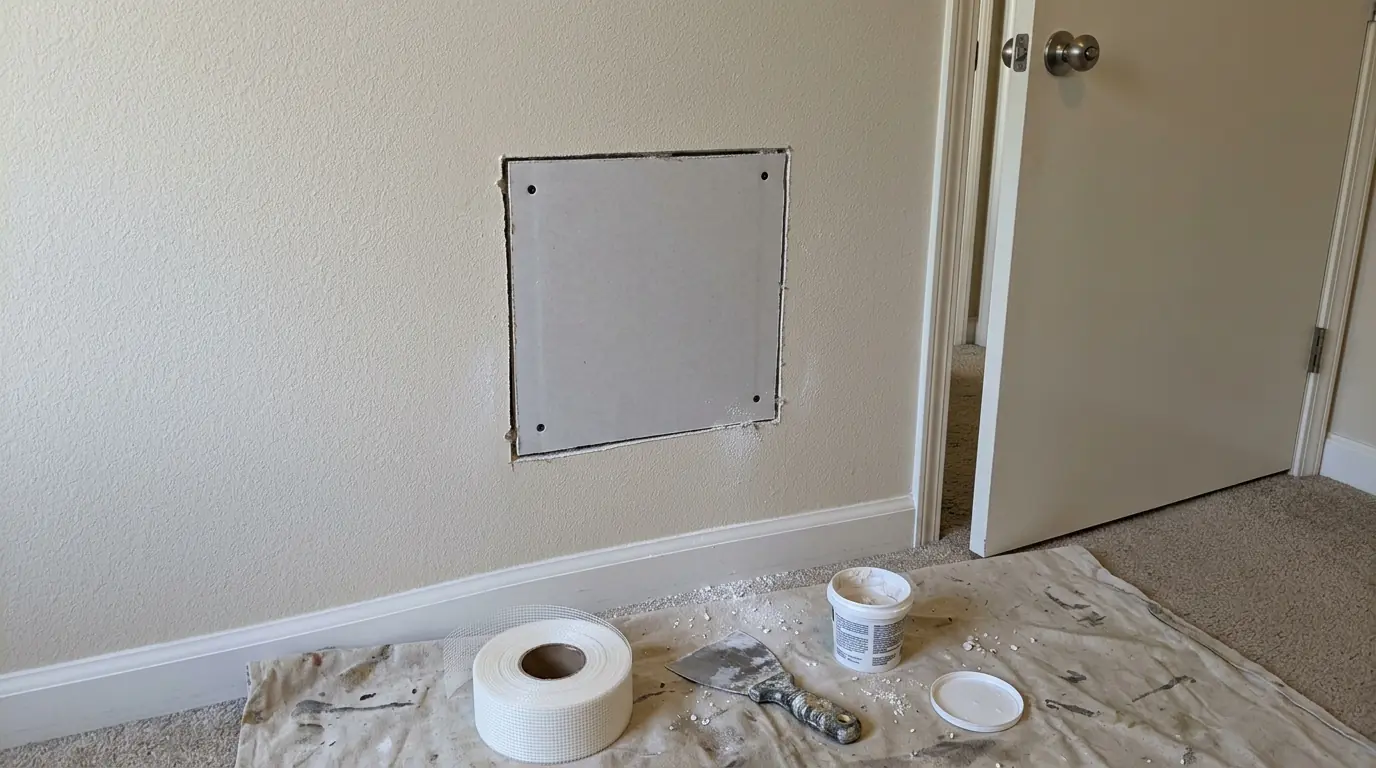
Small dents and anchor holes take a skim of lightweight compound and a light sanding. Anything bigger than a fist, like a doorknob strike or a TV mount pulled out, gets cut square, backed with a wood strip or clips and filled with a new piece of drywall. The seams are taped and coated three times, each coat wider than the last, so the patch tapers into the wall instead of standing proud. A door stop afterward keeps the same hole from coming back.
Nail pops
A nail pop is the round bump or crumbled circle where a drywall nail has backed out, usually because the framing dried and shrank after the house was built. Hammering it back down only works for a season. We drive a drywall screw a couple of inches away to pull the board tight to the stud, then set or remove the old nail, fill both spots and sand. Pops tend to run in lines along a stud, so we check the whole row.
Settlement cracks
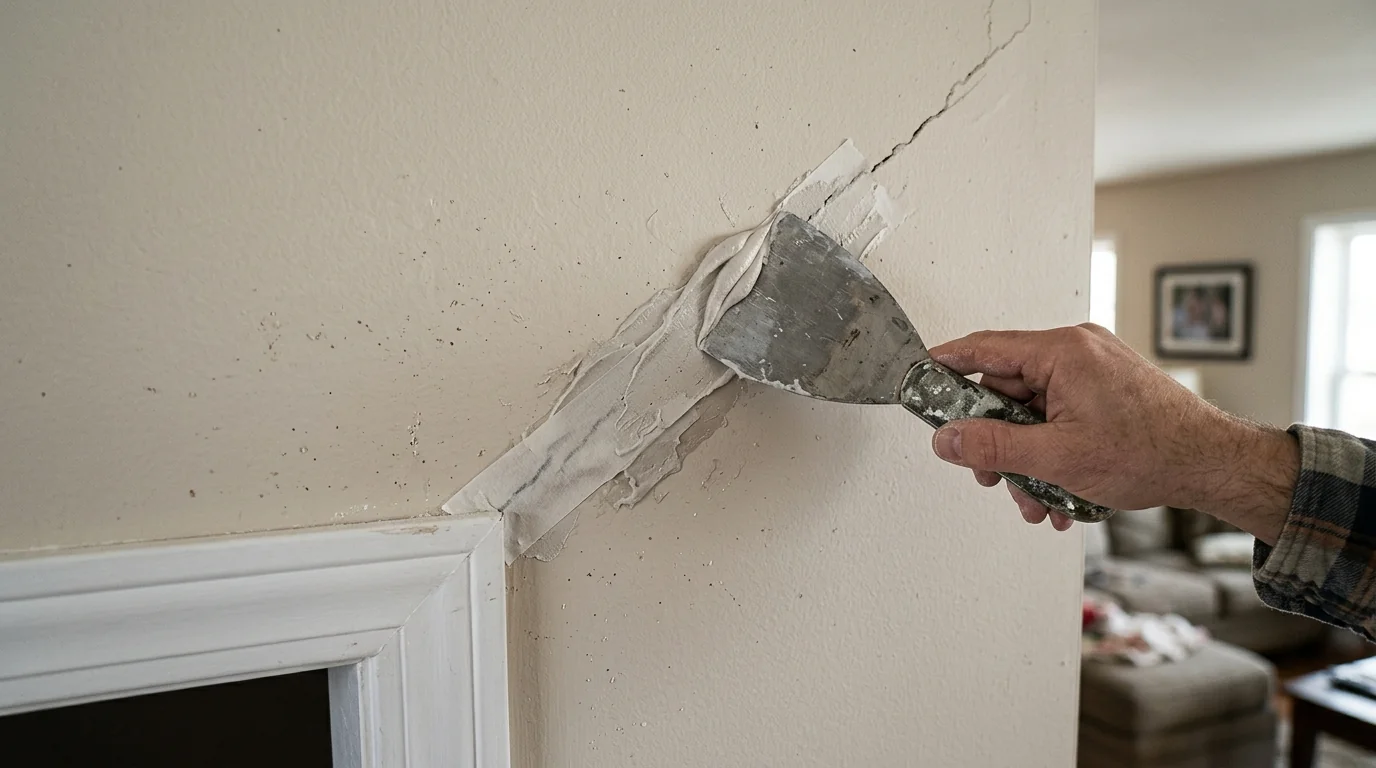
Cracks that start at the corner of a door or window and run at an angle are usually normal seasonal movement in a house. Caulk or spackle alone will crack again in the same spot. The lasting fix is to open the crack slightly, bed paper or mesh tape over it, and feather two or three coats of compound out several inches each side. If a crack keeps widening, reopens within weeks or comes with doors that suddenly stick, have a structural problem ruled out before we patch it.
Patch and paint
A patch is only finished once it is painted, and that is where homemade repairs give themselves away. Raw compound absorbs paint differently from the wall around it, so it flashes as a dull or shiny spot unless it is primed first. Even with a perfect color match, touching up a small square on old paint usually shows, because the old coat has faded. We repaint the full wall, inside corner to inside corner, so the repair cannot be found.
Ranches and split-levels in North Naperville
Between 1960 and 2000 Naperville went from 12,933 residents to 128,358, and through the 1990s it was one of the ten fastest-growing places in the country. A lot of drywall went up quickly in that run, and those walls have been settling ever since. In North Naperville, mid-century ranches and split-levels sit beside newer traditional builds, so one street can need crack taping in an older stairwell and nail-pop fixes in a newer house.
How a drywall repair visit goes
- Mark every flaw. Holes, pops and cracks circled in pencil under a raking light.
- Cut and fill. Big holes squared and backed, small ones filled, cracks taped.
- Coat and sand. Two or three feathered coats, each dried and sanded flat.
- Prime. Every patch sealed so the finish paint dries evenly.
- Paint the wall. Full wall rolled corner to corner so no patch shows.
Wall damage worth fixing before you paint
- Round bumps in a lineNail pops along a stud, often worse after the first heating season.
- Diagonal cracks at cornersHairline cracks running up from door and window frames as the house moves.
- Peaked or split tape seamsJoint tape lifting or bubbling, often on ceilings or near bathrooms.
- Dents at knob and hip heightFurniture, doorknobs and chair backs leave dents that catch light at an angle.
- Old patches you can seeRidges or dull squares from earlier repairs that were never primed.
Jobs that often go with this one
Interior Painting
Single rooms to whole-house color changes
Skim Coating & Smooth Walls
Textured walls troweled smooth
Plaster Repair
Cracked and loose plaster reattached
Water Stain & Ceiling Stain Repair
Leak and smoke stains sealed