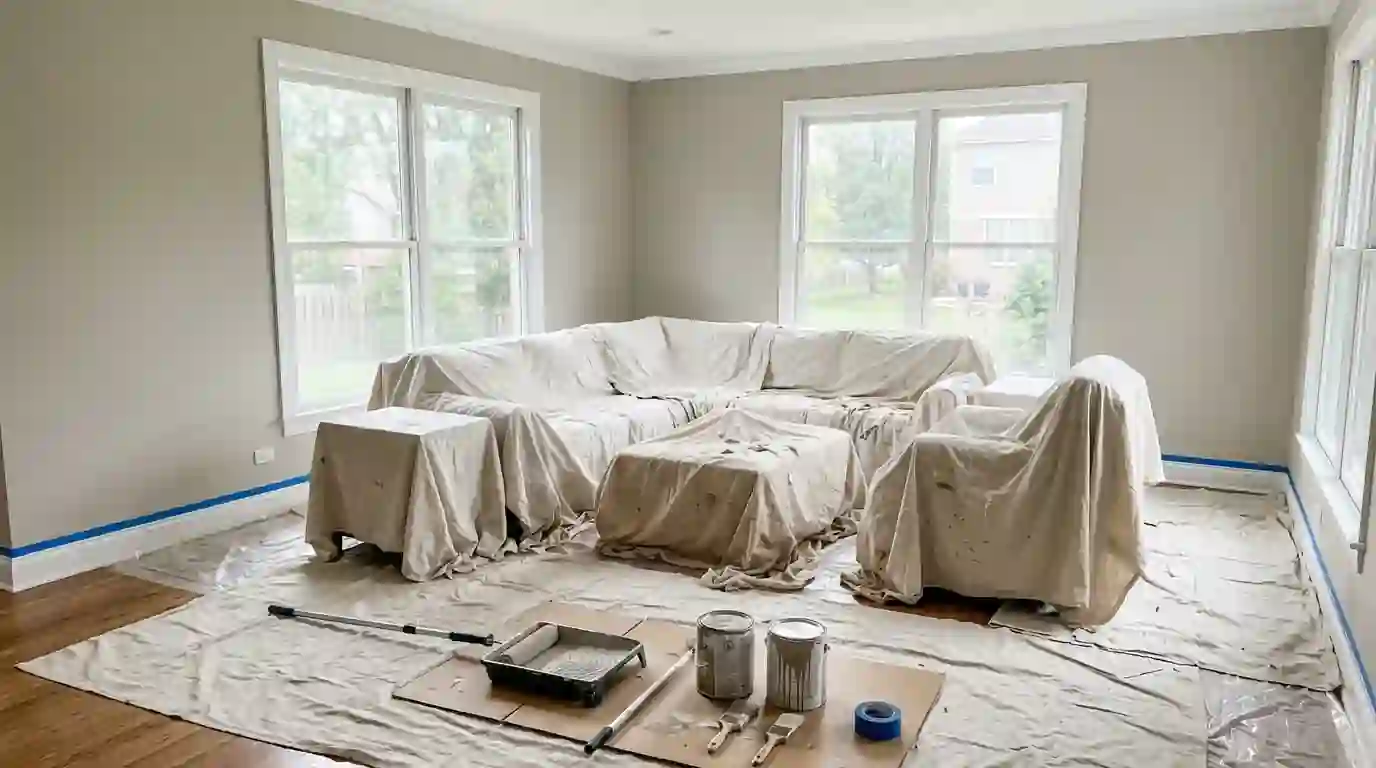
Short answer
Trim and door painting in Naperville is priced by the foot and by the door side. Published ranges run $1 to $4 per linear foot, and $70 per side for a simple door up to $380 for a multi-pane French door. Caulk, filler and sanding take most of the hours.
Why trim takes longer than walls, foot for foot
Trim is narrow, detailed and bumped every day by feet, hands and vacuums. Every inch is brushed along two edges, and any dent or open joint shows under a glossy finish.
That is why prep matters more than paint here. Gaps get caulked, nail holes filled and old gloss scuffed, so the new enamel grips instead of peeling off in strips.
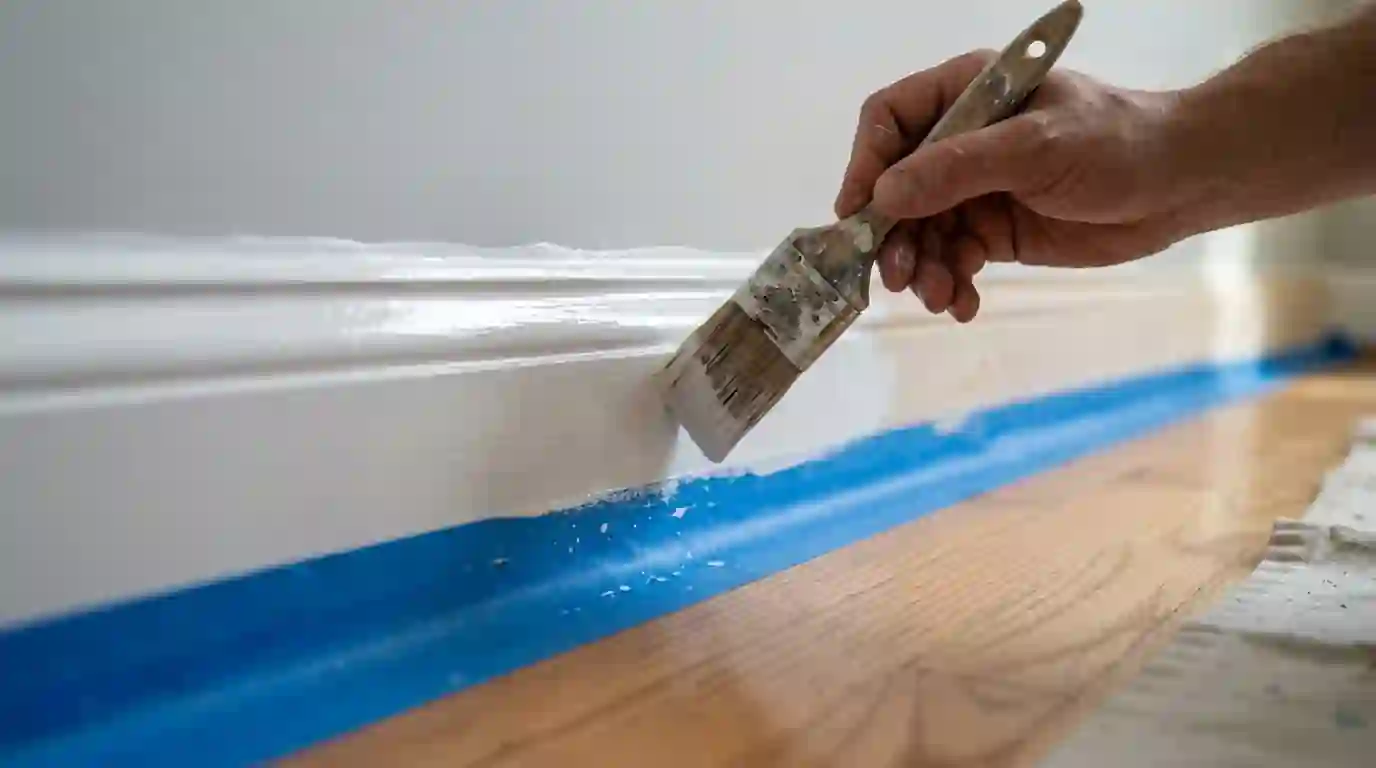
Trim and door painting ranges
These are published planning ranges for trim and doors, not our price; the walk-through counts your actual footage.
| Job | Typical range | Unit | Source |
|---|---|---|---|
| Baseboard / trim painting | $1 to $4 | per linear foot | HomeAdvisor |
| Interior door painting | $70 per side for simple doors to $380 per side for complex multi-paned French doors | per door side | Improovy |
What moves the price
- Linear feet of baseboard, casing and crown
- Number of doors and how detailed they are
- Stained wood that needs a bonding primer
- Brushing in place or spraying doors
Which enamel goes on trim and doors
The enamel decides how the finish levels and whether white stays white.
| Enamel type | Brush marks | Yellowing | Dry and cure |
|---|---|---|---|
| Waterborne alkyd | Levels out well | Stays white | Slow recoat, cures hard |
| Urethane acrylic | Good leveling | Stays white | Fast recoat, tough film |
| Oil-based alkyd | Levels best | Yellows in dim rooms | Overnight recoat, strong odor |
Trim you can tackle, and trim to leave to a painter
Repainting one door in the same color is a fair weekend job.
Fine to do yourself
- One door, same color
- Caulking a few baseboard gaps
- Touch-ups with leftover enamel
Worth calling a painter
- Stained oak trim going white
- A whole floor of doors
- Crown along tall walls
Baseboards and casing
Baseboards collect vacuum scuffs and a dusty film that has to be washed off before anything will stick. We caulk the gap along the top edge where the wall has shrunk away, fill nail holes and corner joints, and sand the old finish dull. Casing around windows and doors gets the same treatment, with a straight brush line where wood meets wall. Floor edges are taped or shielded so no enamel lands on hardwood or carpet, and every piece receives two full coats.
Panel and slab doors
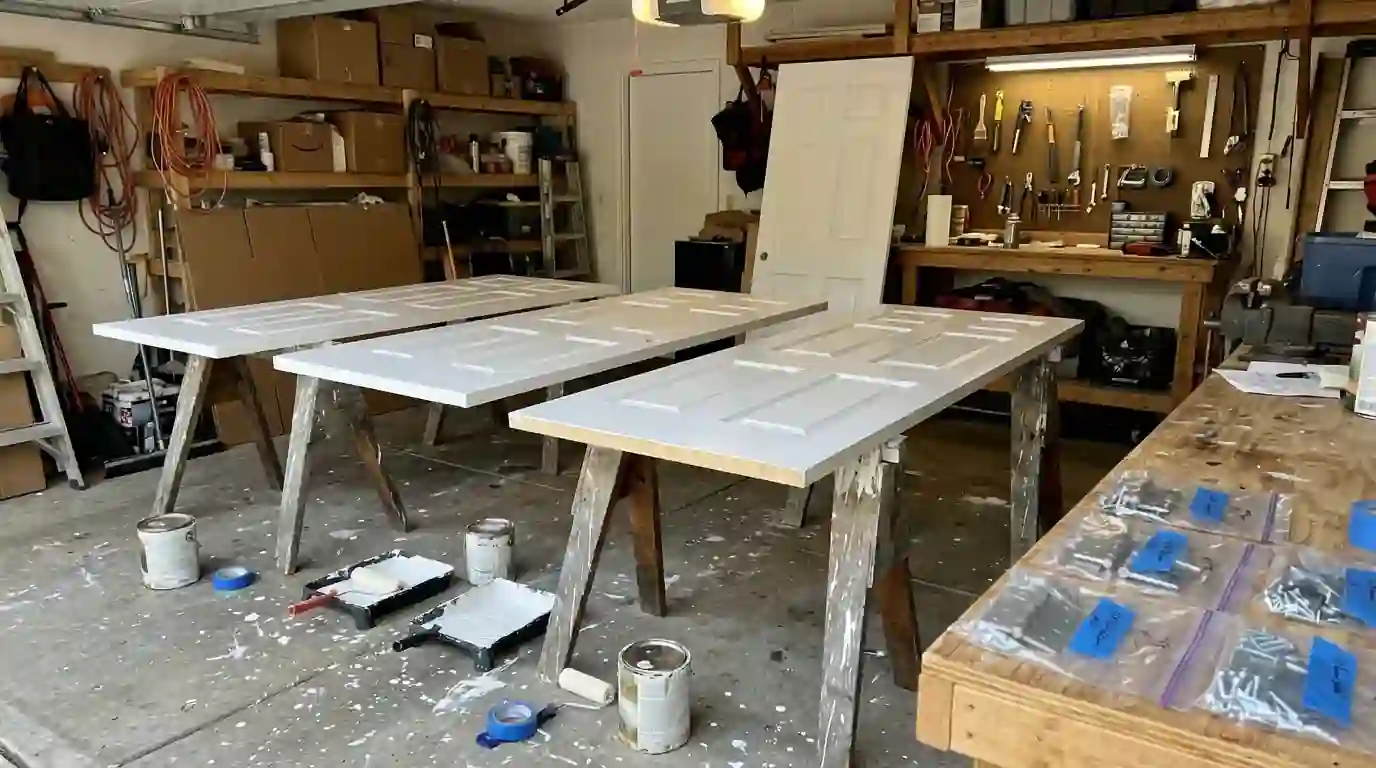
Six-panel doors show brush marks in every recess, while flat slab doors show roller stipple across their whole face. We brush them in place in the right order, panels first and then rails and stiles. Or we take them down and spray them flat in a garage. Hinges and knobs come off rather than being taped over. The door edges get painted too, a step rushed jobs often skip. Detail drives the price, so a French door with many panes costs far more per side.
Crown molding
Crown sits where the ceiling and wall meet, so it shows every crack that opens as the house moves with the seasons. We caulk the joints along the top and bottom, fill the miters and coped corners, and cut both edges by hand from a ladder. Because crown is seen from below at an angle, a satin or semi-gloss enamel helps it read as one crisp line. When the ceiling and walls are being painted too, crown goes last so its edges stay sharp.
Stained trim turned white
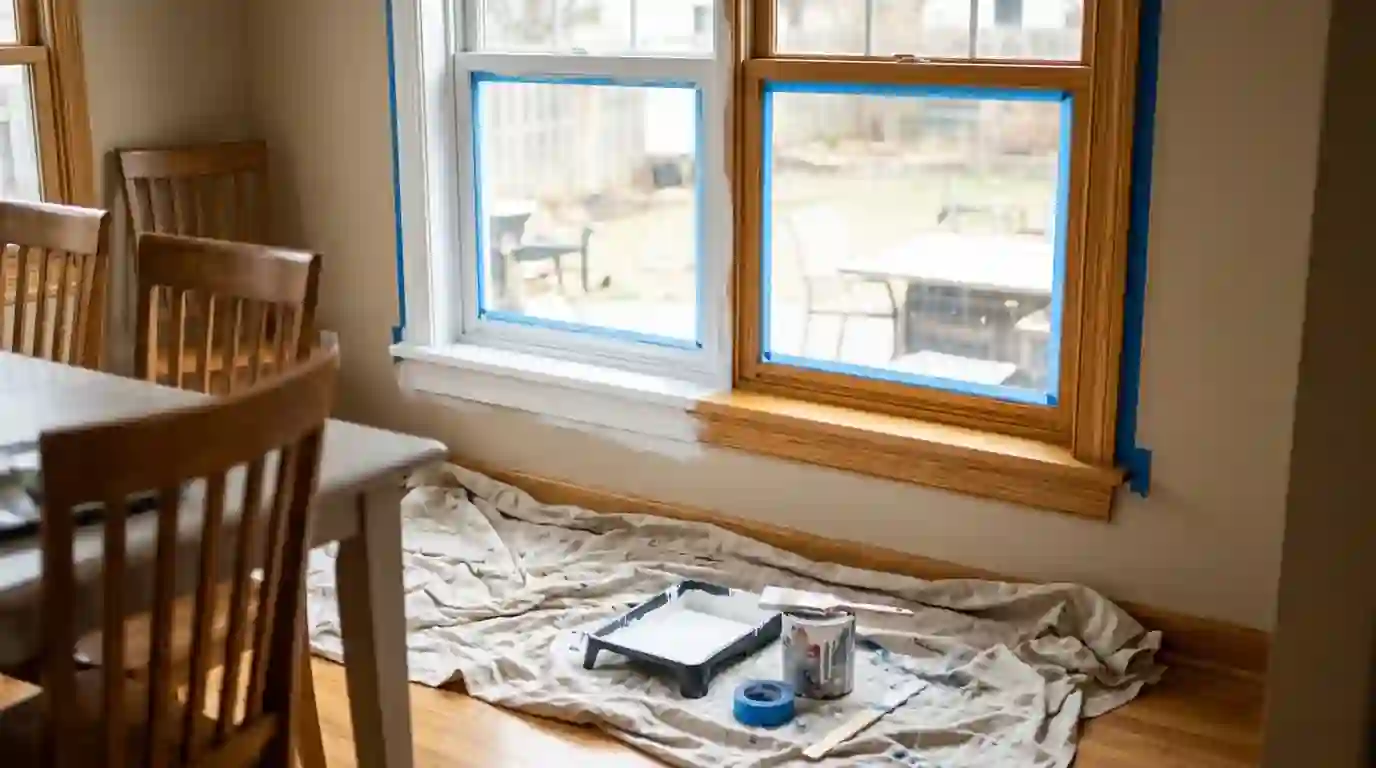
Turning honey oak or dark-stained trim white is a big change, and it fails fast when someone paints straight over the varnish. We clean and scuff-sand the clear coat, then apply a bonding primer that also blocks the tannin that can bleed yellow through white paint. Open grain can be left as a texture or filled smooth. Expect primer plus two coats of enamel. If you would rather keep the wood after all, refreshing the stained trim is the other route worth pricing.
Colonial casing and baseboard in Ranch View
Of the homes in Naperville CUSD 203's attendance area, 71.4% date from 1970 to 1999, and 84.2% are owner-occupied. Much of the trim in town is decades into its life. In Ranch View, New Traditional and Colonial-style houses with attached garages are typical. The door from the garage into the house usually takes the hardest daily wear, so it is often the most worn piece of trim in the home.
How trim and doors get a hard, smooth finish
- Count. Feet of trim and every door listed on the scope sheet.
- Clean and sand. Degreased, scuffed dull and vacuumed so enamel can bite.
- Fill and caulk. Holes and open joints filled, gaps sealed with flexible caulk.
- Prime where needed. Bare wood, stained wood and filler spots sealed before color.
- Enamel. Two coats brushed or sprayed, doors rehung once they harden.
Trim enamels and bonding primers we use
Trim usually gets Benjamin Moore Advance or Sherwin-Williams Emerald Urethane over a Zinsser or Kilz bonding primer.
- Sherwin-Williams
- Benjamin Moore
- PPG Paints
- Behr
- Valspar
- Cabot
- Sikkens
- Olympic
- Zinsser
- Kilz
- Romabio
- Ready Seal
Jobs that often go with this one
Interior Painting
Single rooms to whole-house color changes
Interior Wood Staining & Clear Coats
Stained trim, paneling and built-ins
Staircase & Banister Refinishing
Rails, spindles, treads and risers
Kitchen Cabinet Painting
Doors off, primed and sprayed