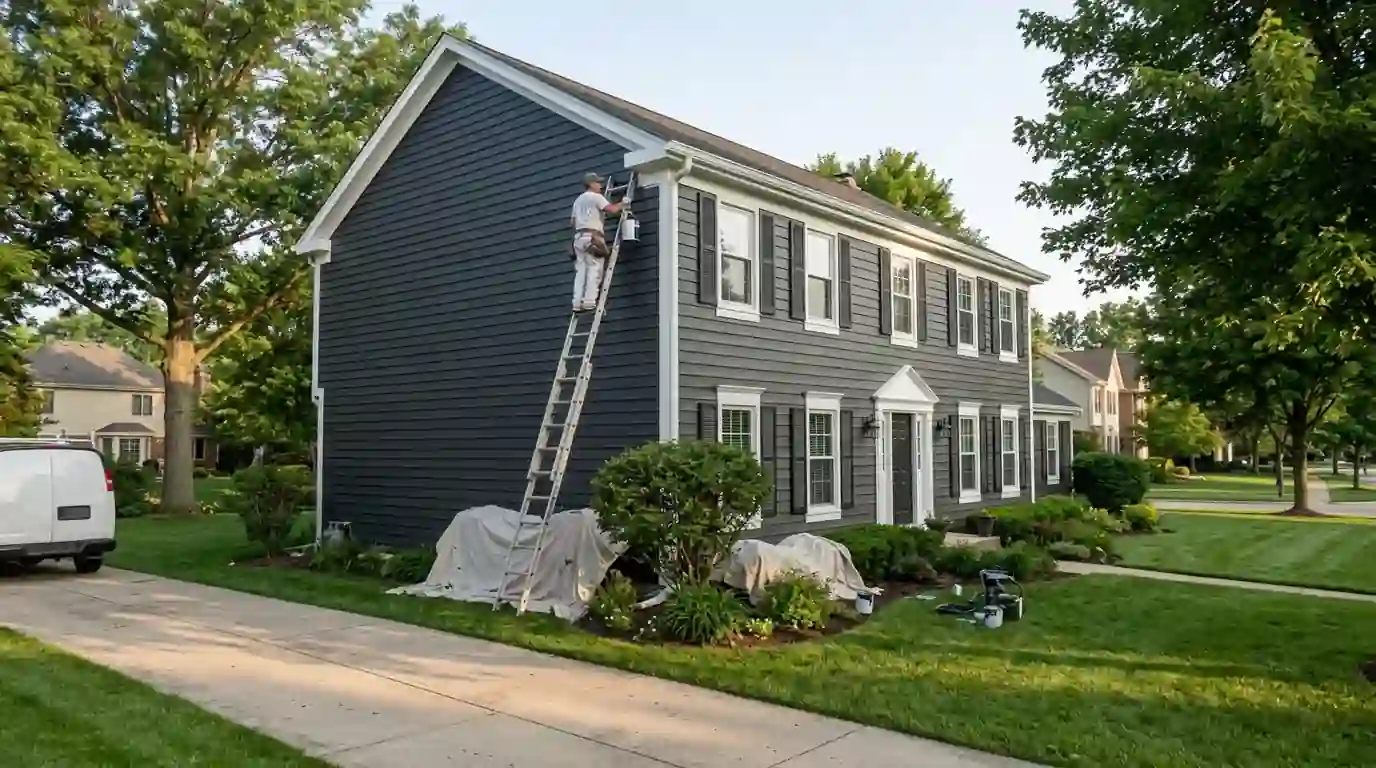
Short answer
Cedar siding in Naperville should only be stained on days between 50°F and 80°F with a dry 24 hours ahead, per Cabot's guidance, which rules out most of winter. Homewyse estimates $2.71 to $5.58 per square foot as a national average for staining cedar siding.
Why cedar wants stain rather than a paint film
Cedar is soft, oily and always moving with the seasons. A penetrating stain soaks in and wears away slowly, while a thick paint film can trap moisture behind it and peel in sheets.
The stain you pick decides the look and the upkeep: more pigment hides more grain and blocks more sun, and less pigment shows off the wood but asks for an earlier recoat.
Semi-transparent stain
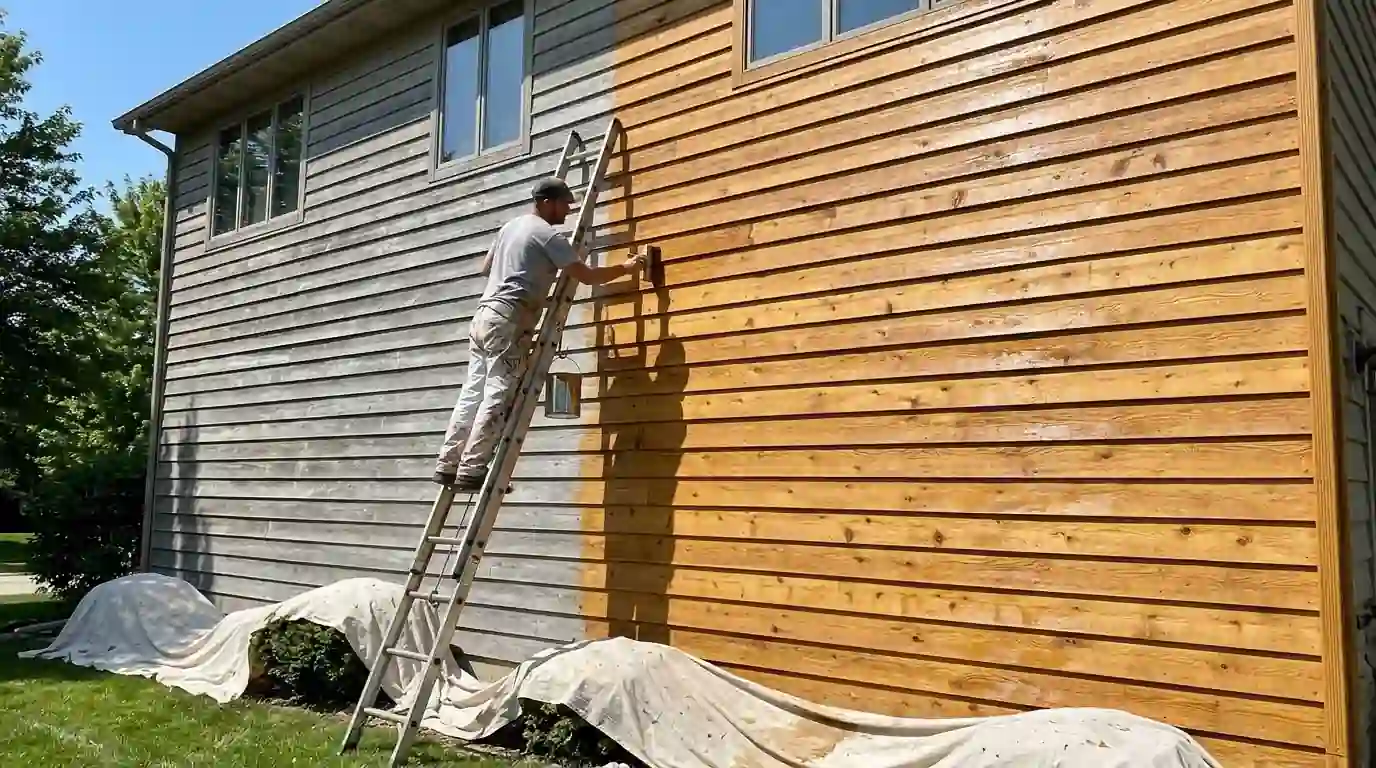
Semi-transparent stain tints the wood but leaves grain and knots in view, the look most people picture for cedar. It soaks in rather than sitting on top, so it cannot go over an old solid stain or paint. If the current finish is semi-transparent and still even, a cleaning and brightener get the wood ready. If it is blotchy, we strip it first so the new coat absorbs evenly. Expect to recoat sooner than with solid color, because thinner pigment lets more sunlight reach the fibers.
Solid stain
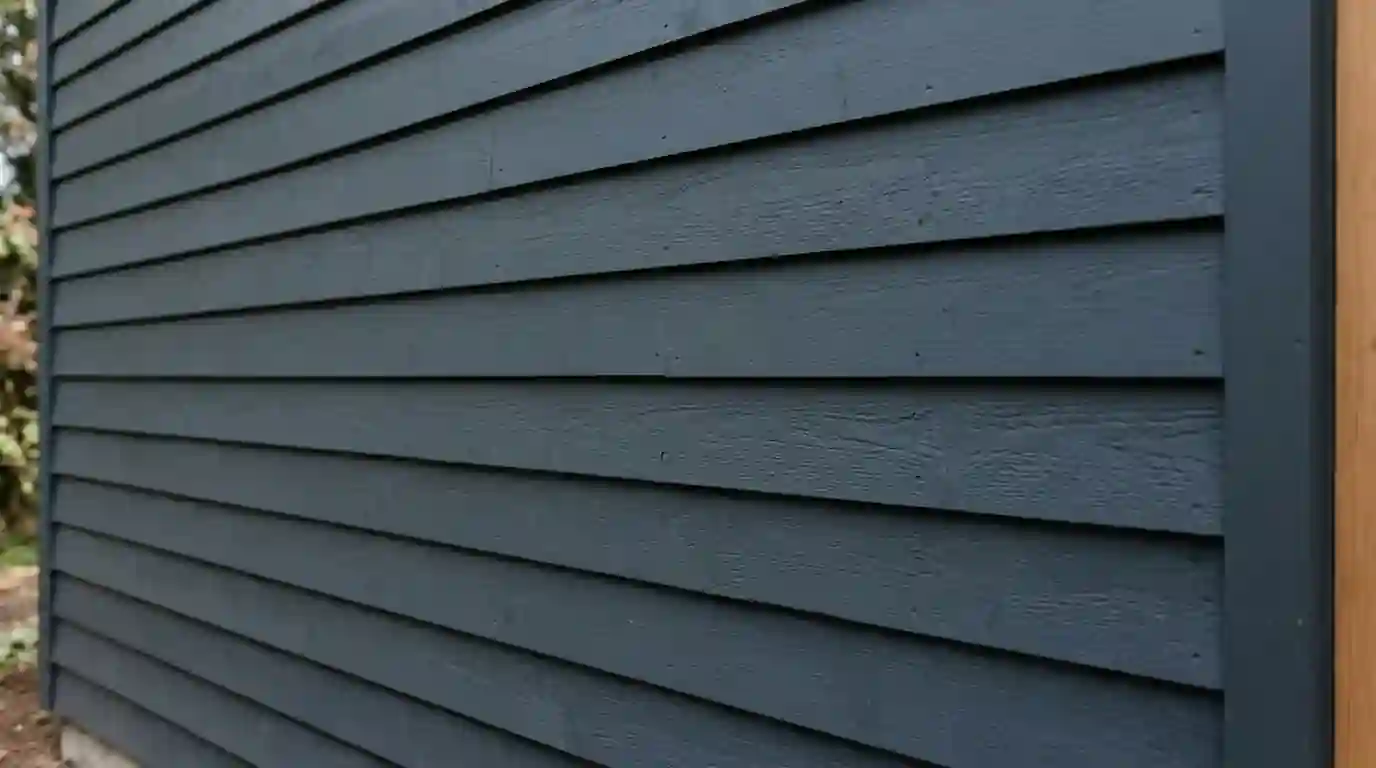
Solid stain carries enough pigment to hide the grain while the texture of the boards still shows, and it blocks far more sunlight than a semi-transparent finish. It is the usual answer when cedar was stained solid before, when replaced boards do not match the rest, or when the old color is too patchy to save. We wash the walls, scrape any loose film, spot prime bare patches when the product calls for it and brush two coats into the laps. Solid stain also lets you change color completely.
Cedar shakes and shingles
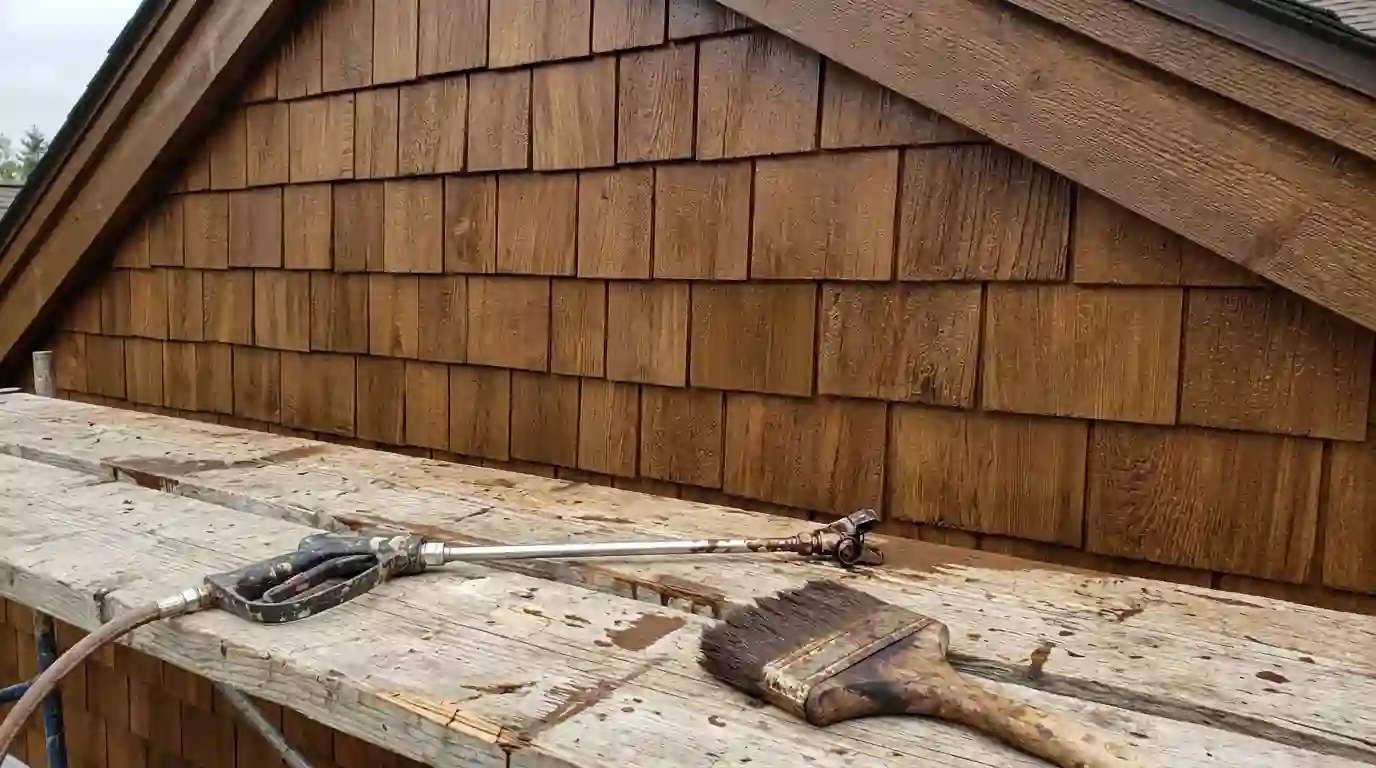
Shakes and shingles have thousands of edges and gaps, so spraying alone leaves dry spots behind each course. We spray to reach the gaps, then back-brush every course by hand to push stain into end grain and the bottom edges, where water lingers longest. Cracked or cupped shingles are replaced before staining starts. Because each shingle sheds water onto the one below it, an even coat matters more here than on lap siding; a missed bottom edge is exactly where graying and rot begin.
How cedar tells you the stain is spent
- Silver-gray boardsSun-bleached gray wood means UV light has worn through the stain and reached bare fiber.
- Water stops beadingSplash a wall with water; if the wood darkens instead of beading, the protection is gone.
- Blotchy colorShaded walls still look stained while the sunny walls beside them look nearly raw.
- Peeling flakesSolid stain or old paint lifting in patches usually points to moisture behind the film.
- Black spots or green growthMildew and algae on north walls need cleaning off before any new stain goes on.
Staining days and big walls in Meadow Glens
Cabot advises staining only between 50°F and 80°F with no rain due for 24 hours, since heat dries stain too fast and can leave lap marks. On a long wall we start on the shaded side and follow the shade around. In Meadow Glens, homes run from split-levels and ranches to Colonial Revival, Shingle-style and Victorian-inspired designs, and even the oldest 1970s houses are at least 2,000 sq ft, so a full restain is planned across several dry days.
From gray boards back to warm color
- Test. Splash and scrape tests show whether the wood needs cleaning or stripping.
- Clean or strip. Wash off dirt and mildew, or remove a failed stain completely.
- Brighten and dry. A brightener restores the wood tone, then the boards dry out.
- Stain. Spray, then back-brush each course while the stain is still wet.
- Review. Walk the walls together and catch any light or missed spots.
What restaining cedar siding costs
The figure below is a published national estimate for planning, not a price from us.
| Job | Typical range | Unit | Source |
|---|---|---|---|
| Cedar siding staining | $2.71 to $5.58 | per sq ft (estimated national average) | Homewyse |
What moves the price
- Stripping a failed finish versus a simple wash
- Shakes and shingles versus smooth lap boards
- Switching from semi-transparent to solid
- Boards to replace before staining
- Two-story walls and steep gables
Choosing between semi-transparent, solid and clear finishes
Pigment is the trade-off: the more of it, the more the stain behaves like paint.
| Finish | When it fits | Prep it needs | Upkeep |
|---|---|---|---|
| Semi-transparent | Even, sound wood you want to show | Clean and brighten, or strip if blotchy | Recoat sooner than solid |
| Solid stain | Mismatched boards or past solid coats | Wash, scrape loose film | Longest stretch between coats |
| Clear or toner | Newer cedar in good condition | Clean and brighten the wood | The most frequent recoats |
Cedar stains we put on
Cabot and Sikkens penetrating stains, Sherwin-Williams solid colors, and Duckback on some semi-transparent jobs.
- Sherwin-Williams
- Benjamin Moore
- PPG Paints
- Behr
- Valspar
- Cabot
- Sikkens
- Olympic
- Zinsser
- Kilz
- Romabio
- Ready Seal
Jobs that often go with this one
Exterior House Painting
Scrape, caulk, prime, two coats
Fence & Pergola Staining
Fences, pergolas and gazebos
Pressure Washing & Soft Washing
Siding, decks and flatwork
Wood Rot Repair Before Painting
Sills, fascia and jambs fixed first