Short answer
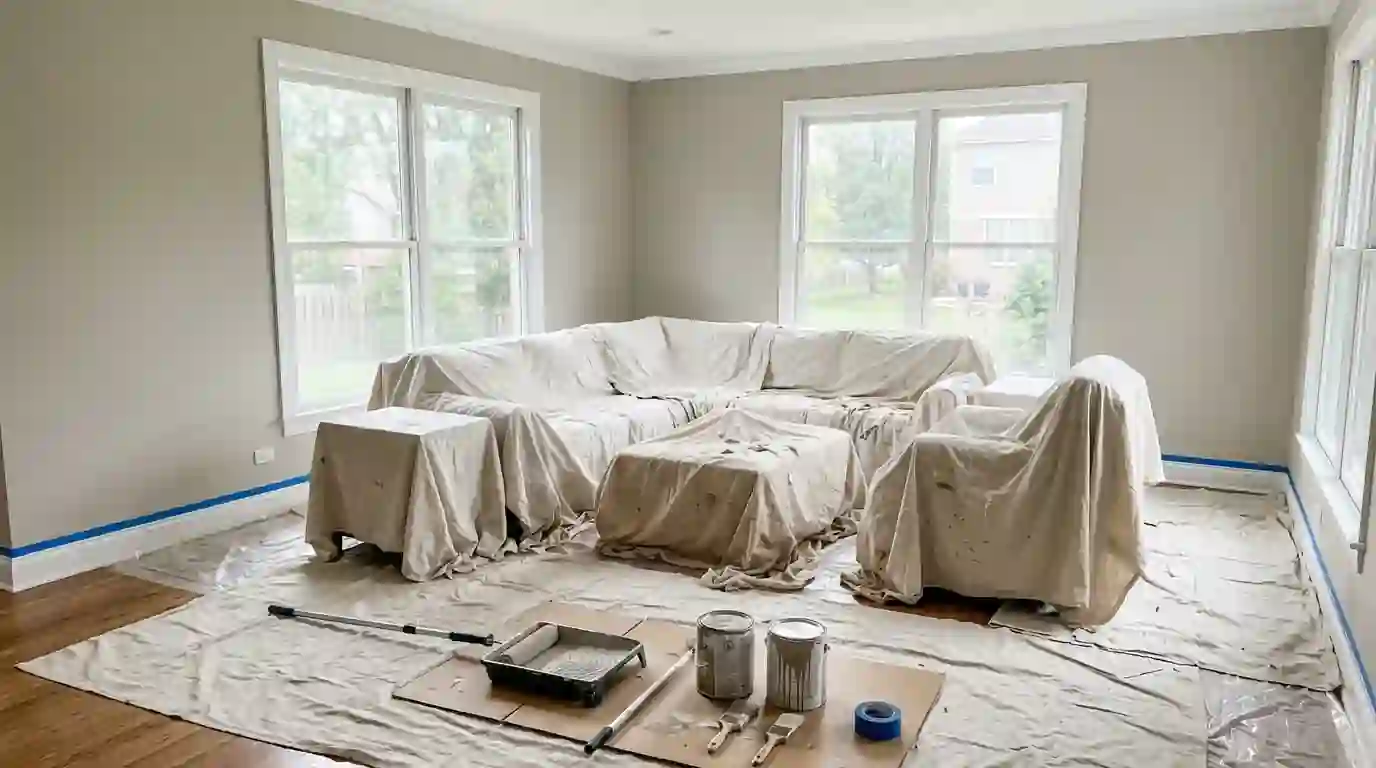
Interior painting in Naperville usually means two finish coats over patched, primed walls, with ceilings and trim done in the same visit so the lines stay crisp. Published Naperville ranges run about $1.40 to $3.40 per square foot plus materials.
What a room repaint covers in a Naperville house
Ceilings yellow, baseboards scuff and door casing chips at hand height, so we price walls, ceilings and trim separately and you choose what goes on the list.
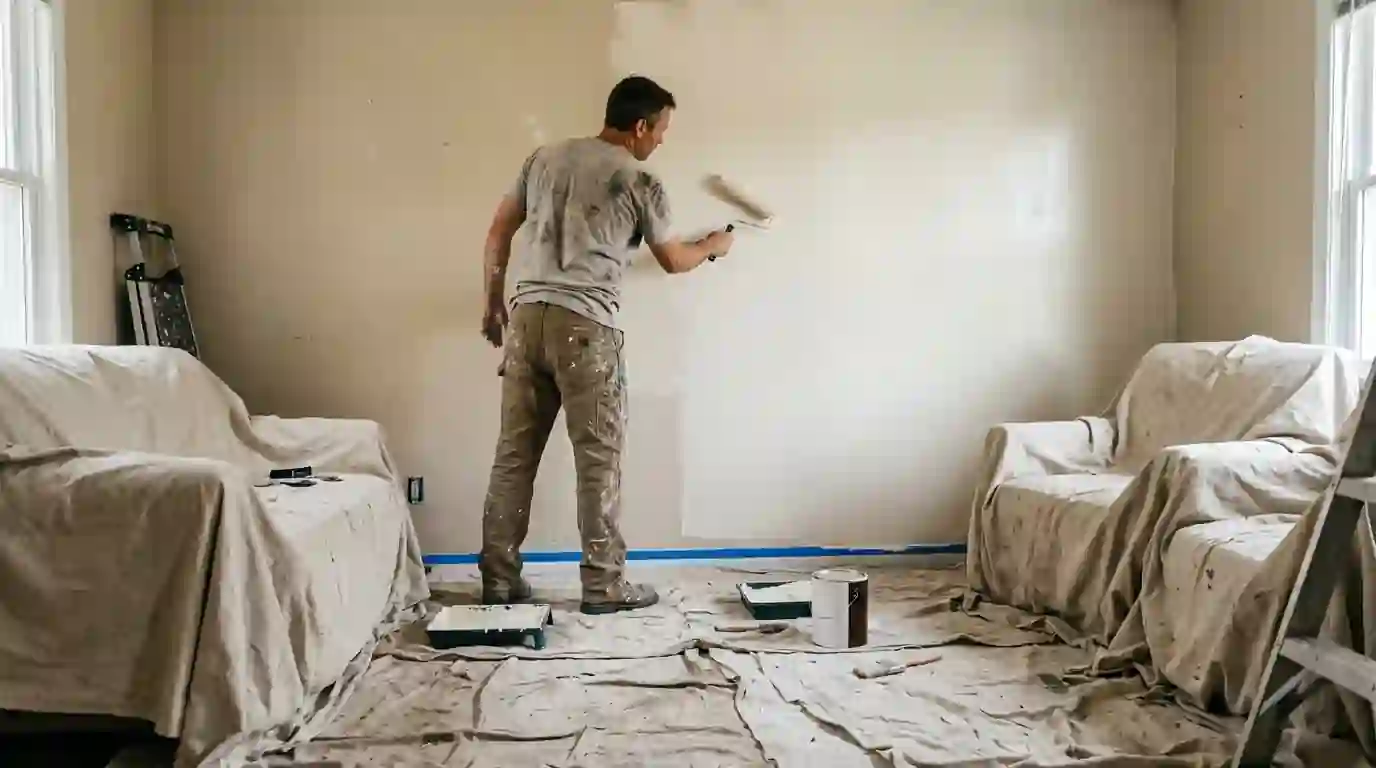
Before color goes on, nail pops get reset, cracks get taped and glossy trim gets scuffed so the new coat bonds. That prep is most of the hours, and it decides whether the paint lasts.
What interior painting costs in Naperville
Published ranges for interior painting, not our price. Your number comes from the walk-through.
| Job | Typical range | Unit | Source |
|---|---|---|---|
| Interior house painting (Naperville, IL) | $1.40 to $3.40 | per sq ft (plus material) | HomeBlue |
| Interior house painting | $965 to $3,089 | total (typical project) | HomeAdvisor |
What moves the price
- Number of rooms, and whether ceilings and trim are included
- Patching and crack repair before paint
- Big color changes that need primer or an extra coat
- Tall ceilings and stairwells
Rooms to paint yourself, and the ones to hand off
A same-color bedroom is a fair weekend project. These are where a painter saves the most time.
Fine to do yourself
- One room, same color, standard ceiling
- Closets and laundry rooms
- Touch-ups with leftover paint
Worth calling a painter
- Stairwells and two-story walls
- Dark-to-light color changes
- Whole floors of furniture to move
Living rooms and open floor plans
Open plans have no natural place to stop a color, so we end it at an inside corner or a real break in the wall, never where the paint happened to run out. Long walls get rolled top to bottom in one pass with a wet edge, which keeps lap marks out of the light from big windows. A ceiling that runs through several rooms is painted as one piece, edge to edge, so the sheen matches and no seam shows where one room ends.
Bedrooms and home offices
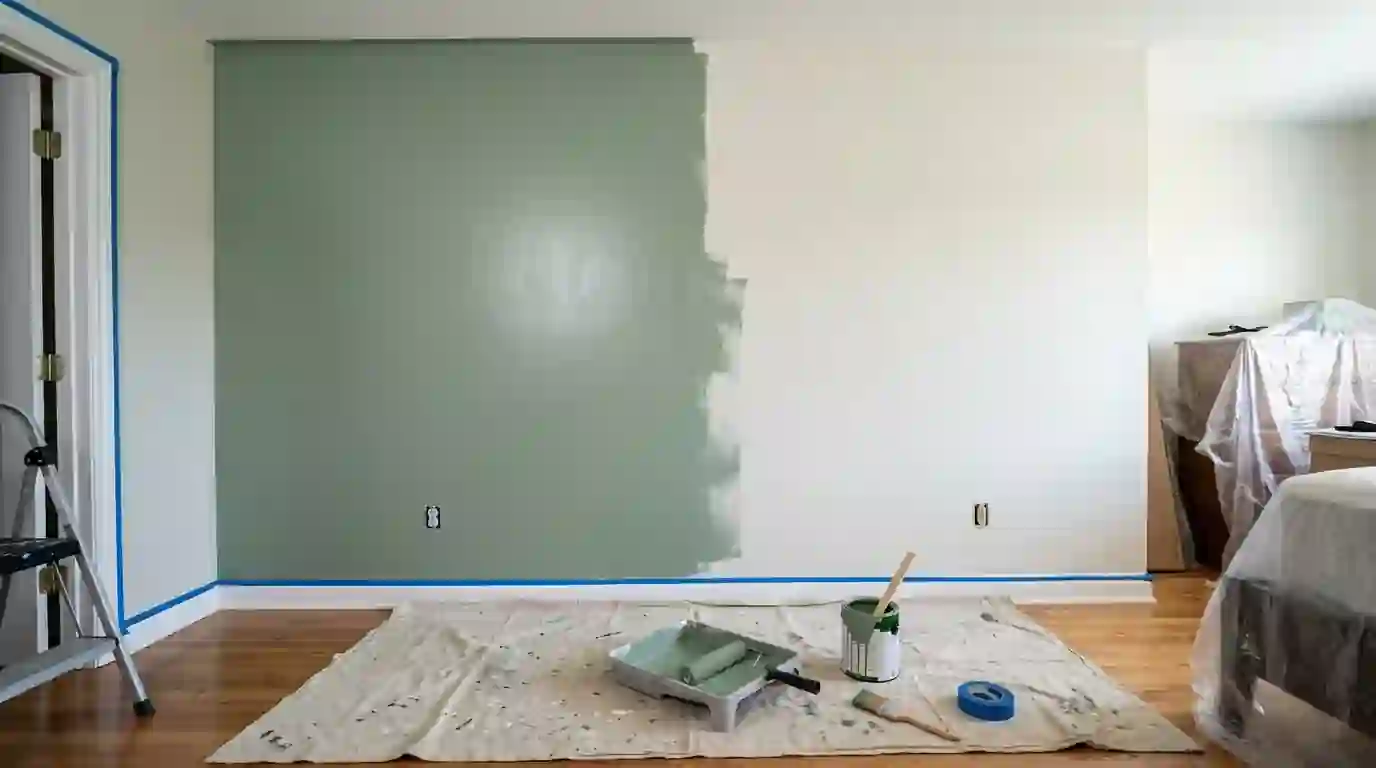
Bedrooms are the easiest rooms to schedule because they can be emptied into the hallway for a day and put back that same evening. Home offices take more planning: desks, cables and shelving get moved and covered, and we keep the noise down around your calls. Matte or eggshell suits both rooms, and a second coat over a darker color change keeps the old shade from ghosting through. Closet interiors are included only if you ask, since many people leave them alone.
Kitchens and eating areas
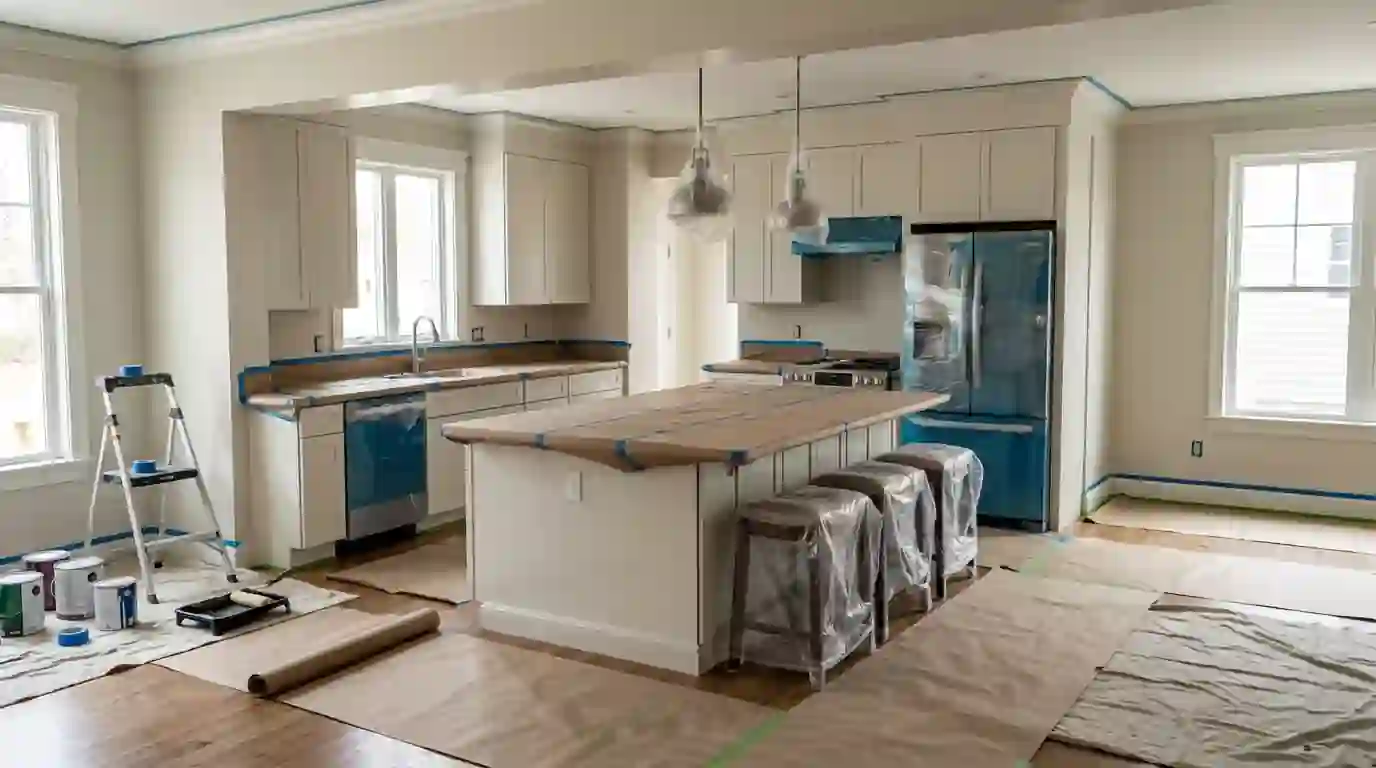
Kitchen walls carry a film of cooking grease that stops new paint from bonding, so they get degreased before anything else happens. Counters, appliances and floors are covered, and the lines along backsplashes and upper cabinets are cut by brush. Satin is the usual pick here because it wipes clean after a messy dinner and handles steam from the range. Ceilings above stoves usually get a stain-blocking primer first. Cabinets are a separate process with their own enamel finish; see kitchen cabinet painting.
Whole-house repaints
A whole interior is planned room by room so you always have a usable kitchen, bath and bedroom while we work. We start with the rooms you use least and finish in the main living spaces. One written color schedule lists every wall, ceiling and trim sheen in the house, so touch-ups years later are easy and the finished house reads as one job instead of a patchwork. Leftover paint is labeled by room and left with you for the next scuff.
What is included in an interior repaint
Scope varies between painters. On ours, unless you say otherwise:
- Moving and covering furniture, and putting it back
- Filling nail holes, dents and hairline cracks
- Spot priming every patch and stain
- Two finish coats where the color changes
- Daily cleanup and a final walk-through
Naperville houses from the 1980s and 1990s
Roughly half of Naperville's homes were built in the 1980s and 1990s, so a lot of them are now on their second or third interior repaint, and the walls carry decades of patches. In Meadow Glens, where split-levels and two-stories sit beside Colonial Revival and Shingle-style homes, stairwells and split-level landings show wear first and take the most planning, because ladders have to stand on stairs.
How an interior repaint runs, start to finish
- Walk-through. Every room, repair and sheen written down before work starts.
- Protect. Floors and furniture covered, switch plates off, outlets taped.
- Repair and prime. Holes filled and sanded, stains sealed, patches primed.
- Paint. Ceilings, then walls, then trim, cut in by hand.
- Walk it together. Tape off, furniture back, every room checked with you.
How long each room is out of use
Most single rooms are done in a day, furniture back that evening. A full floor takes several days, room by room.
Interior paint lines we use
Mostly Sherwin-Williams and Benjamin Moore interior lines, with Zinsser and Kilz primers for stain blocking.
- Sherwin-Williams
- Benjamin Moore
- PPG Paints
- Behr
- Valspar
- Cabot
- Sikkens
- Olympic
- Zinsser
- Kilz
- Romabio
- Ready Seal
Jobs that often go with this one
Ceiling Painting
Flat and textured, no lap marks
Trim, Baseboard & Door Painting
Hard-wearing enamel on trim and doors
Drywall Repair
Holes, nail pops and cracks
Kitchen Cabinet Painting
Doors off, primed and sprayed