Short answer
EPA's Renovation, Repair and Painting rule covers homes, child-care facilities and preschools built before 1978. Any firm paid to disturb painted surfaces in those buildings must hold EPA certification and use trained workers. Before hiring anyone for a pre-1978 house, ask to see that certification and ask how the crew will contain dust and clean up.
What the EPA rule covers, and who it applies to
The federal Renovation, Repair and Painting program, run by the EPA, applies to homes, child-care facilities and preschools built before 1978. Any firm that is paid to disturb painted surfaces in those buildings has to hold EPA firm certification, and the people doing the work have to be trained. That reaches painters, not only remodelers, because scraping and sanding old paint disturbs it.
The year matters because it is the line the EPA draws for older housing where lead-based paint may be present. A house built before then can have lead in its older layers even when the top coats are much newer. You cannot tell by looking, and a fresh coat on top does not change what is underneath. The EPA's program page, listed in the sources below, explains the rule in full.
Notice who the rule is aimed at: firms that are paid to do the work, and the people they send. An older house can still be repainted like any other. What changes is how the prep is carried out, from setting up the work area to cleaning it, and that is what the questions below are meant to draw out.
How many homes around Naperville this touches
Naperville's housing is mostly late 20th century, with a median build year of 1990, but older homes are far from rare. Census survey data for 2019 to 2023 shows about 25.8% of the city's homes were built before 1980, including 14.9% from the 1970s. Some of those went up after 1978, so the only reliable check is the actual build year on your property record.
The older core is the clearest case. Naperville's local historic district, designated in 1986, covers about 320 properties, including 253 homes, and the federal district counts contributing buildings built as late as 1962. In neighboring towns, homes close to the center of Downers Grove date to the mid-1800s, and Aurora has historic districts such as Near Eastside and Tanner.
If you do not know your build year, the county property record or your closing papers will show it. Additions and remodels complicate the picture: a newer addition on an older house still sits next to original walls, windows and trim, and those older parts are where the questions in this guide apply.
Where a normal paint job disturbs old paint
- Scraping loose paint off siding, trim and porch parts.
- Sanding window sills, sashes and the edges of doors.
- Planing or trimming doors and windows that stick.
- Cutting out rotten trim or loose plaster before a repair.
- Scraping textured ceilings that were painted over years ago.
Painted ceiling textures need two checks, not one, since the texture itself can be a separate concern. The popcorn ceiling removal steps explain why a lab test comes before any scraping.
Friction surfaces like windows and doors matter most, since every opening and closing grinds old paint into dust. That dust settles on sills and floors, where children and pets find it. If your job includes rotted trim replacement or cracked plaster repair, ask how those steps will be contained too, not just the painting.
Questions to ask any painter before work starts
- Does your firm hold current EPA certification under the RRP program, and can I see it?
- Who on the crew has completed renovator training, and will they be on site?
- Will you test the paint, or treat it as if it contains lead?
- How will you contain dust inside the house and outside?
- Which methods will you avoid, such as open-flame burning or dry power sanding?
- How will you clean up and check the work area each day?
- Where does the debris go when it leaves the house?
Write the answers down and keep them with the contract. A painter who works lead-safe will answer each one plainly and specifically. Vague answers, or a suggestion that the rule does not apply to painting, are your cue to keep looking.
Call any hour to talk through your home's build year and the surfaces you want painted before anything is scheduled.
Call (630) 760-2729What lead-safe work looks like on the job
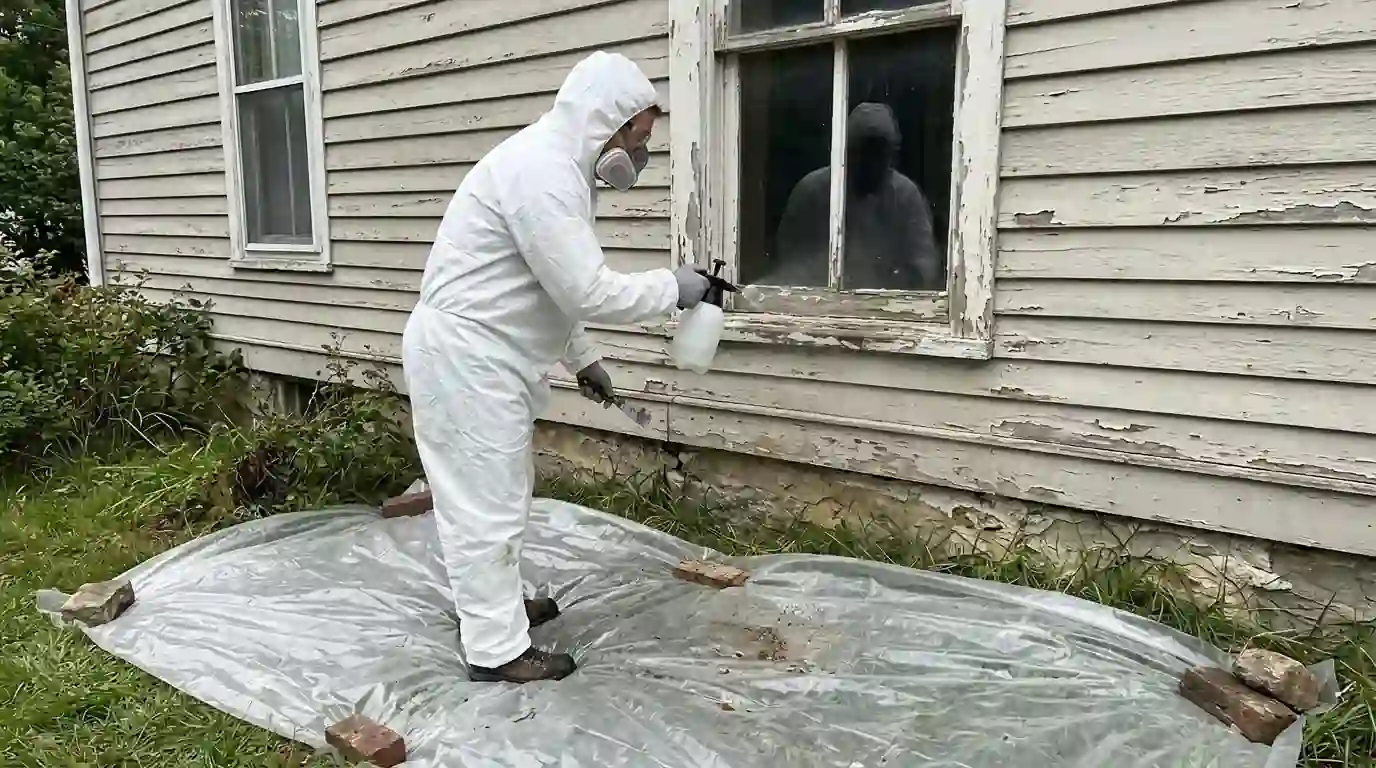
Inside, it starts with containment: plastic sheeting on the floor and over doorways, vents covered, and furniture moved out or wrapped. Surfaces are misted before scraping to keep dust down, and any machine sanding is done with tools attached to a HEPA vacuum. Debris is bagged as it comes off rather than swept up at the end of the day.
Outside, plastic goes on the ground well beyond the wall being scraped, nearby windows and doors are closed, and work pauses in strong wind. Daily cleanup uses HEPA vacuums and wet wiping, never dry sweeping. All of this is slower than ordinary prep, which is one reason quotes for older houses tend to run higher than for newer ones.
Your part as the owner is simple but worth doing. Keep children and pets away from work areas until cleanup is finished each day, do not walk through containment, and ask to see the area after the final cleaning. Keep any paperwork the painter gives you about the work with your other house records.
Historic district homes: paint is exempt, the lead rule is not
Owners in Naperville's historic district often ask about city approval first. The city's Certificate of Appropriateness table lists painting under no COA or review required, and in-kind replacement of less than 50% of the material on a primary facade is exempt too. Larger replacements or a change of material generally need a certificate, and complex projects go before the Historic Preservation Commission at a public meeting.
That city exemption is about appearance, not safety. EPA's rule follows the build year, so it still applies to any pre-1978 house in the district, whether the job is a single porch or an exterior repaint of the whole house.
Any house that keeps its original wood siding, trim and windows can hold many layers of paint. Those layers are part of an older home's character, and they are also why scraping and sanding on one call for the most careful containment.
Services this guide relates to
Exterior House Painting
Scrape, caulk, prime, two coats
Wood Rot Repair Before Painting
Sills, fascia and jambs fixed first
Plaster Repair
Cracked and loose plaster reattached
Interior Painting
Single rooms to whole-house color changes
Sources: epa.gov, point2homes.com, naperville.il.us, naperville.il.us (2), naperville.il.us (3), en.wikipedia.org, en.wikipedia.org (2).